Content Menu
● 1. What Defines a Modern House Door?
● 2. Design Trends Shaping Modern House Doors (2025–2026)
● 3. Material Comparison: Choosing the Right Substrate
● 4. Performance Standards: What B2B Buyers Must Verify
● 5. How to Evaluate Modern House Doors Suppliers
● 6. The Production Process: From Raw Material to Finished Door
● 7. Customization and OEM/ODM Options
● 8. Ordering Process: MOQ, Lead Time, and Shipping
10 min read
When a distributor in Melbourne opens a container of modern house doors only to find the powder coating chipped in transit, the conversation is never about the finish. It is about who approved the packaging spec. That is the reality of importing doors — the product you receive is the sum of hundreds of decisions made before the container ever left the factory floor.
This guide covers the design language, material science, and procurement frameworks that matter when sourcing modern house doors for distribution, development, or installation projects. You will learn what to verify, what to ask, and where corners are commonly cut.
What Defines a Modern House Door?
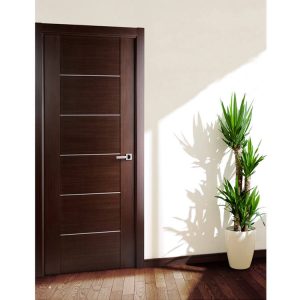
A modern house door is defined by clean lines, minimal ornamentation, flush panels, and either full-lite or narrow-lite glass configurations. The aesthetic draws from mid-century and contemporary design language — the clean look of a contemporary wood door is currently very popular among architects and specifiers, partly because it pairs well with both minimalist facades and warmer, textured exteriors.
Functionally, modern doors are performance components, not just entry points. They carry thermal insulation, security hardware, and weather resistance ratings that must align with local building codes. A door that looks modern but fails an air-tightness test is not a modern door — it is a design failure with a high price tag.
Design Trends Shaping Modern House Doors (2025–2026)
Vertical and Narrow Lite Configurations
The most visible trend is vertical elongation. Configurations like the Leptos — a single vertical lite exterior door at 1-3/4″ thickness — and the Quinque — a five-rectangle lite exterior door — dominate contemporary design catalogs. The Multus, with its multi-horizontal-plank wood construction, offers a different rhythm while staying within the same minimalist vocabulary.
These patterns appeal to architects because they achieve three goals simultaneously: vertical lines draw the eye upward and make entries feel taller, glass lites admit natural light into foyers, and the narrow proportions maintain privacy compared to full-view glass.
Material Aesthetics: Wood, Aluminum, and Fiberglass
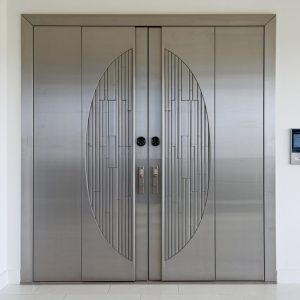
Material choice dictates what is achievable. Solid wood doors deliver warmth and a premium feel — horizontal plank detailing and vertical grain patterns are both in demand. Thermal-break aluminum doors offer slim sightlines and structural strength, making them the default for large-format modern entries where a wood door would require excessive reinforcement. Fiberglass options, such as a Topa fiberglass French door with exterior-grade 1-lite full view, replicate wood appearance with dimensional stability.
Color and Finish Trends
Neutral palettes, matte black hardware, and bronze tones dominate. Wood grain finishes — either natural or transferred onto aluminum — remain strong for villa projects.
One recurring question buyers ask: what are the three colors not to paint your front door? The common guidance is: (1) flat black in sun-exposed areas, because it absorbs heat and can warp the substrate; (2) colors with no contrast against the facade, which reduce curb appeal; and (3) overly trendy colors that date within a few years. Neutral, timeless tones protect resale value.
Finish durability matters as much as color choice. For aluminum, AAMA 2604 or 2605 specifications indicate superior coating performance. For wood, proper sealing and moisture content control determine lifespan.
Material Comparison: Choosing the Right Substrate
| Material | Aesthetics | Thermal Performance | Maintenance | Price Point | Best For |
|---|---|---|---|---|---|
| Solid Wood | High | Moderate–High | High | High | Residential villas, premium projects |
| Thermal-Break Aluminum | High | High | Low | Medium–High | Modern commercial/residential, large spans |
| Fiberglass | Medium–High | High | Low | Medium | Coastal, high-UV, budget-conscious |
Solid Wood Doors
Species selection matters. Oak, walnut, and teak are common; each has distinct stability characteristics. The industry standard thickness for exterior doors is 1-3/4″ (44.45 mm), which accommodates insulation, hardware mounting, and structural rigidity.
Engineering is what separates a quality wood door from a decorative slab. Look for finger-jointed cores, laminated construction, and controlled moisture content — typically 8–12% depending on the destination climate. Wood doors are not always the cheapest option, and for high-humidity areas, buyers should prioritize moisture resistance over appearance.
Thermal-Break Aluminum Doors
Thermal-break technology uses polyamide strips to separate the interior and exterior aluminum profiles, interrupting the thermal bridge. This delivers air-tightness, water-tightness, and wind resistance that are critical for high-rise and coastal projects.
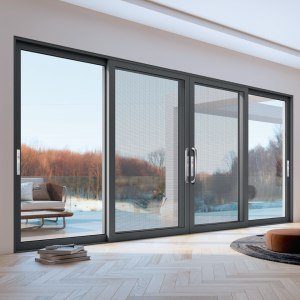
The advantage of aluminum is profile slenderness. A thermal-break frame can be significantly narrower than wood or fiberglass while maintaining structural integrity — which matters for large-format sliding and casement doors where glass area is the design feature.
Coating options include powder coating, anodizing, and wood-grain transfer. The latter allows an aluminum door to match the visual warmth of timber without the maintenance.
Fiberglass and Composite Doors
Fiberglass is gaining share because it will not rot, warp, or split. Foam-insulated cores provide thermal performance comparable to wood, and the surface accepts paint reliably. For coastal climates, high-UV exposure, or budget-constrained projects, fiberglass is often the rational choice — despite being less premium in feel than wood.
Performance Standards: What B2B Buyers Must Verify
The question “What is the best exterior entry door?” is best reframed around performance criteria. The best door is the one that passes the relevant tests for your climate and building code.
Air-Tightness, Water-Tightness, and Wind Resistance
These three tests are the core of exterior door performance:
- Air-tightness — measures air leakage rate per square meter under pressure differential
- Water-tightness — measures resistance to water penetration under simulated rain and wind
- Wind resistance — measures structural integrity under wind load
Common reference standards are EN 12207 (air), EN 12208 (water), and EN 12210 (wind), with ASTM equivalents in North America. A factory that cannot provide test reports for these parameters is a risk, regardless of how good the product looks.
Thermal Performance (U-Value)
U-value measures heat transfer through the door assembly. Lower is better. Thermal-break aluminum with insulated glass — double or triple glazing — achieves significantly lower U-values than non-thermal frames with single glazing. This matters for energy codes and green building certifications like LEED or BREEAM.
Hardware and Fittings
Hinges, locks, multi-point locking systems, and closers are often an afterthought — until they fail. Hardware must be matched to door weight and usage frequency. A heavy solid wood door with standard hinges will sag within years. Multi-point locking systems are increasingly standard on modern exterior doors for both security and weather sealing.
How to Evaluate Modern House Doors Suppliers
Direct Factory vs. Middleman
The supply chain for imported doors typically runs: factory → trading company → importer → contractor. Each intermediary adds 15–30% in markup. Direct factory sourcing eliminates that cost, but it also eliminates the buffer that trading companies provide — which means the buyer must do the due diligence themselves.
Key Quality Indicators
- Pre-shipment inspection reports — verify air-tightness, water-tightness, and wind resistance test results for your actual order, not just the factory’s marketing materials
- Production capacity — ask about monthly output and current order backlog; a factory at 120% capacity will rush your order
- Customization capability — can they adjust profile structures and fittings to match your local building codes? This is not universal
- Export documentation — packing lists, proforma invoices, and full customs documents should be standard
Red Flags to Avoid
- Factories that cannot name the specific test standards their doors meet
- Quotes that are dramatically lower than competitors without a clear explanation
- Resistance to pre-shipment third-party inspection
- No documentation of moisture content control for wood products
Questions to Ask Before Ordering
- What is your standard thickness for exterior doors? (1-3/4″ is industry standard)
- Which test standards do you certify against — EN or ASTM?
- Can you provide a pre-shipment inspection report for my specific order?
- What is your current production lead time?
- Can you adjust profiles and fittings to meet my country’s building codes?
- What is your MOQ for custom sizes versus standard sizes?
The Production Process: From Raw Material to Finished Door
Understanding production helps buyers evaluate whether a factory can deliver consistency at scale.
For aluminum doors: Raw aluminum profiles are cut to length, machined for hardware, and assembled into frames. Thermal-break polyamide strips are inserted before the frame is crimped. Glass is cut, tempered if required, and sealed into insulated glass units. The assembled door undergoes air and water tightness testing before finishing.
For wood doors: Timber is kiln-dried to target moisture content, then finger-jointed and laminated into engineered panels — solid wood planks are prone to movement, so lamination controls warping. The door is machined, sanded, and finished. Glass lites are fitted with proper drainage channels to prevent water accumulation.
For fiberglass doors: A fiberglass skin is molded over a foam core. The surface is primed for paint. The advantage is that the door is dimensionally stable — it will not expand or contract with humidity like wood.
Customization and OEM/ODM Options
Full customization in practice means:
- Size — non-standard widths and heights
- Color — RAL, NCS, or custom wood finish matching
- Glass — single lite, multiple lites, frosted, Low-E, tempered
- Hardware — brand, finish, locking mechanism
For distributors building their own brand, OEM and ODM capabilities are critical. OEM means the factory manufactures to your specifications. ODM means the factory designs and manufactures, and you brand it. Both require a factory with flexible production lines and a willingness to adjust engineering details.
Ordering Process: MOQ, Lead Time, and Shipping
MOQs vary significantly. Some factories accommodate LCL (Less than Container Load) shipments for smaller orders, while FCL (Full Container Load) is more cost-effective for larger quantities. Typical production lead times for custom doors range from 3–6 weeks depending on order size and complexity.
Shipping logistics matter. Direct delivery from factory to port reduces handling damage. FCL shipments are the safest option for large orders — the container is sealed at the factory. LCL requires consolidation, which increases the risk of damage from other cargo.
Experienced factories adjust profile structures and fittings to match local building codes of target markets — this is a capability that separates serious manufacturers from those who only produce for their domestic market.
—
Here is how the industry works — and how we meet these standards.
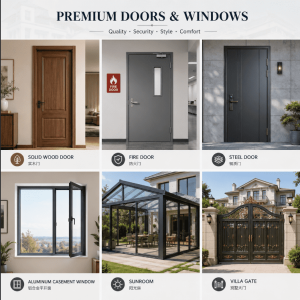
Jusen Door and Windows Manufacturing Co., Ltd. is a factory specializing in solid wood doors, thermal-break aluminum doors and windows, system windows, casement doors, sliding doors, custom villa doors and windows, sunrooms, and aluminum alloy entrance doors.
Our production line conducts strict pre-shipment inspections including the air-tightness, water-tightness, and wind resistance tests described above. Our thermal-break aluminum and solid wood modern house doors are available in the 1-3/4″ thickness standard, with configurations similar to the vertical lite and multi-lite patterns trending in the market.
We support full customization of size, color, glass, and hardware accessories. For B2B partners, we offer OEM, ODM, private label, and construction project bulk supply — with direct factory pricing and no middleman markup.
Our export team routinely handles FCL and LCL shipments with complete documentation: packing lists, proforma invoices, and full customs paperwork. We can adjust profile structures and fittings to match the building codes of your target market.
If you are sourcing modern house doors for distribution, development, or installation projects, talk to our team about your specification requirements.
—
Common Questions Buyers Ask
What are the latest trends for exterior front doors?
Vertical and narrow lite configurations, horizontal plank detailing, matte black hardware, neutral earth tones, and contemporary wood doors. Thermal performance and slim aluminum profiles are growing priorities for specifiers.
What are the trends for front door design in 2026?
Expect continued emphasis on energy efficiency — lower U-values — larger glass areas with privacy glass options, mixed-material designs combining wood and aluminum, and smart lock integration. Flush wood doors with minimal ornamentation remain strong.
What is the best exterior entry door?
The best door depends on priorities. Solid wood offers premium aesthetics. Thermal-break aluminum provides slim profiles and thermal performance. Fiberglass offers low maintenance and high durability. The correct choice passes air-tightness, water-tightness, and wind resistance tests for your climate.
What is the standard thickness for a modern exterior door?
1-3/4″ (44.45 mm) is the industry standard. This thickness accommodates insulation, hardware mounting, and structural rigidity.
Can I order custom-sized modern house doors for a construction project?
Yes. Factories with flexible production lines can manufacture custom sizes, colors, glass configurations, and hardware. Verify the factory can adjust profile structures and fittings to match your local building codes.
What is the minimum order quantity for factory-direct modern doors?
MOQs vary. Some factories accommodate LCL shipments for smaller orders; FCL is more cost-effective for larger quantities. Contact the factory directly for their specific MOQ and shipping options.
—
Choose a factory-direct supplier if you need competitive pricing at scale and have the capacity to manage quality control. Choose a trading company if you are ordering small quantities and need someone else to handle factory communication. Choose a local distributor if your project timeline cannot accommodate international shipping lead times.
Modern house doors are defined by clean design, performance, and material innovation. Buyers who prioritize verified test standards over brand claims — and who invest time in supplier evaluation — consistently get better outcomes. Direct factory sourcing offers cost and communication advantages, but only when the factory can demonstrate the capabilities discussed here.
References
- EN 12207:2016 — Windows and doors. Air permeability. Classification. https://www.en-standard.eu
- EN 12208:2000 — Windows and doors. Water tightness. Classification. https://www.en-standard.eu
- EN 12210:2016 — Windows and doors. Wind resistance. Classification. https://www.en-standard.eu
- AAMA 2604-20 — Voluntary Specification, Performance Requirements and Test Procedures for Pigmented Organic Coatings on Aluminum Extrusions and Panels. https://aamanet.org
- AAMA 2605-20 — Voluntary Specification, Performance Requirements and Test Procedures for Superior Performing Organic Coatings on Aluminum Extrusions and Panels. https://aamanet.org