Content Menu
● 1. Understanding Door with Glass Panels: Types and Applications
● 2. Quality and Performance Factors: What Actually Matters
● 3. How to Evaluate Door with Glass Panels Suppliers
● 4. Relevant Industry Standards and Certifications
● 5. Production Process: From Raw Material to Finished Door
● 6. Key Quality Indicators for Buyers
● 7. Customization and OEM/ODM Options
● 8. Ordering Process: MOQ, Lead Time, and Shipping
● 9. Quality Control: Multi-Stage Inspection
● 10. Certifications and Industry Standards: What to Verify
● 11. Our Approach to Manufacturing Door with Glass Panels
● 12. Case Study: A 500-Door Apartment Project
● 13. Frequently Asked Questions
● 14. Questions to Ask Before Ordering
15 min read
A warehouse manager in Rotterdam ordered 200 aluminum doors with glass panels from a trading company. The glass and frames were correct, but the hinge spacing was wrong for the frame depth. Installation stopped for three weeks while replacement hardware shipped from overseas, erasing the project’s margin.
That is the reality of sourcing doors with glass panels. One specification mismatch can halt an entire site. This guide covers what procurement professionals, contractors, and developers need to know before placing a bulk order — from glass types and frame materials to supplier verification and quality control.
Understanding Door with Glass Panels: Types and Applications
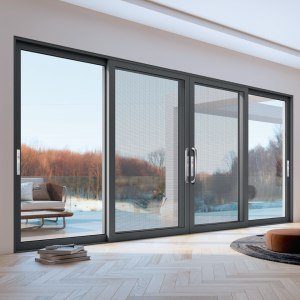
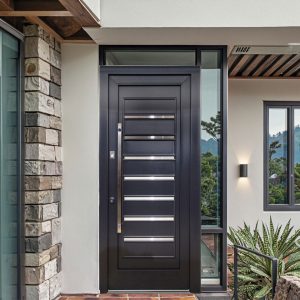
A “door with glass panels” refers to any door where glazing occupies a portion of the door surface — from a small decorative lite to a full-view glass expanse. The industry distinguishes between two primary configurations:
- Door lites: A framed glass insert within a solid door slab. The frame can be wood, aluminum, or uPVC. The glass typically occupies 20–50% of the door surface.
- Full-view doors: Glass spans nearly the entire door surface, held by a perimeter frame. These are common in commercial storefronts, office interiors, and modern residential entrances.
The distinction matters because it affects structural engineering. A full-view aluminum door requires thicker stiles and rails to prevent racking (frame distortion under load). A door with a single lite can use a lighter frame since the solid sections carry the structural load.
Material Profiles: Aluminum, Wood, and uPVC
| Material | Best Application | Thermal Performance | Customization | Cost Range (per unit, bulk) |
|---|---|---|---|---|
| Thermal-break aluminum | Exterior commercial, high-rise | Excellent (with thermal break) | High (color, size, hardware) | $180–$450 |
| Solid wood (engineered core) | Interior luxury, acoustics | Good (wood is natural insulator) | Medium (stain, paint) | $250–$600 |
| uPVC | Budget residential, low-rise | Good | Low (limited sizes, colors) | $90–$200 |
“Aluminum door” is not a single product. Standard aluminum frames conduct heat readily — a problem for exterior applications. Thermal-break aluminum incorporates a polyamide strip between the interior and exterior frames, interrupting heat transfer. For projects in cold climates or with strict energy codes, thermal-break is not optional; it is a compliance requirement.
Glass Type Selection: Safety and Performance
The glass is a structural component with specific safety requirements.
- Tempered glass: Heat-treated to be 4–5 times stronger than annealed glass. When broken, it shatters into small, blunt pieces. Most building codes mandate tempered glass for door glazing within 24 inches of the floor.
- Laminated glass: Two glass layers bonded with a PVB interlayer. When broken, it holds together — critical for security and overhead applications. It also provides better acoustic insulation.
- Low-E coated glass: A microscopic metallic coating reflects infrared radiation while admitting visible light. Combined with Argon gas filling between double glazing, Low-E glass can improve U-values by up to 30% compared to standard double glazing.
A door with glass panels is only as good as its weakest component. A high-performance frame with standard float glass will fail thermal testing. A premium glass package in a poor frame will leak air and water. The buyer must specify both components as a system.
Quality and Performance Factors: What Actually Matters
Air, Water, and Wind Resistance
Three performance metrics determine whether a door with glass panels will perform in real-world conditions:
- Air tightness: Measured in m³/(h·m²) at a given pressure differential. Higher classes (Class 8 per EN 12207) indicate less air leakage.
- Water tightness: Classified per EN 12208, rated from 1A to 9A. Higher ratings mean the door withstands more severe rain and wind conditions.
- Wind load resistance: Per EN 12211, this measures the frame’s ability to withstand pressure without permanent deformation.
A door with poor water tightness will leak during heavy rain. A frame with insufficient wind load resistance will flex, compromising the glass seal. Buyers should request the actual test report — not just a certificate — before committing to a large order.
Hardware Integration
Glass panel doors place different demands on hardware than solid doors:
- Hinges: Full-view doors are heavier. A 900mm × 2100mm aluminum door with 6mm tempered glass weighs approximately 35–45 kg. Standard hinges rated for solid wood doors may fail. Heavy-duty hinges with ball bearings or adjustable friction stays are required.
- Multi-point locking: A single-point lock leaves the top and bottom of a full-view door unsecured — a security risk. Multi-point locking systems engage bolts at multiple points along the frame edge, improving both security and weather sealing.
- Door closers: The weight and wind exposure of exterior glass doors often mandate hydraulic door closers to ensure controlled closing.
The Imperfect Insight
Not every project needs top-tier specifications. A door with glass panels for an interior office partition does not require thermal-break frames or Low-E glass. Specifying premium performance where it is not needed adds 20–30% to the unit cost without functional benefit. Buyers should match the specification to the application — not to the supplier’s most expensive product.
How to Evaluate Door with Glass Panels Suppliers
Verification Steps
- Request the test reports. Not the certificate — the actual test data. A legitimate manufacturer will share the full report showing test conditions and results. A trading company may not have access to this data.
- Ask about the profile source. Aluminum profiles are typically extruded by specialized mills, not by the door factory itself. Reputable mills include Xingfa, JMA, and Minhua in China; Schüco and Reynaers in Europe.
- Visit or video-call the factory. For large orders, a physical or virtual factory audit is standard practice. Look at the production line, check the raw material inventory, and verify the testing equipment actually exists.
- Request samples. A sample door with glass panels allows you to check finish quality, hardware feel, and assembly precision. Weigh it. Measure the frame thickness. Confirm the glass certification marks are present.
- Ask for client references. A supplier with international experience should provide references from projects in your region or similar climates.
Red Flags: Avoid Suppliers Who…
- Cannot provide test reports for air, water, and wind resistance.
- Quote prices significantly below the market average — this usually indicates thinner profiles, lower-grade glass, or inferior hardware.
- Cannot explain the thermal-break technology in their aluminum frames.
- Have no physical factory location or production capacity data.
- Require full payment before production begins without a clear milestone schedule.
Choose A if… Choose B if…
- Choose a trading company if: You are ordering a small quantity (under 20 units), need a specific brand they represent, or require local warehousing and after-sales support in your country.
- Choose a factory-direct manufacturer if: You are ordering bulk quantities (50+ units), need customization on size or finish, want to eliminate middleman markup, or require direct control over the production schedule.
Relevant Industry Standards and Certifications
- EN 14351-1: The European standard for windows and doors. It covers air permeability, water tightness, wind load resistance, and thermal transmittance.
- ISO 9001:2015: Quality management systems certification. This indicates the factory has documented and audited production processes.
- CE Marking: Required for doors sold in the European Economic Area. It signifies the product meets essential health, safety, and environmental requirements.
- ASTM E283 / E330 (USA): Standard test methods for air leakage and structural performance of exterior windows and doors.
- NFRC (USA): Certifies thermal performance ratings for windows and doors.
Buyers should match the certification to their target market. A door certified to EN 14351-1 may not meet ASTM requirements for a US project.
Production Process: From Raw Material to Finished Door
Step 1: Profile Cutting and Machining
Aluminum profiles arrive from the extrusion mill in 6-meter lengths. The factory cuts them to specification and machines the ends for corner joints. CNC machining centers cut hinge recesses, lock holes, and drainage slots. Precision here determines whether the frame assembles square and hardware fits correctly.
Step 2: Frame Assembly
The cut and machined profiles are assembled using corner crimping or corner cleats. For thermal-break profiles, the polyamide strips are already integrated during extrusion. The assembled frame is checked for squareness — a deviation of more than 2mm on a 2-meter door indicates a problem.
Step 3: Glass Preparation and Installation
Glass is cut, edged, and tempered (if specified) by a glass processor. The factory installs the glass into the frame with setting blocks and gaskets. The gasket quality determines the door’s air and water tightness. EPDM gaskets are the industry standard; cheaper PVC gaskets degrade faster under UV exposure.
Step 4: Hardware Installation
Hinges, locks, handles, and closers are installed. Multi-point locks require careful alignment — a misaligned lock mechanism will cause binding and premature wear.
Step 5: Surface Treatment
Aluminum frames receive surface treatment either before cutting (powder coating on raw profiles) or after assembly (for custom colors). Powder coating provides a durable finish in a wide range of RAL colors. Anodizing creates a metallic finish but offers fewer color options.
Step 6: Inspection and Packing
Finished doors undergo final inspection — checking dimensions, hardware function, glass integrity, and appearance. Doors are packed with protective film, corner protectors, and wooden crates for export.
Key Quality Indicators for Buyers
When inspecting a sample door or evaluating a factory, check these specific indicators:
- Corner joint quality: Run your finger over the corner joint. It should be smooth — no sharp edges or gaps.
- Gasket consistency: Gaskets should be continuous at corners, not cut and butt-jointed. A cut gasket at the corner is a potential leak point.
- Drainage system: Exterior doors must have drainage slots in the frame bottom to allow water to escape. Check they are present and unobstructed.
- Glass edge coverage: The glass should sit on setting blocks with even gaps around the perimeter. Uneven gaps indicate poor glazing.
- Hardware feel: Operate the handle and lock mechanism. It should feel smooth and solid, not loose or gritty.
- Finish consistency: Check for runs, sags, or thin spots in the powder coating. Color should be uniform across all visible surfaces.
- Profile wall thickness: Measure the profile wall thickness. Chinese national standard GB/T 8478 requires a minimum of 1.4mm for exterior doors. Thinner profiles (1.0–1.2mm) are cheaper but less rigid.
Customization and OEM/ODM Options
What Can Be Customized
- Dimensions: Width, height, and frame thickness. Most factories can produce non-standard sizes, but lead time increases for non-tooled sizes.
- Color: Powder coating offers hundreds of RAL colors. Standard colors (white, black, silver, bronze) are typically available with shorter lead times.
- Glass: Tempered, laminated, Low-E, tinted, frosted, patterned, or smart glass. The glass specification significantly impacts both price and lead time.
- Hardware: Locking systems, hinges, handles, and closers can be specified by brand or function.
- Profile design: Some factories can modify profile geometry for specific structural requirements — for example, reinforcing the frame for hurricane wind loads.
OEM vs. ODM
- OEM (Original Equipment Manufacturing): The buyer provides the specification — dimensions, materials, hardware brands. The factory produces to spec. This is suitable for buyers who have their own design or a specific project requirement.
- ODM (Original Design Manufacturing): The factory provides the design based on the buyer’s functional requirements. The buyer receives a product that meets their needs without investing in the design process.
For buyers in markets with specific building codes — hurricane zones, extreme cold, high seismic activity — ODM is often the better choice. The factory adjusts profile structure and fittings to meet local requirements.
Ordering Process: MOQ, Lead Time, and Shipping
MOQ (Minimum Order Quantity)
MOQ varies by product complexity. For standard aluminum doors with glass panels, MOQ is typically 50–100 units for factory-direct pricing. For fully custom products, MOQ may be higher (100–200 units) to justify tooling and setup costs. Some factories offer lower MOQs for LCL (Less than Container Load) shipments.
Lead Times
Standard lead time for a bulk order of aluminum glass doors is 25–35 days from order confirmation. This includes:
- Profile cutting and machining: 5–7 days
- Assembly and glazing: 7–10 days
- Surface treatment (if custom color): 5–7 days
- Inspection and packing: 3–5 days
- Buffer for quality issues: 3–5 days
Custom colors, special glass, or complex hardware add 5–10 days to the schedule.
Shipping
- FCL (Full Container Load): For orders of 100+ doors, FCL shipping is more cost-effective. A 40-foot container holds approximately 80–120 aluminum glass doors depending on size and packing.
- LCL (Less than Container Load): For smaller orders, LCL allows buyers to share container space. Per-unit shipping cost is higher, but total investment is lower.
Buyers should confirm whether the quoted price is EXW (Ex Works), FOB (Free on Board), or CIF (Cost, Insurance, and Freight). This significantly affects the final landed cost.
Payment Terms
Standard terms for international orders are typically 30% T/T deposit with 70% balance before shipment, or L/C at sight for larger orders. Some factories offer more flexible terms for repeat customers.
Quality Control: Multi-Stage Inspection
A serious manufacturer performs inspection at multiple stages:
- Incoming materials: Aluminum profiles, glass, and hardware are checked against specifications upon arrival.
- In-process inspection: Dimensional checks during cutting and machining; alignment checks during assembly.
- Pre-shipment inspection: A final inspection of finished doors — dimensions, hardware function, glass integrity, finish quality, and packing.
For door with glass panels, the pre-shipment inspection should include:
- Air tightness test (if applicable): Performed on a sample unit to verify the gasket and frame seal.
- Water tightness test: A hose test to check for leaks around the frame and glass.
- Wind load resistance test: For high-rise or hurricane-prone applications, this test verifies the frame can withstand specified pressures.
Buyers should request the inspection report before shipping. This avoids defective doors arriving at the port with the buyer bearing the cost of return or rework.
Certifications and Industry Standards: What to Verify
When a supplier claims certification, verify it.
- ISO 9001:2015: Check the certificate number against the issuing body’s database. The scope should include “design and manufacture of doors and windows.”
- CE Marking: For EU markets, verify the Declaration of Performance (DoP) matches the product specification.
- Product certifications: Some markets require specific product certifications — for example, the US requires AAMA/WDMA certification for exterior doors.
A supplier who cannot explain their certifications in detail is likely not the manufacturer. Trading companies often hold certificates that belong to the factory they represent. Ask for the factory name and verify independently.
Our Approach to Manufacturing Door with Glass Panels
Our approach to door with glass panels is grounded in the principles discussed throughout this guide. We claim to meet specifications reliably, at a fair price, with documentation to back it up.
Factory-Direct Pricing
Because we are the factory, our pricing reflects raw material costs, not middleman margins. When you request a quote, we break down the cost structure — profiles, glass, hardware, surface treatment, and labor. This transparency allows you to compare our pricing against trading companies and understand exactly what you are paying for.
Full Customization
We offer full customization on size, color, glass type, and hardware accessories. Our engineering team works with you to adjust profile structures and fittings to match your local building codes. Whether your project requires hurricane-rated frames, thermal-break profiles for cold climates, or specific RAL colors, we can adapt the product to your requirements.
Pre-Shipment Inspection
Every order undergoes our multi-stage inspection process. We test air-tightness, water-tightness, and wind resistance on sample units and provide the test reports with your shipment. We want to catch issues at the factory — not have them discovered at your job site.
Export Documentation
Our foreign trade team manages the complete export process. We provide packing lists, proforma invoices, and full customs documents. We arrange both FCL and LCL shipments directly from our factory in China. For buyers unfamiliar with Chinese export procedures, we handle the paperwork and keep you informed at each step.
Case Study: A 500-Door Apartment Project
In 2023, a developer in the Middle East ordered 500 aluminum glass doors for a mid-rise apartment complex. The specification required:
- Thermal-break aluminum profiles
- Double-glazed Low-E glass with Argon filling
- Multi-point locking systems
- Custom bronze powder coating
- Compliance with local wind load requirements
The project timeline was tight — 45 days from order confirmation to port delivery. Our production team prioritized the order, completing profile cutting and machining in 6 days, assembly and glazing in 10 days, and surface treatment in 6 days. The pre-shipment inspection passed on the first attempt. The doors shipped FCL from China and arrived at the port on schedule.
The developer’s procurement manager noted that the test reports provided with the shipment were the deciding factor in their supplier selection — a previous supplier had been unable to provide similar documentation.
Frequently Asked Questions
What are doors with glass called?
In the industry, they are called “glass panel doors,” “door lites,” or “full-view doors.” Technically, a “lite” refers to the glass panel itself, while the complete assembly is a “door with glass panels.”
What type of glass is required for a door to be safe?
Most building codes require tempered or laminated glass for door glazing. Tempered glass breaks into small, blunt pieces that are less likely to cause injury. Laminated glass holds together when shattered, providing additional security. For doors within 24 inches of the floor, safety glazing is typically mandatory.
Can I order a door with glass panels in a custom size?
Yes. As a manufacturer, we offer full customization on width, height, and frame thickness. We can adjust the profile structure to accommodate non-standard sizes. Custom sizes may increase lead time by 5–10 days, depending on the complexity.
How do you ensure the doors meet local energy codes?
We use thermal-break aluminum profiles and can fit Low-E glass with Argon gas filling. Our engineering team can adjust the profile structure and glazing package to meet the specific U-values required by your target market. We provide the thermal performance data with the quotation.
What is the MOQ for a bulk order?
MOQ varies by model and specification. For standard aluminum glass doors, MOQ is typically 50–100 units. We support both FCL and LCL shipments, so smaller projects can be accommodated with LCL shipping. Contact us with your project details for a specific MOQ quote.
Do you provide customs documentation for import?
Yes. We provide a packing list, proforma invoice, and all necessary export customs documents. Our foreign trade team ensures your shipment clears customs smoothly. We also provide the test reports and certificates required for product compliance in your market.
How much is a smart glass door?
Smart glass (switchable glass that changes from transparent to opaque) is significantly more expensive than standard glass — typically $100–$300 per square foot, compared to $10–$30 for tempered glass. For a standard door (approximately 20 square feet of glass), this adds $2,000–$6,000 to the unit cost. Smart glass is justified for high-end residential or premium commercial projects where privacy control is a selling point.
Questions to Ask Before Ordering
Use this checklist when evaluating a supplier:
- What is the profile wall thickness? (Minimum 1.4mm for exterior doors)
- Can you provide the air, water, and wind resistance test reports?
- What glass certification marks are on the glass? (Tempered, laminated, etc.)
- What hardware brands do you use? Can I specify my own?
- What is the lead time for my order? What happens if it slips?
- What are your payment terms? Are there milestone payments during production?
- Can I arrange a third-party inspection before shipping?
- What is the MOQ for my specification?
- Do you provide installation instructions or technical support?
- What is the warranty period and what does it cover?
Making the Final Decision
A door with glass panels is not a commodity product. It is an engineered assembly of profiles, glass, hardware, and seals that must perform under real-world conditions. The cheapest option is rarely the most cost-effective when you account for installation delays, performance failures, and warranty claims.
Choose a factory-direct manufacturer if your order is bulk (50+ units), you need customization, and you want to eliminate middleman markup. Choose a trading company if you need a specific brand, local warehousing, or after-sales support in your country.
The supplier evaluation framework in this guide applies to any market and any product category. Request the test reports. Verify the certifications. Ask for samples. Visit the factory if the order is large enough to justify it. The time spent on due diligence is a fraction of the cost of a failed shipment.
When you are ready to discuss your project requirements, contact our team for a detailed quotation. We will provide the specifications, test data, and pricing you need to make an informed decision.
References
- European Committee for Standardization. (2010). EN 14351-1: Windows and doors — Product standard, performance characteristics. https://www.en-standard.eu/
- International Organization for Standardization. (2015). ISO 9001:2015 Quality management systems — Requirements. https://www.iso.org/standard/62085.html
- ASTM International. (2019). ASTM E283-19 Standard Test Method for Determining Rate of Air Leakage Through Exterior Windows, Curtain Walls, and Doors. https://www.astm.org/e0283-19.html
- National Fenestration Rating Council. (2023). NFRC 100: Procedure for Determining Fenestration Product U-factors. https://www.nfrc.org/
- Chinese National Standard. (2019). GB/T 8478-2019 Aluminum alloy doors and windows. http://www.gbstandards.org/