Content Menu
● 1. What Are 5 Exterior French Doors?
● 2. What Are the Standard Height Options for 5′ French Doors?
● 3. What Materials Work Best for a 5’0″ Exterior French Door?
● 4. What Hardware Specifications Matter for a 5′ French Door?
● 5. How Do Wind Load and Building Codes Affect 5′ Exterior French Doors?
● 6. What Testing Standards Should Buyers Request?
● 7. How to Evaluate 5 Exterior French Doors Suppliers
● 8. What Manufacturing Capabilities Should a 5′ French Door Factory Have?
● 9. What Is the Typical Production Process for a 5′ Exterior French Door?
● 10. What Quality Control Processes Matter for Volume Orders?
● 11. How Do OEM and ODM Work for 5′ Exterior French Doors?
● 12. What Are the Ordering Process, MOQ, and Lead Times?
● 13. Our Approach to 5′ Exterior French Doors Manufacturing
● 14. Logistics and Documentation for Global Buyers
13 min read
When a contractor orders a 5’0″ exterior French door, the conversation rarely starts with aesthetics. It starts with a rough opening measurement, a wind load calculation, and a delivery date that cannot slip. The 5-foot span sits in an awkward middle zone — narrower than the grand 8-foot units you see in showrooms, yet wide enough that structural integrity becomes a genuine engineering concern. This guide breaks down what buyers need to know about sourcing 5′ exterior French doors at volume, from technical specifications to supplier verification.
What Are 5 Exterior French Doors?
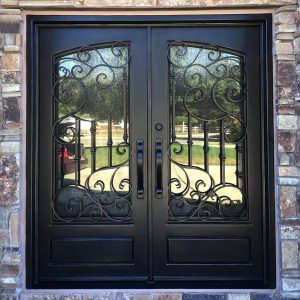
A 5′ exterior French door is a double-door unit with a nominal width of 60 inches, typically configured as two 30-inch panels. The defining characteristic is the glass-to-frame ratio — French doors feature large glass lites that maximize natural light while maintaining the security and thermal performance required for exterior applications. This size is commonly specified for residential patios, commercial side entrances, and villa projects where a single door feels too narrow and a full 6-foot opening is structurally unnecessary.
The Critical Rough Opening (RO) Calculation
The rough opening for a 5-foot French door is not simply 60 inches. The frame adds 2 to 4 inches depending on jamb width, and you need additional clearance for shimming and leveling. The standard rough opening for a 5’0″ French door is typically 62 inches wide by 82.5 inches high for a 6’8″ door unit.
Manufacturers vary in their exact requirements. Some aluminum systems with slim profiles need only 61.5 inches; wood units with thicker jambs may require 62.5 inches. For B2B buyers, this variance matters because it affects framing costs, header sizes, and installation labor. Always request the technical datasheet from your supplier and verify the RO against your project drawings before framing begins. A mistake at this stage costs time and money on site.
French Door vs. Double Door: What’s the Difference?
The terms are often used interchangeably, but procurement professionals should understand the distinction. A double door simply refers to any two-panel configuration. A French door specifically describes a style where the panels are primarily glass, divided by vertical stiles and rails. In the 5’0″ format, a true French door maximizes natural light, whereas a standard double door might feature a solid lower panel — useful for privacy or impact resistance.
For exterior applications, this distinction affects performance. Full-lite French doors have a higher glass-to-frame ratio, making them thermal weak points. Divided-lite configurations (Colonial, Prairie, or 15-lite patterns) add structural rigidity because the muntin bars create additional support across the panel. In high-wind zones, divided lites often outperform full-lite units of the same width.
What Are the Standard Height Options for 5′ French Doors?
The two most common heights are 6’8″ (80 inches) and 8’0″ (96 inches). The 6’8″ height is the residential standard, matching interior door heights and requiring a standard 82.5-inch rough opening. The 8’0″ height creates a more dramatic entrance but introduces engineering considerations — taller glass panes weigh more, require stronger hinges, and demand more rigorous wind load testing.
For 8’0″ units, buyers should expect heavier-duty hardware. A standard 5’0″ door at 6’8″ uses three hinges per panel. At 8’0″, you need the same hinge count but with higher weight ratings. Some manufacturers also recommend reinforced stiles for tall units to prevent sagging over time.
What Materials Work Best for a 5’0″ Exterior French Door?
Three material categories dominate the market: thermal-break aluminum, solid wood, and fiberglass. Each has distinct trade-offs that matter depending on your project location and performance requirements.
Thermal-Break Aluminum: The Structural Choice
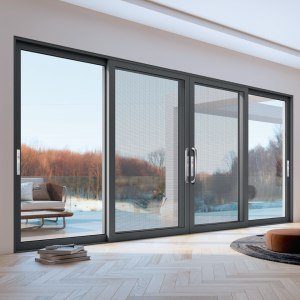
Thermal-break aluminum uses polyamide strips to separate the interior and exterior metal frames, preventing thermal transfer and condensation. For a 5’0″ span, aluminum offers the best structural rigidity-to-weight ratio. It maintains slim sightlines — the visible frame width — which maximizes the glass area without compromising strength.
Buyers should look for specific performance metrics. Air-tightness ratings of Class 8 or higher and water-tightness ratings of Class 9A indicate a well-engineered system. These numbers come from standardized tests, and reputable suppliers provide test reports upon request. For commercial projects or high-rise residential buildings, aluminum is often the only material that meets the required design pressure ratings.
Solid Wood: The Aesthetic Option
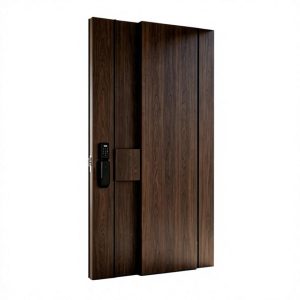
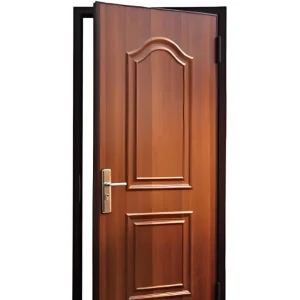
Wood French doors bring warmth and traditional appeal. Mahogany, oak, and pine are common choices. For a 5’0″ span, wood requires careful engineering — the material expands and contracts with humidity, which can affect the door’s fit and seal over time.
Wood is not always the best choice. For high-humidity coastal areas or locations with extreme temperature swings, wood doors demand more maintenance. They also have lower thermal performance than aluminum unless paired with a thermal-break frame system. Buyers should weigh the aesthetic premium against long-term maintenance costs.
Fiberglass: The Low-Maintenance Middle Ground
Fiberglass doors offer the look of wood with better dimensional stability. They resist warping, rotting, and denting. However, fiberglass frames tend to be thicker than aluminum, reducing the glass area slightly. For a 5’0″ door, this means less natural light — a consideration if the door’s primary purpose is illumination.
What Hardware Specifications Matter for a 5′ French Door?
A 5’0″ door carries significant weight, especially with full-lite glass. The hardware must be engineered accordingly.
Multi-Point Locking Systems
A single-point lock is insufficient for a 5’0″ exterior door. Multi-point locking systems shoot bolts into the top and bottom of the frame when the handle is lifted, securing the door along its entire height. This prevents warping, improves security, and creates a tighter seal against air and water infiltration.
Buyers should specify multi-point locks with hardened steel bolts and a minimum of three locking points per panel. For commercial projects, consider systems with anti-pick cylinders and reinforced strike plates.
Hinge Requirements
Standard residential hinges cannot support a 5’0″ French door. Each panel requires three heavy-duty hinges rated for the door’s total weight. A full-lite 5’0″ door at 6’8″ can weigh anywhere from 80 to 150 pounds per panel, depending on glass thickness and frame material. Verify the hinge weight rating against your door’s actual weight before ordering.
Inswing vs. Outswing Configurations
The choice between inswing and outswing affects hardware, weatherstripping, and screen integration. Inswing doors are more common in residential settings because they allow for exterior storm doors. Outswing doors require different hinges (often concealed or heavy-duty exposed types) and must be specified at the time of ordering to ensure proper water drainage and weatherstripping.
Building codes in some regions mandate outswing for certain egress applications. Check local requirements before finalizing your configuration.
How Do Wind Load and Building Codes Affect 5′ Exterior French Doors?
A 5’0″ door in Miami faces different engineering requirements than the same door in Seattle. Wind load — the pressure exerted by wind on the door’s surface — determines the required frame thickness, glass thickness, and overall structural design.
Design Pressure (DP) Ratings
Design Pressure ratings measure a door’s ability to withstand wind loads without failure. In High Velocity Hurricane Zones (HVHZ) like South Florida, exterior doors must meet specific DP ratings established by local building codes. Buyers should verify that their supplier’s profile structure can be adjusted to meet the DP rating required for their project location.
Glass Specifications for Impact Zones
Impact-resistant glazing uses laminated glass with a polyvinyl butyral (PVB) interlayer. When broken, the glass shards adhere to the interlayer, preventing penetration. For 5’0″ doors in hurricane zones, this is mandatory. The glass make-up — typically 5mm glass + PVB interlayer + 5mm glass — adds weight and affects the door’s overall performance.
What Testing Standards Should Buyers Request?
Pre-shipment inspection is not optional for volume orders. Buyers should request test reports for the following:
- Water tightness testing (simulated rain and wind pressure)
- Air infiltration testing (measuring air leakage through the closed door)
- Structural wind resistance testing (applying increasing pressure until deformation or failure)
- Condensation resistance factor testing (for thermal performance)
These tests follow standardized protocols. Suppliers who cannot provide third-party test reports for their 5’0″ configurations should be flagged as high-risk. The absence of test data means you are accepting the supplier’s word without verification — a dangerous position for a volume order.
How to Evaluate 5 Exterior French Doors Suppliers
Beyond product quality, supplier evaluation requires examining manufacturing capability, quality control processes, and logistics reliability. The following framework helps buyers make defensible decisions.
Supplier Evaluation Framework
| Criterion | What to Verify | Red Flag |
|---|---|---|
| Manufacturing capacity | Annual production volume, number of production lines | Vague answers about capacity |
| Quality control | In-house testing equipment, inspection frequency | No documented QC process |
| Export experience | Customs documentation capability, shipping volume | No experience with your target market |
| Customization capability | Ability to modify profiles, colors, hardware | Limited color options or hardware choices |
| Financial stability | Payment terms flexibility, company registration | Pressure for 100% upfront payment |
| Communication | Response time, technical knowledge of staff | Sales-only contacts without technical support |
Questions to Ask Before Ordering
- Can you provide test reports for your 5’0″ configuration in my target market’s wind zone?
- What is your pre-shipment inspection process, and can I arrange third-party inspection?
- What is your MOQ for custom colors and hardware finishes?
- What is the lead time for standard versus custom configurations?
- How do you handle defects found after arrival at the job site?
Avoid Suppliers Who…
- Cannot provide technical datasheets with specific performance ratings
- Quote prices without asking about your project location and wind load requirements
- Claim all sizes are “standard” without explaining their testing coverage
- Offer significantly lower prices than competitors without explaining why
- Cannot name the specific testing standards their products meet
Choose A If… Choose B If…
Choose a thermal-break aluminum supplier if your project is in a high-wind zone, requires slim sightlines, or demands high thermal performance. Choose a wood supplier if the project is residential, climate-controlled, and aesthetics take priority over maintenance costs. Choose a fiberglass supplier if you need low maintenance and are willing to accept thicker frames.
What Manufacturing Capabilities Should a 5′ French Door Factory Have?
The production process for a 5’0″ exterior French door involves multiple precision stages. Understanding what happens inside a factory helps buyers ask better questions and evaluate supplier claims.
CNC Machining and Profile Processing
Aluminum profiles are cut, milled, and drilled using CNC machines. Precision matters — a tolerance of ±0.5mm affects how the door seals and operates. Buyers should ask about the age and maintenance of CNC equipment, as well-calibrated machines produce consistent results across large batches.
Surface Treatment and Finishing
Aluminum frames typically undergo anodizing or powder coating. Powder coating provides better durability and color consistency. For dual-color options — white interior, bronze exterior — the factory must have the capability to apply different finishes to different sides of the profile. This requires specialized spray lines and careful masking during the coating process.
Glass Fabrication and Sealing
Glass units are assembled in controlled environments to prevent dust and moisture contamination. The sealing process — applying butyl and polysulfide to create an airtight unit — determines the glass’s long-term performance. For 5’0″ doors, the glass unit must be precisely sized to fit the frame without excessive play or pressure.
What Is the Typical Production Process for a 5′ Exterior French Door?
- Profile cutting and machining: Aluminum profiles are cut to length and CNC-machined for drainage holes, hardware locations, and corner joints
- Frame assembly: Corner crimping or screw-pin assembly joins the profiles into a rigid frame
- Glass unit fabrication: Glass panes are cut, cleaned, and sealed into insulated glass units with desiccant
- Glazing: The glass unit is fitted into the frame with setting blocks and gaskets
- Hardware installation: Multi-point locks, hinges, and handles are mounted and adjusted
- Weatherstripping: Seals are applied around the perimeter to ensure air and water tightness
- Quality inspection: Each door undergoes dimensional checks, hardware function tests, and visual inspection
- Packaging: Doors are wrapped in protective film, crated, and prepared for shipment
What Quality Control Processes Matter for Volume Orders?
Consistency is the biggest challenge in volume manufacturing. The first door in a batch must match the last door in the same batch — and both must match the sample you approved.
Multi-Stage Inspection
A robust QC process includes incoming material inspection, in-process checks during machining and assembly, and a final pre-shipment inspection. Buyers should ask for the factory’s inspection checklist and request that photos or videos of the final inspection be shared before shipment.
Random Sampling vs. Full Inspection
For high-value orders, full inspection is preferable to random sampling. Some buyers hire third-party inspection agencies to conduct pre-shipment checks. This adds cost but provides independent verification. For large construction projects, the cost of a defective batch far exceeds the inspection fee.
How Do OEM and ODM Work for 5′ Exterior French Doors?
Original Equipment Manufacturing (OEM) means the factory produces doors to your specifications — your dimensions, your hardware, your branding. Original Design Manufacturing (ODM) means the factory designs the product, and you choose from their existing designs with modifications.
Private Label Opportunities
For hardware distributors and building supply companies, private labeling allows you to sell 5’0″ French doors under your own brand. The factory applies your logo to the door, packaging, and documentation. This requires a factory-direct relationship and clear agreements on quality standards and liability.
Customization Options
Customization for 5’0″ French doors typically includes:
- Frame color (standard RAL colors or custom matching)
- Glass type (clear, frosted, Low-E, laminated, tinted)
- Hardware finish (matte black, bronze, chrome, custom powder coat)
- Lite configuration (full-lite, 6-lite, 9-lite, 15-lite patterns)
- Frame profile modifications to meet local building codes
What Are the Ordering Process, MOQ, and Lead Times?
Standard 5’0″ French doors with common configurations typically have lower minimum order quantities — often 10 to 20 units. Custom colors, special glass, or modified profiles increase the MOQ to 50 units or more, depending on the factory’s production setup.
Lead times vary:
- Standard configurations: 15-25 days from order confirmation
- Custom colors or hardware: 25-35 days
- Modified profiles for specific wind zones: 30-45 days
These timelines assume production capacity is available. During peak construction seasons, lead times may extend. Buyers should confirm capacity and lead times before committing to project schedules.
Shipping and Logistics
For international orders, factories ship via Full Container Load (FCL) or Less than Container Load (LCL). FCL is more cost-effective for large orders — typically 20 to 40 units per container depending on door size. LCL works for smaller orders but incurs higher per-unit shipping costs and longer transit times.
Customs documentation matters. A factory with export experience provides the packing list, proforma invoice, and customs declarations needed to clear ports without delays. Missing or incorrect documentation can hold a container at port for days, disrupting construction schedules.
Our Approach to 5′ Exterior French Doors Manufacturing
The technical specifications covered above represent the baseline for professional procurement. As a factory-direct manufacturer, we align our production processes with these standards.
Our approach to the 5’0″ span focuses on adjustable profile structures. We modify mullion and jamb thickness to meet the wind load and building code requirements of your target market — whether that is a residential villa in a mild climate or a commercial project in a hurricane zone. This flexibility is built into our design process, not added as an afterthought.
Quality control follows the standards discussed throughout this guide. Every batch of 5′ exterior French doors undergoes pre-shipment inspections, including water tightness and air infiltration tests. We provide test reports and technical datasheets so buyers can verify compliance before shipment. [1]
Logistics and Documentation for Global Buyers
We operate on a direct supply model from our factory. This means no middleman markup, but it also means we handle the logistics complexity directly. We manage FCL and LCL shipments, delivering directly from our factory to your warehouse or job site.
With experience in foreign trade, we provide full customs documentation, including packing lists and proforma invoices. For contractors working to tight deadlines, this simplifies the import process and reduces the risk of port delays. [2]
Collaboration Models for Volume Projects
For developers and distributors, we offer OEM and ODM arrangements. You can order 5’0″ doors with specific hardware finishes, custom glass configurations, and your own brand name. Bulk orders receive prioritized production slots, ensuring consistent color matching across large batches — a common challenge with smaller suppliers.
Because we are the factory, we remove the middleman markup. This is critical for B2B buyers who need to maintain profit margins on large-scale builds. Factory-direct communication also reduces the risk of specification errors that occur when information passes through multiple intermediaries.
References
[1] American Architectural Manufacturers Association. “AAMA/WDMA/CSA 101/I.S.2/A440-17, North American Fenestration Standard/Specification for windows, doors, and skylights.” https://aamanet.org
[2] International Organization for Standardization. “ISO 9001:2015 Quality management systems — Requirements.” https://www.iso.org/standard/62085.html
Ready to discuss your project requirements or request a technical datasheet for our 5’0″ aluminum or wood French doors? Contact our team today.