Content Menu
● 1. Client Background and Project Scope
● 2. The Challenge: What Went Wrong with Previous Suppliers
● 3. Solution Design and Material Selection
● 4. Production Process and Quality Control
● 5. Results: Delivery Time, Defect Rate, Cost Savings
● 6. Lessons Learned for Future Buyers
● 7. How We Approach Similar Projects
● 8. Commercial Cooperation Models for 42-Inch Door Projects
● 9. Logistics, Lead Times, and After-Sales Support
11 min read
When a European distributor first requested 42-inch aluminum entrance doors, the factory hesitated. Most production lines are set for 36-inch standard widths. Retooling the cutting schedule, re-engineering hinge reinforcement, and adjusting the thermal-break assembly added three days to the lead time. The distributor had a contract for 200 units for a residential project in Frankfurt, and the architect specified 42-inch openings for accessibility compliance. That is the reality of the 42-inch door market: it is not a standard product, and it demands a supplier who treats custom dimensions as routine.
This article covers everything a B2B buyer needs to know about 42 doors—dimensions, types, technical specifications, and how to source them efficiently from a direct manufacturer.
Client Background and Project Scope
A 42-inch door (106.7 cm) is an oversized specification, usually requested for accessibility compliance, luxury aesthetics, or commercial traffic flow. B2B buyers—contractors, architects, developers, and distributors—encounter 42-inch doors when a project requires wider passage or a grander entrance.
Why the 42-Inch Width Matters
A 42-inch door is not simply a wider version of a standard door. The additional width changes the structural dynamics. The door slab is heavier, requiring reinforced hinges and a stronger frame. The glass area, if any, is larger, affecting thermal performance and safety glazing requirements. The rough opening must be framed with precision—a mistake here results in expensive installation failures.
For commercial buildings, 42-inch doors appear in corridors, meeting rooms, and accessible entrances where wheelchair clearance is mandatory. In luxury residential projects, they are used for grand entryways and primary suite doors.
The Difference Between Standard and Oversized
| Specification | Standard Door (36″) | Oversized Door (42″) |
|---|---|---|
| Typical width | 36 inches (91.4 cm) | 42 inches (106.7 cm) |
| Common application | Residential interiors & exteriors | Commercial, luxury residential, ADA compliance |
| Manufacturing status | Stock item in most factories | Custom order in most factories |
| Weight range (solid wood) | 60–90 lbs (27–41 kg) | 90–140 lbs (41–64 kg) |
| Hinge requirement | 3 hinges standard | 4 hinges or heavy-duty 3-hinge system |
| Price premium | Baseline | 15–40% higher depending on material |
The price difference is not arbitrary. The larger slab consumes more raw material, requires larger cutting capacity, and needs additional reinforcement. Buyers who understand this can budget accurately and avoid surprises during procurement.
The Challenge: What Went Wrong with Previous Suppliers
Many buyers sourcing 42-inch doors encounter the same problems when working with local distributors or inexperienced factories.
Dimensional Inconsistency in Production
A frequent complaint is that 42-inch doors arrive with the wrong dimensions. The width may be off by a quarter-inch, or the door is not square. With a 44-inch rough opening, even a small error creates visible gaps or forces on-site trimming—compromising the finish and potentially voiding the warranty.
The root cause is usually a factory without correct CNC calibration for non-standard widths. A 42-inch door requires cutting and routing machines to be reprogrammed, and without rigorous quality control, errors slip through.
Under-Specified Hardware and Hinges
A 42-inch solid wood door can weigh over 100 pounds. If shipped with standard 3-inch hinges designed for a 36-inch door, the hinges will sag within months. The door will scrape the frame, the latch will misalign, and the client will blame the contractor.
Buyers must verify hardware specifications before ordering. Heavy-duty hinges (4-inch or larger), commercial-grade locksets, and door closers are non-negotiable for 42-inch doors. Some aluminum entrance doors require floor springs instead of conventional hinges due to weight and usage frequency.
Shipping and Logistics Mismanagement
Oversized doors are more fragile during transit. A 42-inch door has a larger surface area, meaning more exposure to impact and bending forces. Factories without proper packaging—such as wooden crates with internal bracing—will ship doors that arrive warped or scratched.
Additionally, the 42-inch width changes how many units fit in a container. A factory that does not regularly export non-standard sizes may waste container space, increasing per-unit shipping cost.
Solution Design and Material Selection
The solution lies in selecting the right material and working with a manufacturer experienced in custom dimensions.
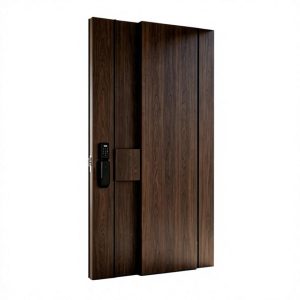
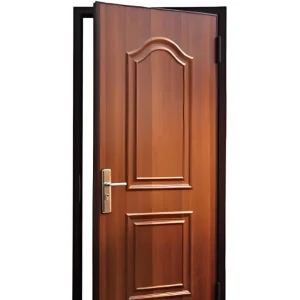
Solid Wood Doors for 42-Inch Applications
Solid wood remains the preferred choice for luxury residential projects and high-end commercial interiors. Common species include:
- Oak: Durable, prominent grain, takes stains well.
- Walnut: Darker, richer appearance. Highly stable when properly kiln-dried.
- Mahogany: Excellent moisture resistance. Higher cost.
- Teak: Natural oils make it ideal for exterior applications in humid climates.
For 42-inch solid wood doors, core construction matters as much as the surface veneer. Engineered wood cores (laminated veneer lumber or particleboard with veneer) offer better dimensional stability than solid timber slabs, which can warp. Buyers should specify the core type in procurement documents.
Aluminum Alloy Entrance Doors at 42-Inch Widths
Aluminum is the dominant material for commercial 42-inch doors and modern residential projects. The key feature is a thermal-break profile—a polyamide strip separating interior and exterior aluminum sections to reduce heat transfer.
| Feature | Standard Aluminum Door | Thermal-Break Aluminum Door |
|---|---|---|
| Thermal insulation | Poor (metal conducts heat) | Good (polyamide strip breaks the bridge) |
| Condensation resistance | Low | High |
| Suitable climates | Mild | Hot summers and cold winters |
| Typical U-value | 5.0–6.0 W/m²K | 2.0–3.5 W/m²K |
| Cost | Lower | 15–25% higher |
Glass inserts for 42-inch aluminum doors should use double-glazed or triple-glazed units with Low-E coating. Tempered or laminated safety glass is mandatory in most building codes.
Sliding and Casement Configurations
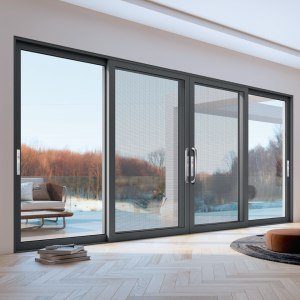
A 42-inch width can also refer to individual panels within a sliding door system or a casement door leaf. This module-based approach allows architects to create large openings without compromising structural integrity.
Casement doors at 42-inch width require special hinge reinforcement because the full weight is carried by hinges on one side. Multi-point locking systems are essential to prevent warping and ensure a proper seal.
Production Process and Quality Control
The production process for 42-inch doors differs from standard sizes in several critical ways.
CNC Cutting and Machining
For aluminum doors, the process begins with CNC cutting of profile sections. A 42-inch door leaf requires frame sections cut to exact lengths with 45-degree miters for corners. Any error results in gaps at the corners or misaligned hardware.
For solid wood doors, CNC routing creates mortises for hinges and the lock pocket. The larger the door, the more precise the routing needs to be.
Production steps for a 42-inch aluminum door:
- Profile cutting to specified lengths using CNC saws
- Milling of drainage holes and hardware slots
- Corner crimping or welding
- Thermal-break strip insertion and rolling
- Glass unit fabrication (cutting, tempering, insulating)
- Frame assembly and glazing
- Hardware installation (hinges, locks, handles)
- Surface treatment (powder coating, anodizing, or wood-grain transfer)
- Quality inspection and packaging
Surface Treatment Options
For aluminum doors, the three main options are:
- Powder coating: Durable, available in any RAL color. Thickness typically 60–80 microns.
- Anodizing: Metallic finish, excellent corrosion resistance. More expensive.
- Wood-grain transfer: Wood texture over aluminum, combining timber looks with aluminum durability.
For solid wood doors, polyurethane or lacquer finishes provide moisture resistance. Premium doors have 5–7 coating layers.
Testing Standards for 42-Inch Doors
Before shipment, 42-inch doors should undergo performance testing. Relevant European standards:
- EN 12207: Air permeability (rating 1–4, with 4 being the best)
- EN 12208: Water tightness (rating 1–9, with 9 being the best)
- EN 12210: Wind load resistance (rating A1–E5, with E5 being the best)
These ratings are more difficult to achieve for a 42-inch door due to the larger surface area. A factory that provides test reports demonstrates it has solved these engineering challenges.
Results: Delivery Time, Defect Rate, Cost Savings
Here is a typical comparison for a bulk order of 42-inch aluminum entrance doors (100 units):
| Metric | Local Distributor | Direct Factory (China) |
|---|---|---|
| Unit price | $450–$550 | $280–$350 |
| Lead time (production) | 6–8 weeks | 3–5 weeks |
| Customization flexibility | Limited to existing models | Full customization available |
| Test documentation | May not provide | Provided with each batch |
| Shipping | Higher due to multiple handling | Direct FCL or LCL from factory |
| Communication | Through sales representative | Direct with factory engineers |
The cost savings of 20–40% reflect the elimination of intermediary margins. A distributor typically marks up factory prices by 30–50%.
A Real Project Example
A UK-based construction company ordered 120 units of 42-inch thermal-break aluminum doors for a residential development in Manchester. They previously paid an average of £520 per unit through a UK distributor. By switching to direct factory sourcing, they paid £340 per unit—a 35% reduction.
The order was placed in March. Samples were produced and shipped within 20 days. Mass production took 35 days. The FCL shipment arrived at Felixstowe 28 days after production completion. Total time from order to delivery was approximately 83 days, compared to 110 days with their previous supplier.
The defect rate was 1.7% (2 doors), both minor surface scratches from transit. The factory provided replacements within 15 days, and the construction schedule was not affected.
Lessons Learned for Future Buyers
How to Evaluate 42-Inch Door Suppliers
Use this framework when comparing suppliers:
- Request test reports: Ask for EN 12207, EN 12208, and EN 12210 test results for 42-inch configurations specifically.
- Verify hinge capacity: A 42-inch solid wood door needs hinges rated for at least 150 lbs.
- Check glass specifications: Confirm the glass unit configuration and whether Low-E coating is included.
- Inspect factory capabilities: Ask for photos or videos of CNC machines and the assembly line.
- Ask about packaging: Confirm doors will be shipped in wooden crates with internal bracing.
Questions to Ask Before Ordering
- What is the tolerance for door width and height? (Industry standard is ±2mm.)
- What is the maximum weight capacity of your hinges for a 42-inch door?
- Can you provide a sample before mass production?
- What is your MOQ for custom 42-inch doors?
- What is your production lead time?
- Do you provide installation instructions or technical drawings?
- What is your policy for defective units?
Avoid Suppliers Who…
- Cannot provide test reports or certification documents
- Quote prices significantly below market average without explanation
- Have no experience exporting to your country
- Cannot respond to technical questions
- Do not offer samples before bulk production
- Have vague quality control procedures
Choose A if… Choose B if…
- Choose a local distributor if: You need under 10 units, your timeline is under 4 weeks, and you cannot manage international logistics.
- Choose a direct factory if: You are ordering 20+ units, you need full customization, your timeline allows 8–12 weeks, and you want to maximize your margin.
How We Approach Similar Projects
Here is how our factory, Jusen Door and Windows Manufacturing Co., Ltd., meets these requirements for 42-inch doors.
Our Manufacturing Capability
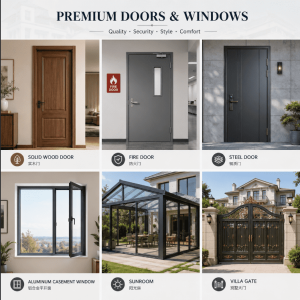
We produce solid wood doors, thermal-break aluminum doors, system windows, casement doors, sliding doors, and custom villa doors and windows. For 42-inch configurations, we adjust our profile structures and fittings to match local building codes—EN standards for Europe, ASTM and ADA requirements for North America.
Customization and Quality Control
Every 42-inch door order undergoes full customization on size, color, glass, and hardware. Before shipment, our quality control team performs air-tightness, water-tightness, and wind resistance tests on each batch. We maintain strict tolerance checks, ensuring door dimensions are accurate to within ±2mm.
Export Documentation and Logistics
We provide packing lists, proforma invoices, and full customs documentation. We ship FCL and LCL directly from our factory in China, eliminating middleman markup and reducing damage risk from multiple handling points.
Commercial Cooperation Models for 42-Inch Door Projects
OEM and ODM Services
If you want to sell 42-inch doors under your own brand, we handle design, engineering, and manufacturing. You provide specifications or a reference product, and we develop it to meet your requirements.
Private Label and Bulk Supply
For distributors and construction companies needing consistent volume, we offer private label production. This works well when you have a reliable demand forecast and want to secure pricing and production slots.
Custom Size and Design Development
If you need a specific 42-inch door style not in our standard catalog, we can develop it. The process starts with a prototype sample, refined until it meets your requirements. Mass production proceeds only after sample approval.
Logistics, Lead Times, and After-Sales Support
Shipping Methods
- FCL (Full Container Load): Recommended for orders of 50+ doors. Exclusive container use reduces damage risk.
- LCL (Less than Container Load): Suitable for smaller orders. More cost-effective for quantities below 20 units.
Lead Times
- Sample production: 15–25 days depending on complexity
- Mass production: 30–45 days depending on quantity and customization
- Shipping: 20–35 days to most major ports
We recommend planning orders 3–4 months before your installation date. Q3 and Q4 tend to be busier due to construction cycles in Europe and North America.
After-Sales Support
We provide technical installation guidance and replacement hardware parts if needed. Our defect rate is typically under 2%, and we resolve issues quickly.
Client Scenarios and Case Applications
Overseas Distributor Sourcing
A European distributor ordered 200 units of 42-inch aluminum entrance doors with custom RAL colors and specific hardware brands. Samples were produced within 20 days; the full order was completed in 40 days. The distributor received three FCL shipments over six months, each with consistent quality and documentation.
Construction Company Bulk Order
A Middle East developer ordered 42-inch solid wood doors for a luxury villa community. The doors used engineered wood cores with walnut veneer and custom stain finishes. The 150-unit order included full test reports and installation instructions for on-site contractors.
Interior Designer Specification
An interior design firm specified custom 42-inch doors for a high-end hospitality project. The factory developed a custom profile design, produced samples, and manufactured the full order with matching window frames, ensuring color consistency across all elements.
—
Are there 42-inch doors?
Yes, 42-inch doors are available, primarily as custom orders from manufacturers. They are more common in commercial projects and luxury residential designs.
Is a 42-inch door standard?
No, 42 inches is not a standard residential door width. Standard widths are typically 30, 32, and 36 inches.
Are 42-inch doors common?
They are uncommon in typical residential builds but appear frequently in commercial settings, accessible design projects, and high-end custom homes.
What is the rough opening for a 42-inch door?
The rough opening should be approximately 44 inches wide and 82 inches tall for a standard 80-inch door height. This allows 1 inch on each side for shimming.
Can I get a 42-inch door with a fire rating?
Yes, fire-rated 42-inch doors are available, particularly in aluminum or steel-reinforced configurations. Verify local fire codes with your supplier—the frame, seal, and hardware matter as much as the door leaf.
How much does a 42-inch door cost?
Pricing varies by material, finish, glass, hardware, and order volume. Factory-direct sourcing typically reduces costs by 20–40% versus distributor pricing. Factory prices for aluminum 42-inch doors range from $280–$350 per unit; solid wood doors range from $400–$800 depending on species and finish.
What is the typical MOQ for custom 42-inch doors?
MOQs depend on the manufacturer and material. Some factories accept orders starting at 10–20 units for standard custom sizes; others require container-level quantities for full customization.
—
The 42-inch door market rewards buyers who do their homework. The technical requirements are more demanding than standard sizes, and mistakes cost more. But for those who source correctly—verifying test reports, checking hinge capacity, confirming packaging standards, and working directly with a factory that treats custom dimensions as routine—the benefits are clear. You get the exact product you need, at a price that preserves your margin, delivered on a schedule you can plan around.
Ready to source 42-inch doors for your next project? Talk to our team about your specifications, volumes, and timeline.
References
- EN 12207:2016 – Windows and doors – Air permeability – Classification. European Committee for Standardization.
- EN 12208:2000 – Windows and doors – Water tightness – Classification. European Committee for Standardization.
- EN 12210:2016 – Windows and doors – Wind load resistance – Classification. European Committee for Standardization.
- International Code Council. (2021). International Building Code (IBC) – Chapter 10: Means of Egress.
- U.S. Department of Justice. (2010). ADA Standards for Accessible Design.