Content Menu
● 1. External Glass Door: A Complete B2B Sourcing Guide for Bulk Buyers
● 2. What Is an External Glass Door and What Types Are Available?
● 3. What Performance Standards Should You Verify for External Glass Doors?
● 4. How Should You Evaluate an External Glass Door Supplier?
● 5. What Are the Key Logistics and Supply Chain Considerations for External Glass Door Orders?
● 6. How Is the Price of External Glass Doors Determined?
● 7. What Does the External Glass Door Production Process Look Like?
● 8. How Does Quality Control Work in External Glass Door Manufacturing?
● 9. What Customization and OEM/ODM Options Are Available for External Glass Doors?
● 10. What Are the Ordering Process, MOQ, Lead Time, and Shipping Options?
● 11. What Certifications and Industry Standards Should External Glass Door Suppliers Hold?
● 12. What Does the Production Process Look Like from Raw Material to Finished External Glass Door?
● 13. How Does Jusen Door and Windows Manufacturing Co., Ltd. Meet These Standards?
● 14. What Are the Partnership Models for Working with a Door Manufacturer?
● 15. What Are Some Real-World Scenarios and How Were They Solved?
● 16. What Questions Should You Ask Before Ordering External Glass Doors?
● 17. What Are the Common Questions About External Glass Doors?
16 min read
External Glass Door: A Complete B2B Sourcing Guide for Bulk Buyers
What Is an External Glass Door and What Types Are Available?
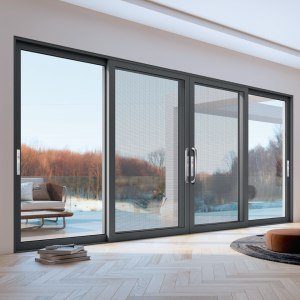
An external glass door is a building entrance system with glass panels and a supporting frame—typically aluminum, steel, or wood—designed to withstand outdoor weather while providing access, natural light, and thermal insulation. Primary types include aluminum-framed, frameless, sliding, and hinged configurations.
1.1 Aluminum-Framed External Glass Doors
Aluminum-framed doors dominate the commercial and high-end residential markets. Frames are extruded from 6063-T5 aluminum alloy, offering strength and corrosion resistance. For external applications, thermal break profiles—polyamide strips separating interior and exterior aluminum sections—are essential, reducing heat transfer by up to 40% compared to non-thermal-break profiles.
Common frame depths range from 40mm for lightweight doors to 80mm for heavy-duty external systems. Buyers should check profile wall thickness: standard is 1.4mm to 1.8mm. Anything below 1.2mm compromises wind load resistance.
1.2 Frameless Glass Doors
Frameless doors rely on the glass for structural integrity. They use tempered or laminated glass with thicknesses of 10mm to 12mm (tempered) and 8.8mm to 13.52mm (laminated safety glass). Hardware—pivot hinges, patch fittings, and floor springs—carries the entire load.
The appeal is visual: uninterrupted sightlines favored for retail storefronts and modern office lobbies. The trade-off is precision. A frameless door requires site measurements with a tolerance of ±2mm. If the opening is out of square, the door will bind or leave visible gaps.
1.3 Sliding vs. Hinged Configurations
Sliding external glass doors save space and suit balconies, terraces, and patio access. Multi-track configurations—2 to 5 tracks—allow up to 6 panels to stack away. The downside is air-tightness: sliding doors typically achieve Class 6–7 per EN 12207, while hinged doors reach Class 8.
Hinged doors offer superior sealing because compression hardware presses the gasket against the frame. They can integrate panic bars and multi-point locking systems, making them suitable for commercial egress routes.
1.4 Glass Selection: Double-Glazed vs. Triple-Glazed Units
Double glazing—two 5mm panes separated by a 12mm to 20mm argon-filled cavity—achieves U-values of 1.1 to 1.6 W/m²K. Triple glazing pushes U-values down to 0.6 to 0.9 W/m²K, the range required for passive house certification.
Low-E coatings reflect infrared radiation while allowing visible light to pass. A selectivity ratio above 1.8 indicates high performance. For sound insulation, laminated glass with PVB or SGP interlayers reduces noise by 10 to 15 dB. SGP offers tear strength roughly 5 times that of PVB, making it preferred for hurricane-prone regions.
What Performance Standards Should You Verify for External Glass Doors?
The three parameters determining real-world performance are air-tightness, water-tightness, and wind load resistance. Buyers should request the actual test data sheet, not just a certificate.
2.1 Air-Tightness, Water-Tightness, and Wind Load
Air-tightness is measured per EN 12207, with Class 4 being the highest rating for doors. At 600 Pa pressure, leakage must not exceed 0.75 m³/h·m². Poor air-tightness leads to drafts, energy loss, and whistling in high winds.
Water-tightness follows EN 12208. Class 9A—the highest practical classification—means no water ingress during a 5-minute test at 600 Pa. For coastal or high-rainfall regions, Class 9A should be a minimum requirement.
Wind load resistance is classified per EN 12210. Class C5, withstanding 2,000 Pa, is standard for high-rise applications. The frame’s reinforcement determines this rating. A 1.4mm wall thickness profile with steel reinforcement outperforms a 2.0mm unreinforced profile.
2.2 Thermal Performance: U-Value and Condensation Resistance
U-value measures heat transfer through the entire door system. For cold climates, a compliant external door should achieve ≤ 1.4 W/m²K. The frame and glass both contribute—a high-performance glazing unit with a poorly designed frame will still underperform.
Condensation resistance is quantified by the temperature factor (fRsi). A value of ≥ 0.75 is recommended to prevent mold growth. Warm-edge spacers reduce heat loss at the glass edge by up to 15% compared to standard aluminum spacers.
2.3 Security and Safety Certifications
Burglar resistance ratings follow EN 1627. RC2 is standard for residential ground-floor doors; RC3 is recommended for commercial ground floors. Multi-point locking systems with mushroom-head pins and reinforced strike plates achieve these ratings.
Safety glass is mandatory in most jurisdictions for door panels below 1,500mm from floor level. Tempered glass (EN 12150) shatters into small, blunt pieces. Laminated glass (EN 14449) holds together when broken, resisting forced entry and preventing injury.
Fire-rated external glass doors are available with E30 to EI60 ratings, requiring specialized framing, intumescent seals, and ceramic or wired glass. They cost significantly more and are specified only when building codes require them.
How Should You Evaluate an External Glass Door Supplier?
Evaluation comes down to verifying four things: cost structure, production capacity, customization capability, and quality control rigor.
3.1 The Factory-Direct Advantage
Buying direct from a factory eliminates the trading company markup, which typically adds 15% to 30% to the base price. However, “factory-direct” requires verification. Ask for production output in units per month—a serious manufacturer produces 5,000+ doors monthly. Ask for photos of the production floor and, if possible, a video call walkthrough.
More important than price is adjustment capability. A factory that exports regularly will adjust profile structures and fittings to match local building codes. A trading company cannot do this. A factory can.
3.2 Customization Capability
Standard sizes rarely fit complex architectural designs. Key questions to ask:
- What is the maximum door height without reinforcement? (Typically 3,000mm. With steel inserts, up to 4,500mm.)
- How many RAL colors are available? A full RAL range suggests in-house powder coating lines.
- Can the glass be customized? Tinted, patterned, silk-screened, or curved options are available.
- Which hardware brands are compatible? Hoppe, GU, Roto, and similar premium brands indicate quality components.
OEM means you provide the design and the factory manufactures to your drawings. ODM means the factory adapts its existing product line—faster lead times and proven performance, but less design control.
3.3 Quality Control Protocols
A reputable factory tests air-tightness, water-tightness, and wind resistance for each production batch, not just annually. Ask for incoming material inspection records. Aluminum billet should be grade 6063-T5. Third-party inspection should be welcomed—hesitation to allow SGS or BV inspection is a warning sign.
What Are the Key Logistics and Supply Chain Considerations for External Glass Door Orders?
Logistics planning requires attention to lead times, shipping modes, and export documentation.
4.1 Lead Times and MOQ
Typical production lead time for custom external glass doors is 15 to 30 days. Custom sizes, special glass, or unique RAL colors add 5 to 10 days. Sea freight adds another 15 to 30 days depending on destination port.
Minimum order quantities for factory-direct orders are often 20 to 50 units or one 20ft container. A 20ft container holds approximately 100 to 150 standard doors. Q3 and Q4 are peak construction seasons, so orders should be placed 60 to 90 days in advance.
4.2 FCL vs. LCL Shipping
Full Container Load (FCL) is cost-effective for orders above 30 cubic meters and reduces handling damage risk. Less than Container Load (LCL) suits sample orders or small projects—higher cost per cubic meter but better flexibility.
Proper packing is non-negotiable. Doors should be shipped in plywood crates or reinforced cartons with corner protectors. Glass edges need foam protection, and frames need wrapping to prevent scratches.
4.3 Export Documentation
A supplier experienced in foreign trade provides a packing list, proforma invoice, commercial invoice, and bill of lading. Certain markets require additional documents: certificate of origin, phytosanitary certificate for wooden components, and test reports for glazing certification.
The most common pain point is code compliance. A good supplier will proactively ask about the destination market’s building codes and adjust the profile structure accordingly.
How Is the Price of External Glass Doors Determined?
Understanding cost structure helps buyers compare quotes fairly.
5.1 Cost Components
| Component | Share of Total Cost | Notes |
|---|---|---|
| Aluminum profile | 20–30% | Thermal break profiles cost 15–20% more |
| Glass | 25–35% | Triple glazing adds 30–50% over double |
| Hardware | 10–15% | Hinges, locks, multi-point systems |
| Labor & overhead | 15–25% | Manufacturing, QC, packaging |
| Shipping & insurance | 5–10% | Varies by destination |
5.2 Comparing Quotes Fairly
Always compare on a delivered cost basis: FOB price + freight + insurance + import duties + local delivery. Request a detailed bill of materials with each quote. A quote specifying 1.2mm aluminum wall thickness instead of 1.4mm is not comparable to one using the standard.
Check the price adjustment clause. Suppliers who reference the LME aluminum price index in their contracts follow industry best practice.
5.3 The Hidden Costs of Cheap Quotes
Low-cost doors often use 1.2mm aluminum wall thickness instead of the standard 1.4mm to 1.8mm, directly reducing wind load resistance. Cheap hardware may fail after 10,000 to 20,000 cycles, while premium hardware is rated for 100,000+ cycles. Installation costs are higher for poorly fabricated doors because field adjustments eat into the contractor’s margin.
What Does the External Glass Door Production Process Look Like?
Understanding manufacturing helps buyers evaluate supplier claims and identify quality issues.
6.1 Raw Material Preparation
The process starts with 6063-T5 aluminum billets, heated to approximately 500°C and extruded through steel dies. After extrusion, profiles are quenched and artificially aged to achieve the T5 temper—a process taking 4 to 6 hours that develops the alloy’s strength.
6.2 Surface Treatment
Profiles are surface-treated via anodizing (creating a protective oxide layer, typically 15 to 25 microns thick) or powder coating (a dry powder cured under heat, available in thousands of RAL colors). Coating thickness should be 60 to 120 microns for external applications.
6.3 CNC Machining and Assembly
Treated profiles are cut to size and machined using CNC equipment—drilling holes for hardware, cutting drainage slots, and milling corner joints. A tolerance of ±0.5mm is standard for frame fabrication.
Assembly involves joining frame corners with corner keys and structural sealant, installing gaskets, and fitting hardware. The glazing unit is set into the frame with setting blocks and secured with glazing beads.
How Does Quality Control Work in External Glass Door Manufacturing?
Quality control follows a multi-stage inspection process covering incoming materials, in-process checks, and finished product testing.
7.1 Incoming Material Inspection
The first checkpoint verifies the aluminum alloy grade via spectrometer testing. Glass shipments are checked for dimensions, edge quality, and coating integrity. Hardware components are sampled and tested for function.
7.2 In-Process QC Checkpoints
Inspectors check profile dimensions at extrusion, verify hole positions and slot dimensions after machining, inspect surface treatment for coating thickness and visual defects, and ensure corner joints are square within tolerance.
7.3 Pre-Shipment Testing
The final stage tests finished doors for air-tightness, water-tightness, and wind load resistance—typically one door per production batch. Buyers should ask for this test report; it provides objective evidence of performance.
What Customization and OEM/ODM Options Are Available for External Glass Doors?
Customization extends beyond size and color to glass type, hardware brands, frame profiles, and performance characteristics.
8.1 OEM (Original Equipment Manufacturing)
Under OEM, the buyer provides the design and specification, and the factory manufactures to those exact drawings. This suits unique profile designs or specific performance characteristics. The buyer owns the design and can source from multiple factories.
8.2 ODM (Original Design Manufacturing)
ODM involves the factory adapting its existing systems to the buyer’s requirements. Lead times are shorter because tooling already exists. Performance is proven because the product has been tested. This is the practical choice for most projects.
8.3 Private Label
Private label combines OEM or ODM manufacturing with the buyer’s branding. The factory applies the buyer’s logo and packaging—ideal for distributors selling under their own brand.
Decision Guide: Choose OEM if you have a proprietary design and volume to justify tooling costs. Choose ODM if you need proven performance with fast lead times.
What Are the Ordering Process, MOQ, Lead Time, and Shipping Options?
The ordering process follows a standard sequence: inquiry, quotation, sample approval, production, inspection, and shipment.
9.1 The Inquiry and Quotation Stage
Provide the supplier with your door schedule—sizes, quantities, glass specifications, and hardware requirements—plus project timeline and destination port. The supplier responds with a quotation including FOB price, lead time, and payment terms.
9.2 Sample Approval
For custom designs or new supplier relationships, a sample order is recommended. Sample lead time is typically 10 to 15 days. The cost is usually deducted from the first bulk order.
9.3 Production and Inspection
Production takes 15 to 30 days for standard configurations. Buyers should arrange pre-shipment inspection—either their own QC team or a third-party agency like SGS or BV.
9.4 Shipping and Documentation
Choose FCL for orders above 30 cubic meters, LCL for smaller orders. The supplier provides the packing list, proforma invoice, and customs documents.
What Certifications and Industry Standards Should External Glass Door Suppliers Hold?
Certifications provide objective evidence of a supplier’s capability. Buyers should verify that certifications are current and cover the products being purchased.
10.1 Quality Management Certifications
ISO 9001:2015 is the baseline quality management certification. It demonstrates documented processes for quality control, continuous improvement, and customer satisfaction.
10.2 Product Performance Certifications
Depending on the destination market, certifications may include CE marking under the Construction Products Regulation (CPR), NFRC ratings for North America, or SIRIM certification for Malaysia. Verify that products meet the specific requirements of your target market.
10.3 Third-Party Test Reports
Test reports from accredited laboratories provide the most reliable evidence of performance. Look for tests per EN 12207 (air-tightness), EN 12208 (water-tightness), and EN 12210 (wind load resistance).
What Does the Production Process Look Like from Raw Material to Finished External Glass Door?
One thing that surprises new buyers is that production is not fully automated. Skilled workers still perform assembly, hardware installation, and quality inspection by hand. This allows the flexibility that customization requires.
11.1 Extrusion and Surface Treatment
Aluminum billets are heated and extruded into profile shapes. After quenching and aging, profiles undergo surface treatment—anodizing or powder coating—and are cut to length.
11.2 Machining and Assembly
CNC machines drill holes, cut drainage slots, and mill corner joints. Profiles are assembled into frames using corner keys and structural sealant. Gaskets are installed, and hardware is fitted.
11.3 Glazing and Final Inspection
The glazing unit is set into the frame with setting blocks and secured with glazing beads. The finished door undergoes functional testing: opening and closing cycles, lock operation, and seal integrity. Only then is it packed for shipment.
How Does Jusen Door and Windows Manufacturing Co., Ltd. Meet These Standards?
As a factory-direct manufacturer of external glass doors, we align our operations with the industry standards and procurement criteria discussed above.
12.1 Factory-Direct Supply with Full Customization
We are a direct factory supplier, meaning our pricing reflects manufacturing cost rather than a trading company’s markup. Buyers work directly with the production team, not through intermediaries who cannot answer technical questions.
We offer full customization on size, color, glass specification, and hardware accessories. Our profile structure and fittings are adjustable to match local building codes—we have done this for projects across North America, Europe, Southeast Asia, and the Middle East.
12.2 Pre-Shipment Inspection and Quality Assurance
Every order undergoes pre-shipment inspection covering air-tightness, water-tightness, and wind resistance tests. We provide test data sheets with each shipment and welcome third-party inspections—SGS, BV, or your own QC team—before dispatch.
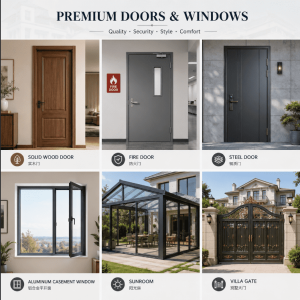
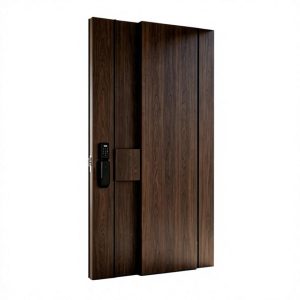
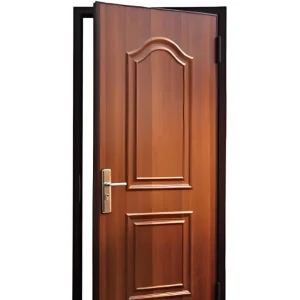
Our production capacity covers solid wood doors, thermal-break aluminum doors and windows, system windows, casement doors, sliding doors, custom villa doors and windows, sunrooms, and aluminum alloy entrance doors.
12.3 Export Experience and Logistics Support
With years of experience in foreign trade, we provide complete export documentation: packing list, proforma invoice, commercial invoice, certificate of origin, and any additional customs documents your market requires.
We ship via FCL or LCL, direct from our factory in China. You get one point of responsibility from production to port. For large construction projects, we can stagger deliveries to match your site schedule.
What Are the Partnership Models for Working with a Door Manufacturer?
Depending on your role in the supply chain—distributor, contractor, architect, or developer—you will need different levels of involvement with the factory.
13.1 OEM and ODM Collaboration
OEM: You provide the design; we manufacture to your exact drawings. This requires a higher MOQ to amortize tooling costs but gives complete design control.
ODM: We adapt our existing systems to your project requirements. Faster lead times and proven performance. This is the practical choice for most projects.
Private label: Your brand, our manufacturing. We apply your logo and packaging—ideal for distributors.
13.2 Bulk Supply for Construction Projects
We supply construction projects of any scale—from residential villas to commercial towers. Provide us with your door schedule and performance requirements, and we will propose a configuration that meets your budget and code compliance.
MOQs are flexible depending on the product line. For standard external glass doors, a typical order is one 20ft container.
What Are Some Real-World Scenarios and How Were They Solved?
These scenarios illustrate how procurement decisions play out in practice.
14.1 Coastal Project Requiring High Water-Tightness
A developer in a tropical region needed external glass doors rated for heavy rain and wind. We supplied thermal-break aluminum doors with Class 9A water-tightness and stainless-steel hardware to prevent corrosion. The project delivered on schedule with no water ingress complaints after the first monsoon season.
14.2 Passive House Standard
An architect specified U-value ≤ 0.8 W/m²K for external doors. We configured triple-glazed units with warm-edge spacers and a thermally broken frame to achieve the target. The doors passed the blower door test on the first attempt.
14.3 Tight Construction Deadline
A contractor needed 200 external glass doors within 45 days. We adjusted our production schedule and shipped via FCL to meet the deadline without compromising pre-shipment testing.
What Questions Should You Ask Before Ordering External Glass Doors?
Before placing an order, verify these points with your supplier:
- What is the aluminum profile wall thickness? (Standard: 1.4–1.8mm)
- What test data can you provide for air-tightness, water-tightness, and wind load?
- What is the maximum door height without reinforcement?
- Which hardware brands are compatible with your profiles?
- What is your production capacity per month?
- Can you accommodate third-party inspection before shipment?
- What export documentation do you provide?
- What is your MOQ for standard and custom configurations?
- What is the lead time for production and shipping?
Red Flags to Watch For
- Unwillingness to provide test data sheets—not just certificates
- Hesitation to allow third-party inspection
- Inability to specify the aluminum alloy grade used
- Quotes that do not include a bill of materials
- Very low prices without explanation of cost-saving measures
What Are the Common Questions About External Glass Doors?
What is the difference between a thermal-break and non-thermal-break external glass door?
Thermal-break doors use polyamide strips to separate interior and exterior aluminum profiles, reducing heat transfer. Non-thermal-break doors are cheaper but prone to condensation and energy loss. For most climate zones, thermal-break is recommended.
How do I choose the right glass for an external glass door?
Consider three factors: safety (tempered or laminated), thermal performance (double or triple glazing with Low-E coating), and acoustic requirements (laminated glass with PVB interlayer reduces noise by 10–15 dB). Your supplier should help balance these against budget.
What is the typical lead time for a bulk order of external glass doors?
For a standard configuration, 15–30 days for production. Custom sizes, special glass, or unique RAL colors may add 5–10 days. Add 15–30 days for sea freight depending on destination port.
Can I order samples before committing to a bulk order?
Yes. Most factory-direct suppliers offer sample orders. The sample cost is typically deducted from your first bulk order. Expect a lead time of 10–15 days for a sample door.
What documentation do you provide for customs clearance?
We provide a packing list, proforma invoice, commercial invoice, bill of lading, and certificate of origin when applicable. If your market requires specific certifications—CE marking, NFRC ratings—we can advise on whether our configuration meets them or how to adjust it.
How do you handle after-sales issues?
We provide installation guidance and technical documentation with every order. For structural issues—glass breakage, frame deformation—we review the case with supporting photos and videos. If it is a manufacturing defect, we provide replacement parts or units as per our warranty policy.
Conclusion
Sourcing external glass doors for B2B projects requires attention to product performance, supplier capability, and logistics planning. The technical parameters—air-tightness, water-tightness, wind load resistance, U-values—are objective. The supplier evaluation criteria—factory-direct status, customization capability, quality control rigor, export experience—are verifiable.
A factory-direct supplier with export experience, customization flexibility, and rigorous pre-shipment inspection reduces your project risk. You get one point of responsibility from production to port, and you avoid the middleman markup that inflates costs.
If you are planning a project that requires external glass doors—whether standard or fully customized—reach out to discuss your specifications. We will provide the technical data, test reports, and documentation you need to make an informed decision.
References
- EN 12207:2016 – Windows and doors – Air permeability – Classification. European Committee for Standardization.
- EN 12208:2000 – Windows and doors – Watertightness – Classification. European Committee for Standardization.
- EN 12210:2016 – Windows and doors – Wind load resistance – Classification. European Committee for Standardization.
- EN 1627:2021 – Pedestrian doorsets, windows, curtain walling, grilles and blinds – Burglar resistance. European Committee for Standardization.
- ISO 9001:2015 – Quality management systems – Requirements. International Organization for Standardization.
- EN 12150-1:2015 – Glass in building – Thermally toughened soda lime silicate safety glass. European Committee for Standardization.
- EN 14449:2005 – Glass in building – Laminated glass and laminated safety glass. European Committee for Standardization.