Content Menu
● 1. Understanding Exterior French Doors 5: Types and Applications
● 2. Exterior French Doors 5 Quality and Performance Factors
● 3. How to Evaluate Exterior French Doors 5 Suppliers
● 4. Key Quality Indicators for Exterior French Doors 5 Buyers
● 5. Relevant Industry Standards and Certifications
● 6. Our Exterior French Doors 5 Manufacturing Capabilities
● 7. Quality Control: Our Multi-Stage Inspection Process
● 8. Production Process: From Raw Material to Finished Exterior French Doors
● 9. Customization and OEM/ODM Options
● 10. Ordering Process: MOQ, Lead Time, and Shipping
● 11. Certifications and Industry Standards
18 min read
When a contractor receives a container of aluminum French doors with drainage holes drilled on the wrong side of the frame, the conversation stops being about aesthetics. It becomes a dispute over who pays for rework, freight for the return, and whether the deadline can survive a 45-day replacement cycle.
That scenario plays out more often than most buyers admit. Exterior French doors are not a commodity product. They carry structural loads, resist water intrusion, and must function through thousands of open-close cycles. The “5” in “exterior french doors 5” typically refers to a 5-panel configuration or a 5-foot-wide unit—both introducing specific engineering requirements that standard single doors do not have.
This guide covers what professional buyers need before placing a bulk order: material science, testing protocols, supplier evaluation, and logistics of importing from overseas.
Understanding Exterior French Doors 5: Types and Applications
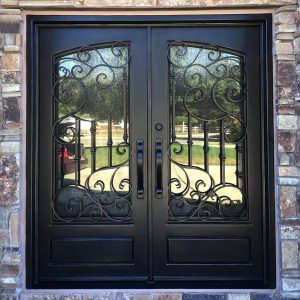
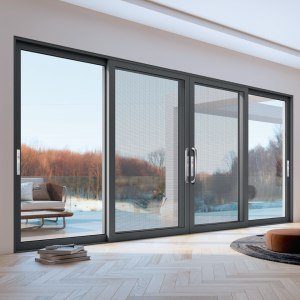
Exterior French doors are dual-leaf door systems with glass panels extending most of the full height, designed for exterior wall openings. The “5” designation commonly indicates a 5-panel configuration or a 5-foot nominal width, both requiring reinforced framing and multi-point locking systems.
French doors originated as interior dividers, but exterior application demands different engineering. An exterior unit must contend with wind loads, rain penetration, thermal transfer, and forced-entry attempts. The glass-to-frame ratio that makes French doors appealing is also their structural vulnerability.
Configuration Types
Hinged Pairs: The classic configuration. Two active leaves hinged at outer jambs, meeting at a center astragal. For exterior use, one leaf is often fixed to reduce hardware complexity.
Telescopic Sliding Units: Multiple panels that slide and stack to one side. Popular for large openings with limited swing clearance. Requires heavier floor tracks and more complex weatherstripping.
Fixed-and-Active Combinations: One fixed sidelite paired with one active leaf. Common in retrofit projects where only one side needs regular access.
Multi-Fold Systems: Three to five panels hinged together, folding to one side. The “5” in some product codes refers to this. These require precision hinges and careful weight distribution.
Sizing Conventions
The nominal “5-foot” width refers to the rough opening size, not actual door dimensions. A 5-0 unit measures approximately 60 inches wide by 80 inches tall. The actual frame is usually 1/2 to 3/4 inch smaller than the rough opening to accommodate shimming.
For 5-panel configurations, each leaf typically measures 12–15 inches wide. Total unit width can range from 60 to 96 inches depending on the manufacturer’s engineering limits.
Application Contexts
- Residential patios and terraces: The most common application. Homeowners want maximum glass area with minimal visual obstruction.
- Commercial storefronts: Secondary entrances or restaurant patio access. Requires commercial-grade hardware and higher cycle ratings.
- Garden rooms and sunspaces: Often specified with fixed sidelites flanking an active door pair.
- Historic renovations: Custom sizes and profiles to match existing architectural details.
The application determines the specification. A residential unit in California faces different seismic and energy requirements than a commercial unit in Florida facing hurricane-force winds.
Exterior French Doors 5 Quality and Performance Factors
Five factors determine exterior French door performance: frame material, glass specification, thermal break design, hardware quality, and weatherstripping integrity. Each factor has measurable standards verifiable through test reports and physical inspection.
Frame Material Comparison
| Material | U-Factor (Btu/hr·ft²·°F) | Structural Strength | Maintenance | Relative Cost |
|---|---|---|---|---|
| Aluminum (thermal break) | 0.28–0.45 | High | Low | $$ |
| Wood | 0.30–0.50 | Medium | High | $$$ |
| uPVC | 0.20–0.35 | Low-Medium | Low | $ |
| Aluminum (no break) | 0.80–1.20 | High | Low | $ |
Typical values for double-glazed units. Actual performance varies by manufacturer.
Thermal-break aluminum has become the default for commercial and high-end residential projects. The polyamide or polyurethane strip separating interior and exterior profiles reduces thermal transfer significantly. A 30mm thermal break can improve U-factor by 50% or more compared to non-thermal-break profiles.
Wood remains the choice for heritage projects, but its maintenance burden is real. Exterior wood doors require refinishing every 2–3 years and are susceptible to warping in high-humidity climates. The weight of solid wood also places greater demands on hinges and frames.
uPVC offers the best thermal performance per dollar but has structural limitations for wide spans. A 5-foot uPVC French door may require steel reinforcement to meet wind load requirements, adding cost and complexity.
Glass Specification
The glass area of a French door can represent 70–80% of total surface. This makes glass selection as important as frame selection.
Standard double glazing: Two panes of 4–6mm glass with a 12–20mm air gap. Suitable for moderate climates.
Low-E coatings: Microscopic metallic layers reflecting infrared radiation. Reduces heat gain in summer and heat loss in winter. Specify the coating on surface #2 (interior face of the outer pane).
Argon or krypton fill: Inert gases with lower thermal conductivity than air. Improves U-factor by 10–15% for argon, more for krypton.
Tempered glass: Heat-treated to withstand higher stress. Required for safety glazing in most jurisdictions. Breaks into small, relatively harmless pieces.
Laminated glass: Two or more panes bonded with PVB or SGP interlayer. Remains intact when broken, providing security and sound insulation. SGP offers higher strength for hurricane-prone areas.
Impact-resistant glazing: Laminated glass tested to withstand wind-borne debris. Required in Miami-Dade County and other high-velocity hurricane zones. This is a building code requirement, not a cosmetic upgrade.
Thermal Break Design
The quality of the thermal break matters as much as its presence. A poorly designed break can become a condensation path or structural weak point.
Key specifications to verify:
- Break width: 20mm is the minimum for meaningful thermal performance. 30–40mm is preferred for cold climates.
- Material: Polyamide 66 with glass fiber reinforcement is the industry standard. Some manufacturers use PVC, which has lower structural strength.
- Placement: The break should extend through the entire profile, including the sash and frame.
Hardware and Locking Systems
Multi-point locking systems are a minimum requirement for exterior French doors. A standard single-point lock leaves the door vulnerable to forced entry and can allow sagging over time.
Look for:
- Multi-point locks: At least three locking points on the active leaf. Five or more for tall doors.
- Stainless steel hardware: Hinges and lock components should be 304 or 316 grade stainless steel. Zinc-alloy corrodes in coastal environments.
- Concealed hinges: Safer than exposed hinges, which can be removed from the exterior. Also provide a cleaner aesthetic.
- Shoot bolts: Located at top and bottom of the active leaf, securing the door into the frame at multiple points.
Weatherstripping
Weatherstripping is the first line of defense against air and water infiltration. It is also the most common component to fail.
EPDM rubber is the preferred material for exterior applications. It resists UV degradation, ozone, and temperature extremes better than silicone or neoprene.
Compression seals are superior to wipe seals for exterior doors. They maintain contact pressure regardless of wind load or thermal expansion.
Check for:
- Corner sealing: Weatherstripping must be properly joined at corners—a common failure point.
- Dual or triple seals: Multiple layers provide redundancy if one seal degrades.
- Drainage slots: The frame must have weep holes at the bottom to allow water penetrating the outer seal to drain outward.
How to Evaluate Exterior French Doors 5 Suppliers
A reliable supplier provides documented test reports, offers genuine customization, and maintains transparent communication. Buyers should verify certifications, request production photos, and conduct third-party inspections before payment.
The evaluation process has five stages: documentation review, technical verification, sample inspection, production monitoring, and final inspection. Skipping any stage increases risk.
Stage One: Documentation Review
Request and verify:
- ISO 9001:2015 certificate: Confirms a quality management system. Verify the certificate number with the issuing body.
- Product test reports: Air permeability, water tightness, and wind load resistance tests from an independent laboratory. CNAS or equivalent bodies are acceptable.
- CE marking (if exporting to Europe): Verify the Declaration of Performance (DoP) and Notified Body number.
- Material certificates: Mill certificates for aluminum profiles, test reports for glass, and certification for thermal break strips.
Stage Two: Technical Verification
Ask specific technical questions:
- What is the profile wall thickness? GB/T 8478 requires a minimum of 1.4mm for exterior doors. European standards (EN 13829) have different requirements. A 1.2mm profile is lighter and cheaper but may not meet wind load requirements.
- What is the thermal break width and material? Polyamide 66 with glass fiber reinforcement is standard. PVC breaks are cheaper but structurally inferior.
- What glass suppliers do you use? Recognized brands include Xinyi, CSG, and Yaohua in China; Saint-Gobain, AGC, and Pilkington internationally.
- What hardware brands do you offer? Options include Hoppe, Siegenia, MACO, or Chinese equivalents like Kinlong and G-U. Quality varies significantly between brands.
Stage Three: Sample Inspection
Order a sample before committing to a full container. A sample that passes inspection demonstrates the factory can execute. A sample that fails tells you everything about the factory’s quality control.
Inspect for:
- Surface finish: Scratches, dents, or uneven coating.
- Corner joints: Gaps or misalignment at frame corners.
- Hardware operation: Open and close 100 times to test smooth operation.
- Weatherstripping: Continuous contact around the entire perimeter.
- Glass installation: Gaps between glass and frame, properly seated glazing gaskets.
Stage Four: Production Monitoring
For orders above 50+ units, request mid-production inspection. Ask for photos or a video call showing:
- Profile cutting and machining (CNC ensures precise cuts)
- Frame assembly: Corner joints and squareness
- Glass installation: Glazing and gasket placement
- Hardware installation: Lock assembly and adjustment
Stage Five: Final Inspection
A pre-shipment inspection is non-negotiable. Use a third-party service (SGS, Bureau Veritas, Intertek) or send your own QC person. The inspection should include:
- Air permeability test: Per GB/T 7106 or EN 1026
- Water tightness test: Per GB/T 7106 or EN 1027
- Wind load resistance test: Per GB/T 7106 or EN 12211
- Visual inspection: Scratches, dents, or finish defects on every unit
- Hardware function test: Open and close every door, test all locks
Key Quality Indicators for Exterior French Doors 5 Buyers
Seven measurable indicators determine exterior French door quality: air permeability class, water tightness class, wind load resistance, U-factor, sound insulation, hardware cycle rating, and surface coating thickness. Each has a defined test method and acceptable threshold.
Air Permeability (Air Leakage)
Measured in m³/h·m² at a standard pressure differential. GB/T 7106 uses 8 classes, with Class 8 highest. EN 12207 uses four classes (1–4). A high-performance door should achieve Class 6–8 (Chinese) or Class 3–4 (European).
Water Tightness
Measured by maximum water pressure the door can withstand without penetration. GB/T 7106 uses classes 1–9, with Class 9 highest. EN 12208 uses classes 1–9 with different test pressures. For rainy climates, Class 6 or higher is recommended.
Wind Load Resistance
Measured as maximum wind pressure without permanent deformation or failure. Directly related to profile strength, glass thickness, and reinforcement. A door rated for 3000 Pa (approximately 120 mph wind) is suitable for most coastal regions.
U-Factor (Thermal Transmittance)
Measured in W/m²·K. Lower values indicate better insulation. A high-performance thermal-break aluminum door with double glazing should achieve 2.0–3.0 W/m²·K. For comparison, a solid wall has a U-factor of approximately 0.3–0.5 W/m²·K.
Sound Insulation
Measured as the weighted sound reduction index (Rw) in decibels. Standard double glazing achieves Rw 30–35 dB. Laminated or asymmetric glazing can improve this to Rw 35–40 dB.
Hardware Cycle Rating
The number of open-close cycles before failure. EN 1191 specifies 20,000 cycles for residential and 200,000 for commercial doors. High-quality hardware should pass 100,000+ cycles.
Surface Coating Thickness
For aluminum doors, powder coating or anodizing thickness determines durability. Powder coating should be 60–120 microns. Anodizing should be 15–25 microns. Thinner coatings will show wear within 2–3 years.
Relevant Industry Standards and Certifications
Exterior French doors are governed by national and international standards covering performance, safety, and energy efficiency. Key standards include ISO 9001:2015 for quality management, EN 14351-1 for CE marking in Europe, and GB/T 8478 for the Chinese market.
International Standards
ISO 9001:2015 is the baseline quality management standard. It certifies the manufacturing process, not the product. A factory without this certification should be treated with suspicion.
EN 14351-1 is the European standard for windows and doors. CE marking under this standard requires declaring performance characteristics including air permeability, water tightness, wind load resistance, thermal transmittance, and acoustic performance. The DoP must be available to the buyer.
Chinese Standards
GB/T 8478 is the Chinese national standard for aluminum alloy doors. Key clauses include:
- Profile wall thickness: minimum 1.4mm for exterior doors
- Air permeability: Class 6 or higher for exterior doors
- Water tightness: Class 4 or higher for exterior doors
- Wind load resistance: Must meet specified local requirements
GB/T 7106 specifies test methods for airtightness, water tightness, and wind load resistance.
North American Standards
AAMA/WDMA/CSA 101/I.S.2/A440 is the North American specification, including performance grades for air infiltration, water penetration, and structural integrity.
Miami-Dade County has its own hurricane resistance testing requirements (TAS 201, TAS 202, TAS 203), among the most stringent in the world.
NFRC provides energy performance ratings for the U.S., including U-factor and Solar Heat Gain Coefficient (SHGC).
What Buyers Should Request
- Test reports for all relevant standards from an independent laboratory
- The specific test values (not just class ratings)
- The factory’s internal QC records for recent production batches
- Certification numbers and issuing body’s contact information for verification
Our Exterior French Doors 5 Manufacturing Capabilities
As a manufacturer of exterior French doors, our approach is straightforward: meet the technical standards outlined above, offer genuine customization, and provide complete documentation for every order. This is a practical requirement for the 40+ countries we export to.
At Jusen Door and Windows Manufacturing Co., Ltd., we operate a vertically integrated factory in China with dedicated production lines for thermal-break aluminum doors, solid wood doors, and system windows. Our exterior French doors are produced on the same lines that supply commercial projects across Southeast Asia, the Middle East, and Europe.
What We Offer
Full customization on size, color, glass, and hardware. We do not restrict buyers to a catalog of standard sizes. If the project requires a 5-foot-6-inch wide unit with a custom bronze finish and laminated acoustic glass, we will produce it. Our CNC machining centers handle custom profile lengths and hardware cutouts without manual rework.
Adjustable profile structures and fittings to match local building codes. This is critical for international buyers. A profile designed for the Chinese market will not automatically meet European or North American standards. Our engineers adjust profile geometry, reinforcement, and hardware selection to meet the specific wind load, thermal, and security requirements of the destination market.
Complete export documentation. Our foreign trade team provides packing lists, proforma invoices, bills of lading, and full customs documentation with every order. We ship FCL and LCL directly from our factory, coordinating with freight forwarders to ensure on-schedule arrival.
Quality Control: Our Multi-Stage Inspection Process
Our quality control system follows the industry standards discussed earlier: raw material inspection, in-process QC during machining and assembly, and a final pre-shipment inspection that includes air, water, and wind resistance testing.
Stage One: Incoming Material Inspection
Every batch of aluminum profiles is checked for alloy composition and wall thickness. Glass is verified against the order specification (thickness, coating, tempering). Hardware is sampled and tested for function.
Stage Two: In-Process Quality Control
During CNC machining, operators check each profile for dimensional accuracy. Frame assembly is verified with a squareness gauge. Glass installation is checked for sealant application and gasket seating. Hardware installation is tested for smooth operation.
Stage Three: Pre-Shipment Inspection
Every order undergoes a final inspection before packing. This is not a random sample—we inspect every unit. The inspection includes:
- Air-tightness testing per GB/T 7106
- Water-tightness testing per GB/T 7106
- Wind resistance testing per GB/T 7106
- Visual inspection for surface defects
- Hardware function testing on every door
If a unit fails any test, it is removed from the shipment and replaced. This is why we can provide test reports with confidence—we have the data to back them up.
Production Process: From Raw Material to Finished Exterior French Doors
The production of a thermal-break aluminum exterior French door involves profile cutting, CNC machining, corner crimping, glass fabrication, assembly, weatherstripping, hardware installation, and final testing. Each step has measurable quality criteria.
Step One: Profile Cutting and Machining
Aluminum profiles are cut to length using automated saws with ±0.5mm precision. CNC machining centers drill holes and create cutouts for hinges, locks, and drainage. Drainage holes are positioned according to the frame’s water management design—this is where the earlier example of incorrectly drilled holes comes from.
Step Two: Thermal Break Assembly (If Applicable)
For thermal-break profiles, polyamide strips are inserted into the aluminum extrusions. The assembly is then rolled or crimped to mechanically lock the thermal break in place. This step requires precise pressure control—too little force results in a loose break, too much can deform the profile.
Step Three: Frame Assembly
Corner joints are cut at 45 degrees and joined with corner cleats or screws, sealed with structural adhesive. The assembled frame is checked for squareness (diagonal measurement difference should be less than 2mm for a standard-size door).
Step Four: Glass Fabrication
Glass is cut to size, processed (tempered, laminated, or coated), and assembled into insulated glass units (IGUs). The IGUs are sealed with butyl and polysulfide or structural silicone. This step happens in a separate facility with controlled humidity to prevent sealant failure.
Step Five: Assembly and Glazing
The frame is glazed—the IGU is placed into the frame with setting blocks and glazing gaskets. The gaskets are the primary weather seal, so their placement is critical. After glazing, hardware is installed: hinges, locks, handles, and any additional security devices.
Step Six: Weatherstripping and Final Adjustment
Weatherstripping is applied to the frame and sash. The door leaves are hung and adjusted for proper alignment. The compression of the weatherstripping is checked—it should be firm but not so tight that the door requires excessive force to close.
Step Seven: Packaging and Shipping
Finished doors are wrapped in protective film, fitted with corner protectors, and packed in plywood crates or cardboard cartons depending on destination and shipping method. LCL shipments require more robust packaging than FCL because of additional handling.
Customization and OEM/ODM Options
Buyers can order exterior French doors as standard catalog products, as OEM products with custom branding, or as ODM products with fully custom designs. The level of customization determines lead time and minimum order quantity.
Standard Products
Pre-engineered designs the factory produces regularly. Lead time is typically 15–20 days. MOQ is flexible—even a single door can be ordered, though per-unit cost is higher.
OEM (Original Equipment Manufacturing)
The buyer specifies the product design, and the factory produces it under the buyer’s brand. This includes:
- Custom profile colors (powder coating, anodizing, wood-grain finish)
- Custom hardware branding (hinges, handles, locks)
- Custom packaging (boxes, manuals, warranty cards)
- Custom documentation (certificates, test reports with buyer’s name)
OEM orders typically require a minimum of 20–50 units per size and color combination.
ODM (Original Design Manufacturing)
The factory designs and produces a product that the buyer then brands and sells. Suitable for buyers who want a proprietary product but lack in-house design capabilities. The factory handles engineering, prototyping, and testing.
What We Can Customize
- Profile color: Any RAL color, wood-grain finishes, anodized finishes
- Glass specification: Thickness, coating, tempering, lamination, acoustic interlayers
- Hardware: Brand, finish, style
- Size: Width, height, configuration
- Performance level: Air-tightness class, water-tightness class, wind load resistance
The customization process starts with a technical specification sheet. Our engineers review requirements, confirm feasibility, and provide a quotation within 2–3 working days.
Ordering Process: MOQ, Lead Time, and Shipping
A standard order for exterior French doors follows this timeline: quotation within 1–3 days, sample production in 15–20 days, mass production in 20–30 days, and shipping in 5–10 days. The MOQ is flexible depending on the level of customization.
Minimum Order Quantity (MOQ)
For standard products, the MOQ is 5–10 units. For OEM orders with custom colors or hardware, the MOQ is typically 20–50 units per size and color combination. The MOQ exists because custom colors require a minimum batch size for the powder coating line, and custom hardware requires a minimum purchase from the hardware supplier.
Lead Time Breakdown
| Order Type | Sample Time | Production Time | Total Lead Time |
|---|---|---|---|
| Standard product | N/A | 15–20 days | 15–20 days |
| Custom color only | 5–7 days | 20–25 days | 25–32 days |
| Full customization | 15–20 days | 20–30 days | 35–50 days |
Excludes shipping time, which is 15–30 days for sea freight from China to most destinations.
Shipping Options
FCL (Full Container Load) is the most cost-effective for large orders. A 20-foot container holds approximately 15–20 standard-size exterior French doors. A 40-foot container holds 30–40 units. FCL offers dedicated space, lower per-unit cost, and reduced handling damage.
LCL (Less than Container Load) is suitable for smaller orders. The buyer pays for the space the goods occupy. LCL is more expensive per unit and involves additional handling at consolidation warehouses. For orders under 10 units, LCL is often the only option.
Documentation
Every export order includes:
- Packing list (itemized contents of each carton or crate)
- Proforma invoice (commercial invoice for customs clearance)
- Bill of lading (evidence of shipment)
- Certificate of origin (for tariff preference)
- Test reports (if requested)
Our foreign trade team has handled exports to 40+ countries and is familiar with the documentation requirements of most major markets.
Certifications and Industry Standards
Our factory operates under ISO 9001:2015 certification. Our products are tested to GB/T 8478 and GB/T 7106 standards, and we can provide CE marking documentation for European-bound shipments.
For buyers targeting the U.S. market, we can configure products to meet AAMA/WDMA/CSA specifications and provide the necessary test data for local code approval. We cannot perform Miami-Dade testing in our facility, but we work with external laboratories that can conduct these tests on sample units.
What Buyers Should Ask Before Ordering
- Can you provide test reports for air permeability, water tightness, and wind load resistance from an independent laboratory?
- What is your profile wall thickness, and how does it compare to the requirement in my market?
- Can you adjust the thermal break width or profile geometry to meet local energy codes?
- What is your MOQ for custom colors and hardware?
- Can you provide a pre-shipment inspection report for my order?
- What is your lead time for a container order?
- How do you handle defective units—do you replace them or issue a credit?
Avoid Suppliers Who:
- Cannot provide test reports from an independent laboratory
- Refuse to show their production facility or send production photos
- Have no experience with export documentation
- Quote a lead time under 10 days for custom products (this indicates they are not actually producing the product)
- Cannot explain the technical specifications of their product
Our Experience with International Buyers
We have supplied exterior French doors to projects in Australia, the United States, Canada, the United Kingdom, Germany, and the Middle East. One recent project involved a villa development in Perth, Australia, requiring 120 units of custom-size thermal-break aluminum French doors with laminated glass to meet local wind load and energy efficiency requirements. The order was shipped in two 40-foot containers, with the entire production and delivery cycle completed in 45 days.
Another project involved a commercial renovation in London with stringent acoustic requirements. We supplied 30 units of double-glazed French doors with asymmetric glass (6mm + 12mm air gap + 8.8mm laminated) to achieve the required Rw 38 dB sound insulation rating.
These projects required more than manufacturing capability—they required engineering expertise to adapt standard products to local building codes, and logistical experience to handle international shipping and documentation.
Choose our factory if you need:
- A manufacturer that can adapt products to meet your local building codes
- Full customization on size, color, glass, and hardware
- Complete export documentation and reliable shipping
- A supplier that treats quality control as a contract requirement, not a marketing slogan
Choose a local distributor if you need:
- Immediate availability (no lead time)
- Local warranty and after-sales service
- Familiarity with local building codes and installation practices
Both approaches have merit. The choice depends on your order volume, timeline, and budget. For volume orders with specific technical requirements, factory-direct sourcing is the most cost-effective and technically reliable option.
References
- ISO 9001:2015 Quality Management Systems. International Organization for Standardization. https://www.iso.org/standard/62085.html
- EN 14351-1:2006+A2:2016. European Committee for Standardization. https://standards.cencenelec.eu/
- GB/T 8478-2020 Aluminum Alloy Doors and Windows. Standardization Administration of China. https://www.sac.gov.cn/
- GB/T 7106-2019 Test Methods for Air Permeability, Water Tightness and Wind Load Resistance. Standardization Administration of China. https://www.sac.gov.cn/
- AAMA/WDMA/CSA 101/I.S.2/A440-22. American Architectural Manufacturers Association. https://aamanet.org/
- NFRC 100-2023. National Fenestration Rating Council. https://www.nfrc.org/
- Miami-Dade County Product Control. https://www.miamidade.gov/building/product-control.asp