Content Menu
● 1. Double Entry Wood Doors: The B2B Buyer’s Guide to Specification and Bulk Sourcing
● 2. Understanding Double Entry Wood Door Construction
● 3. Performance Standards and Compliance for Imported Doors
● 4. The Procurement Process: From RFQ to Delivery
● 5. How a Factory-Direct Partner Streamlines Your Supply Chain
13 min read
Double Entry Wood Doors: The B2B Buyer’s Guide to Specification and Bulk Sourcing
A contractor in Miami once ordered a pair of solid mahogany entry doors for a beachfront villa. Six months later, the homeowner called him back. The doors had warped at the bottom rail, the gap between the two slabs had grown to nearly a centimeter, and the lockset had dropped out of alignment. The wood itself was fine. The problem was that nobody had accounted for the fact that two large slabs of solid timber, exposed to salt air and high humidity, would move in opposite directions.
That is the reality of double entry wood doors. When you double the width, you do not just double the weight — you multiply the engineering challenges. This guide is written for architects, contractors, and importers who need to specify, source, and install these doors without learning those lessons the hard way.
Understanding Double Entry Wood Door Construction
The first decision a buyer faces is not about aesthetics. It is about how the door is built internally. The core material determines whether a double door will stay straight for twenty years or start twisting within the first two seasons.
Solid Core vs. Engineered Wood vs. Solid Wood
Solid wood slabs are exactly what they sound like — milled from a single piece or staves of timber. They offer an unmatched grain pattern and a sense of mass that many high-end clients insist on. But for double doors, solid wood presents a real problem. Wide slabs of solid timber expand and contract significantly across the grain with changes in humidity. A 1.2-meter-wide door can move 6 to 10 millimeters between wet and dry seasons. When two such slabs are mounted side by side with a 3-millimeter gap between them, that movement can cause the doors to bind, scrape, or leave an unsightly gap at the meeting stile.
Engineered wood — typically a veneer applied over a laminated core of finger-jointed or cross-banded timber — solves much of this. The cross-lamination restricts movement in one direction, making the slab dimensionally stable across wide spans. This is why most commercial-grade double entry wood doors use engineered construction. The visible surface is genuine wood veneer, so the appearance is indistinguishable from solid timber. The internal structure, however, resists warping far better.
Hollow core doors should be avoided for double entry applications altogether. They lack the weight to feel substantial, they transmit sound poorly, and — critically — they do not hold heavy hardware. A multi-point lockset on a hollow core door will eventually tear the screws out of the mounting points.
For B2B buyers, the practical guidance is straightforward: specify engineered wood for exterior double doors in climates with significant humidity swings. Reserve solid wood for interior applications or for projects where the budget genuinely allows for the maintenance that solid timber demands.
Frame, Jamb, and Anchoring Systems
A double door is only as good as the frame that carries it. Two active door slabs — each weighing 60 to 100 kilograms depending on size and glass — impose significant loads on the jamb and the surrounding wall structure.
The sub-frame, typically fabricated from aluminum or pressure-treated lumber, must be anchored to the structural opening with heavy-duty expansion bolts or embedded anchors. The gap between the sub-frame and the wall is then filled with expanding foam or grout to transfer wind loads and prevent air infiltration.
Hinges deserve particular attention. Standard butt hinges rated for 40-kilogram doors are insufficient. For double entry wood doors, 3D adjustable hinges — which allow vertical, horizontal, and compression adjustment after installation — are the industry standard. They allow the installer to fine-tune the alignment of both slabs, which is essential because the weight of the doors will cause slight settlement in the frame over the first year.
Reinforced stiles are another non-negotiable. The stile — the vertical edge of the door — must be built up with additional material or a steel reinforcement plate in the area where the lockset and handle mount. A standard 45-millimeter-thick stile will not hold a heavy mortise lock securely for long.
Glass and Glazing Options for Entry Doors
Most double entry wood doors incorporate glass — either as a full-lite design (one large pane) or divided lites (multiple smaller panes). The glazing choice affects both thermal performance and cost.
Double glazing (two panes with an air gap) is the minimum for exterior doors in most climates. Triple glazing adds a third pane and is worth considering for projects in extreme northern or alpine regions. Low-E coatings — microscopic metallic layers that reflect infrared radiation — reduce heat loss in winter and heat gain in summer. Argon gas fills between panes further improve insulation values.
One cost decision that surprises many buyers: true divided lites (SDL) versus simulated divided lites (GDL). SDL uses individual glass panes separated by real muntin bars — historically accurate but significantly more expensive and harder to clean. GDL uses a single pane with grilles applied on both sides. For double entry wood doors, GDL is almost always the practical choice. It looks identical from a distance, performs better thermally, and reduces cost by 15 to 25 percent.
Performance Standards and Compliance for Imported Doors
Sourcing doors from overseas brings a second set of concerns: regulatory compliance. A door that looks beautiful in a showroom may not have the test certificates your local building inspector requires.
Navigating Air, Water, and Wind Load Tests
The most common performance standards for exterior doors in North America are AAMA/WDMA/CSA 101/I.S.2/A440, which classifies windows and doors by performance grade. In Europe, the relevant standard is EN 14351-1. These standards test three critical properties:
- Air infiltration — how much air passes through the closed door assembly under pressure.
- Water penetration — whether water leaks through the assembly during simulated rain combined with wind pressure.
- Wind load resistance — whether the door can withstand the structural pressures of high winds without permanent deformation.
For double entry wood doors, wind load resistance is the most demanding test. Large door slabs act like sails. A 2.4-meter-wide double door in a coastal area may need to withstand wind pressures of 2,000 pascals or more — equivalent to a Category 3 hurricane. The test report will show the maximum pressure the door withstood before failure, expressed as a design pressure (DP) rating. A DP50 rating means the door passed at 50 pounds per square foot.
When reviewing a manufacturer’s test report, check three things: the exact model tested, the size of the test specimen, and whether the report is current. A test certificate for a different door model, or for a smaller size, does not apply to your project.
Fire Ratings and Egress Compliance
Wood doors can achieve fire ratings, but the path to compliance is more complex than simply making the slab thicker. Fire-rated double entry wood doors typically require:
- A fire-rated frame and jamb assembly
- Intumescent seals that expand when exposed to heat, sealing the gap between door and frame
- Fire-rated glazing (typically ceramic or wired glass) if the door includes lites
- Self-closing devices, in many commercial applications
Fire-rated double doors also interact with egress requirements. If the doors are on an exit path, they must open in the direction of travel and be equipped with panic hardware. The fire rating of the door must be matched with the rating of the wall assembly it is installed in — a 45-minute door in a 60-minute wall creates a code violation.
Ask the manufacturer for the specific fire test certificate for the exact model of double entry wood doors you intend to purchase. The certificate should reference the same dimensions and hardware configuration as your order.
Hardware Integration and Local Code Adjustments
Hardware for double entry wood doors is not a simple add-on. Mortise locks, multi-point locking systems, and panic bars all require specific cutouts and reinforcement inside the door slab. A manufacturer that builds the door around the hardware — rather than cutting the hardware into a finished door — will produce a more reliable product.
Local building codes also differ in ways that affect door specifications. Threshold heights, hinge placement, and even the direction of door swing can be regulated. A supplier with international experience will typically offer adjustable profile structures and fittings to accommodate these variations. This is not a luxury; it is a necessity for importers who serve multiple markets.
The Procurement Process: From RFQ to Delivery
Once the technical specifications are locked, the procurement process begins. This is where many buyers make costly mistakes.
Understanding the Cost Drivers
The price of double entry wood doors varies enormously based on five factors:
- Wood species — Domestic oak and ash are moderately priced. Exotic species like mahogany, sapele, and teak command a premium. The difference between a mahogany door and a sapele door — which look nearly identical — can be 30 to 40 percent.
- Core construction — Engineered cores cost less than solid timber because they use less high-grade wood. They also perform better in most applications.
- Glass specification — Triple glazing, Low-E coatings, and decorative glass patterns each add cost.
- Hardware grade — A basic lockset might cost $50. A high-security multi-point system with anti-pick pins and reinforced strike plates can cost $400 or more. The hardware is often the single largest variable cost item.
- Finish — Factory-applied stain and lacquer is significantly more expensive than a primed surface, but it ensures a consistent finish that would be difficult to replicate on site.
The cheapest quote is rarely the cheapest project cost. A door that arrives with a poor finish, or that requires rework to fit the opening, will cost more in labor and schedule delays than the savings on the initial purchase. Calculate the total installed cost, not just the door price.
Lead Times and Shipping Logistics (FCL vs. LCL)
Double entry wood doors are large, heavy, and fragile. Shipping them requires care.
Full Container Load (FCL) is the safer option. A 40-foot container can hold roughly 40 to 60 double doors, depending on size and packaging. The doors are packed in wooden crates or steel frames, with each door individually wrapped in waterproof paper and foam. FCL shipping means your cargo is not handled multiple times — the container is sealed at the factory and opened at your warehouse.
Less than Container Load (LCL) means your cargo shares a container with other shipments. This reduces freight cost for small orders but increases the risk of damage from improper handling or shifting during transit. For double entry wood doors, LCL is only advisable for samples or very small orders.
The Importance of Documentation
International door shipments require a specific set of documents. A packing list itemizes every crate and its contents. The proforma invoice serves as the commercial invoice for customs valuation. The bill of lading is the contract of carriage. A certificate of origin may be required to qualify for preferential duty rates under trade agreements.
A supplier with established foreign trade experience will provide these documents accurately and on time. Delays in documentation are a leading cause of customs holds — and customs holds mean demurrage charges, which can run hundreds of dollars per day. Verify that the supplier will provide all necessary documents before you place the order. A packing list and proforma invoice may seem like administrative details, but they directly affect your landed cost.
How a Factory-Direct Partner Streamlines Your Supply Chain
The technical criteria above define a reliable product. But the process of sourcing those doors often involves multiple middlemen — an overseas agent, a local distributor, an import broker — each adding a markup and a layer of communication lag. That is where a factory-direct relationship changes the equation.
The Advantage of Direct Supply
At Jusen Door and Windows Manufacturing Co., Ltd., we operate the factory. When you work with us, there is no trading company between you and the production line. The price you receive is the factory price, and the specifications you discuss are communicated directly to the engineers who build the doors.
This model has a practical benefit beyond cost. When a project requires adjustments — a different hinge position, a bespoke glass configuration, a specific veneer match — the change order is processed in hours, not weeks. There is no chain of intermediaries to relay the information and no risk of the message being distorted in transmission.
Customization and OEM/ODM Capabilities
Our production line is set up for full customization. Size, color, glass specification, and hardware accessories can all be configured to your project requirements. For OEM and ODM projects, we work from your drawings or adapt our existing designs to your brand specifications.
One capability that matters for international buyers: we adjust the profile structure and fittings of our doors to match the local building codes of your target market. If your project requires a specific threshold height for accessibility compliance, or a particular hinge spacing for wind load resistance, we engineer the door accordingly before production begins.
Quality Control and Pre-Shipment Inspections
Every batch of double entry wood doors undergoes pre-shipment testing for air tightness, water tightness, and wind resistance. These are not generic claims — they are documented test results that you can review before the goods leave our factory. This reduces your risk of receiving non-compliant products and having to deal with a costly replacement process or a failed inspection on site.
We also provide the full export documentation package: packing list, proforma invoice, and customs documents. For buyers who are new to importing, our team walks you through the paperwork so there are no surprises at the port.
Is a double entry wood door from a Chinese factory worth the risk? The risk is not about geography — it is about due diligence. A factory that can show you test reports, offers to adjust its products to your local codes, and provides transparent documentation is a safer partner than a local distributor selling imported doors with no technical backup. The direct factory relationship means accountability sits with the people who built the product, not with a middleman who just moved boxes.
Frequently Asked Questions
What is the maximum size available for double entry wood doors?
Standard maximum heights are typically 2.4 to 3 meters (8 to 10 feet). With engineering modifications — such as a reinforced frame and additional hinge points — heights up to 3.6 meters (12 feet) are achievable. The limiting factor is usually the core material. Engineered cores can handle taller spans than solid timber.
Are these doors suitable for exterior use?
Yes, provided the construction is appropriate. Engineered wood cores with proper weather-stripping and a durable finish are suitable for exterior applications in most climates. Solid wood doors can also be used outdoors, but they require more maintenance — annual refinishing and careful attention to the seal around the glass and frame.
Can you match a specific wood veneer or paint color (e.g., RAL)?
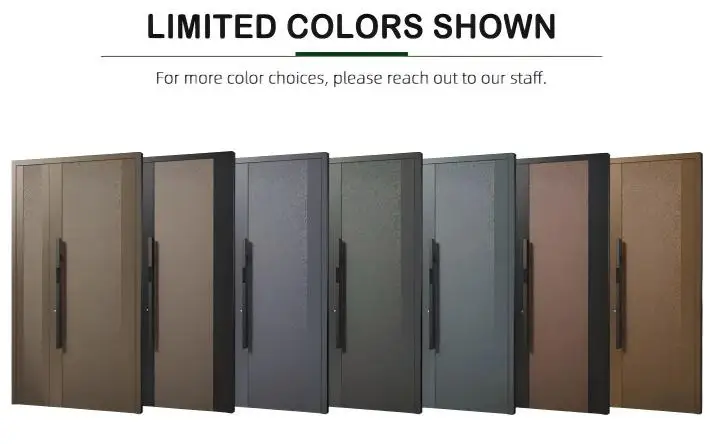
Yes. We can match custom finishes, including specific RAL paint colors and specific veneer species. For critical color matches, we recommend providing a sample or an approved color chip before mass production begins. We produce a finish sample for your approval before the full order goes into production.
What are the common lead times for a 20-foot container of double doors?
Production typically takes 3 to 5 weeks for a standard configuration. Customized orders — with bespoke glass, hardware, or finishes — may take 6 to 8 weeks. Transit time from China to North America or Europe is typically 30 to 45 days by sea. Plan for a total lead time of 8 to 12 weeks from order confirmation to delivery at your port.
Do you provide all necessary customs clearance documents?
Yes. We provide a packing list, proforma invoice, bill of lading, and certificate of origin. For projects requiring additional documentation — such as Fumigation certificates for wooden crates — we arrange those as well. Our export documentation is prepared in accordance with international trade standards to minimize customs clearance delays.
What is the difference between FCL and LCL shipping for doors?
FCL (Full Container Load) means your doors occupy an entire container, which reduces handling and damage risk. LCL (Less than Container Load) means sharing a container with other cargo, which is more economical for small orders but increases the risk of damage or delay. For double entry wood doors, we recommend FCL for orders of 20 units or more.
Decision Guide
Choose engineered wood double entry doors if:
- The project is in a climate with significant humidity or temperature swings
- The door width exceeds 1.5 meters per leaf
- You need consistent performance with minimal maintenance
- The budget allows for a high-quality finish but not for annual refinishing
Choose solid wood double entry doors if:
- The project is interior or the climate is consistently dry
- The client values authentic solid timber over engineered alternatives
- The maintenance schedule includes regular refinishing
- The door size is within the range where solid wood remains stable
Choose a factory-direct supplier if:
- You are ordering in bulk (10+ units per order)
- You need customization that local distributors cannot provide
- You want to eliminate middleman markups
- You require direct communication with the production team
—
Ready to discuss your project specifications? Our team can provide technical drawings and a detailed quote tailored to your building codes.
References
[1] AAMA/WDMA/CSA 101/I.S.2/A440, “Standard/Specification for Windows, Doors, and Unit Skylights,” American Architectural Manufacturers Association. https://aamanet.org/
[2] EN 14351-1:2006+A2:2016, “Windows and doors – Product standard, performance characteristics,” European Committee for Standardization. https://www.cen.eu/
[3] Wood Doors Technical Guide, WDMA (Window & Door Manufacturers Association). https://www.wdma.com/
[4] “Thermal Performance of Fenestration Systems,” National Fenestration Rating Council (NFRC). https://www.nfrc.org/
[5] “Fire Rated Door Assemblies,” UL Fire Director, Underwriters Laboratories. https://www.ul.com/