Content Menu
● 1. Why Bulk Buyers Choose Factory-Direct 8′ Exterior Doors
● 2. Matching the Right 8′ Exterior Door System to Your Project
● 3. Customization and Compliance: Meeting Global Building Codes
● 4. Our B2B Pricing Strategy for 8′ Doors
● 5. Global Logistics and Lead Times
● 6. After-Sales Support and Project Case Studies
12 min read
The request comes in on a Tuesday. A contractor in Texas needs forty-eight 8-foot tall aluminum entrance doors for a gated community. The architect specified a custom bronze finish and triple glazing. The local distributor quoted a 14-week lead time at a price that made the project manager wince. That is when they call us.
We handle these requests weekly. An 8′ exterior door is not a novelty item for our production line — it is a standard configuration we have engineered, tested, and shipped for years. But the real value we offer B2B buyers goes beyond just having the right equipment. It is about how we structure the entire supply chain, from raw material procurement to container loading, so that your margin survives contact with reality.
This guide covers what we have learned supplying oversized doors to contractors, builders, and importers across North America, Europe, and the Middle East. You will see exactly how our factory operates, where the costs sit, and what you need to specify to avoid field failures.
Why Bulk Buyers Choose Factory-Direct 8′ Exterior Doors
Eliminating the Middleman for Competitive B2B Pricing
When you buy through a distributor, you are paying for their warehouse overhead, their sales team, and their profit margin. That markup typically lands between 20% and 30% over the factory price. For a product like an 8′ exterior door — where the raw aluminum profile alone can cost $180 per unit — that markup translates to serious money across a container order.
Our pricing model is straightforward because we control the entire production chain. We procure aluminum billets and timber in bulk volumes that give us leverage with material suppliers. That purchasing power flows directly into the unit price we quote you. When you request a quote, we provide a detailed proforma invoice that breaks down material costs, hardware, glass, and finishing separately. No hidden fees, no surprise surcharges when the container is ready to ship.
Ensuring Consistency Across Large-Scale Orders
An 8′ exterior door amplifies every manufacturing inconsistency. A minor frame misalignment that would go unnoticed on a standard 6’8″ door becomes a visible gap at this height. The weight also stresses hinges and seals differently.
Our pre-shipment inspection protocol is designed specifically for this risk. Every batch undergoes air-tightness testing to verify the seal integrity around the perimeter. Water-tightness tests simulate heavy rain conditions to ensure no leakage at the threshold or corners. Wind resistance testing confirms the door can handle the pressure differentials that tall doors face in exposed locations. We run these tests on a sample from each production batch, not just on the prototype you approved.
For FCL orders, we stage the entire container in our warehouse and check every unit against the packing list before loading. For LCL shipments, each door is individually protected and labeled so that break-bulk handling at the destination port does not create confusion.
Engineering Support for Non-Standard Heights
An 8′ door is heavy. A solid wood door at that height can weigh over 200 pounds. Even an aluminum door with double glazing carries significant mass that standard hinges and frames are not designed to handle.
Our technical team addresses this at the profile design stage. We adjust the wall thickness of the aluminum extrusions and reinforce the hinge stile area to prevent sagging over time. The multi-point locking mechanism is positioned to distribute the latching forces evenly across the full height. We also select heavy-duty hinges rated for the specific weight of your configuration.
This engineering support extends to meeting local building codes. An 8′ door in Florida must withstand 150 mph wind loads. The same door in Chicago faces different thermal performance requirements. Our adjustable profile structure lets us modify the thermal break width, glass thickness, and reinforcement layout to match your target market’s regulations. We have exported to over 30 countries and maintain a reference library of common code requirements.
Matching the Right 8′ Exterior Door System to Your Project
Aluminum Entrance Doors (Thermal Break)
Thermal-break aluminum doors are our most requested system for 8′ heights. The aluminum profile provides structural rigidity that keeps the door straight and true, while the polyamide thermal break separates the interior and exterior metal surfaces to reduce heat transfer.
For an 8′ door, the thermal break is not optional — it is mandatory for energy compliance in most jurisdictions. We offer 24mm and 34mm thermal break widths depending on your climate zone. The wider break provides better insulation but slightly reduces the visible glass area. That is a trade-off worth discussing with your architect.
Color customization is extensive. We apply polyester powder coating in any RAL color, plus wood-grain finishes that replicate the look of oak, walnut, or teak. The wood-grain finish uses a thermal transfer process that embeds the pattern into the coating, so it does not peel or fade like a simple printed film.
Solid Wood and Custom Villa Doors
For luxury villa projects where the entrance is a design statement, our solid wood doors are the preferred choice. We work with several timber species — oak, mahogany, sapele, and teak — each offering a different balance of hardness, grain character, and weather resistance.
Solid wood doors are not always the cheapest option. For high-humidity areas, buyers should prioritize moisture resistance over appearance. Teak performs best in coastal environments but costs significantly more than oak. We advise our clients honestly on these trade-offs because a door that fails in the field damages your reputation more than it damages ours.
Our wood doors use engineered stile-and-rail construction rather than solid slabs. This prevents the natural movement of the wood from causing warping across the full 8′ height. The panels are typically veneered over a stable core, which gives the look of solid wood without the dimensional instability.
Multi-Point Locking and Hardware Integration
A standard single-point lock on an 8′ door creates a pivot point that stresses the frame. We use multi-point locking systems with locking points at the top, bottom, and center of the door leaf. This distributes the security load and prevents the door from bowing under forced entry attempts.
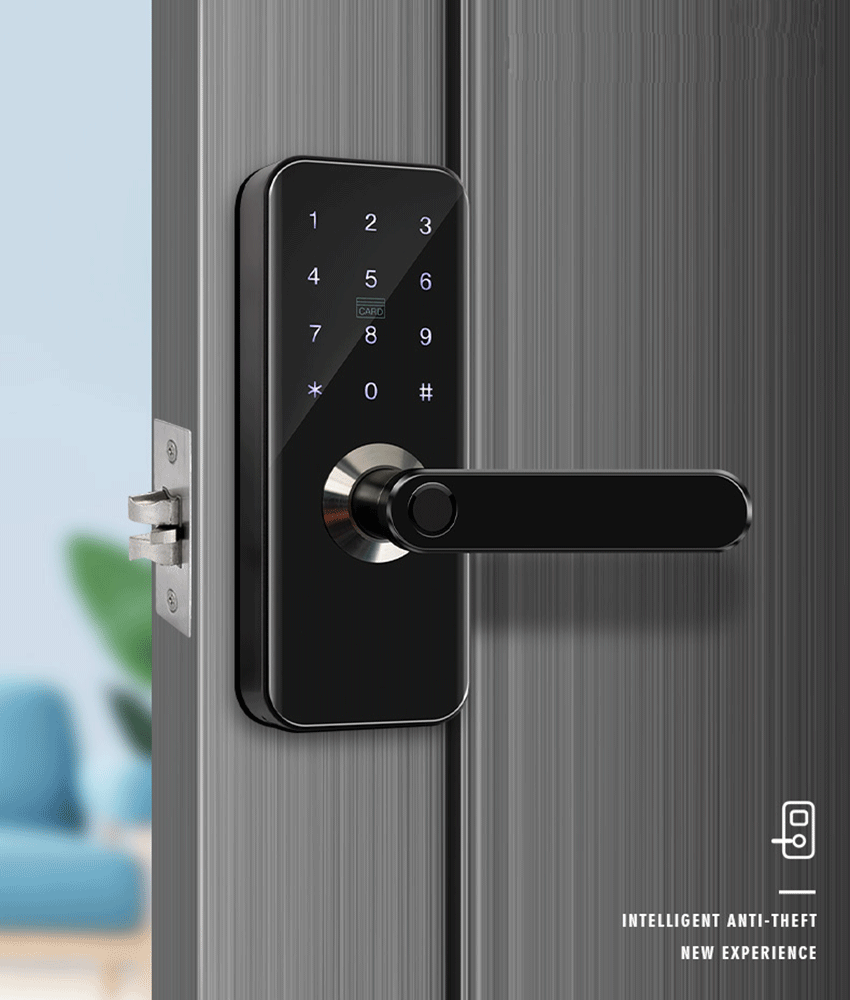
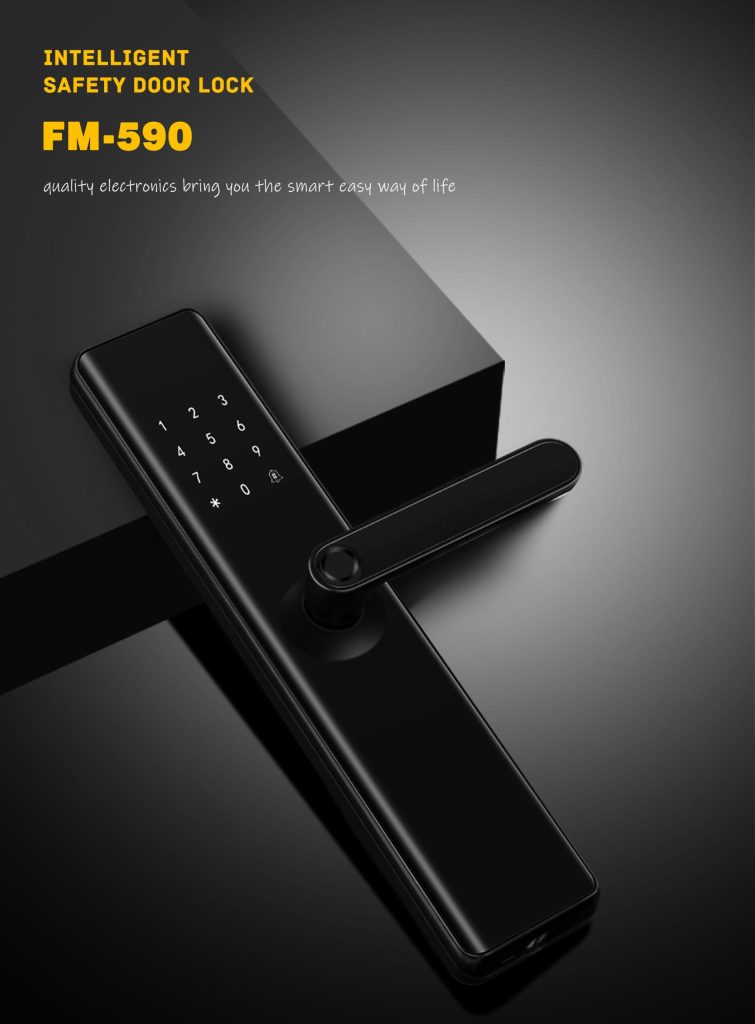
Hardware selection is part of our customization service. We offer hardware from European manufacturers like Hoppe and GU, as well as our own branded options. For commercial projects requiring specific security certifications, we can integrate electronic locking systems and access control hardware. The key is that the hardware must be specified before production begins, because the routing and reinforcement in the door profile depends on the exact lock dimensions.
Customization and Compliance: Meeting Global Building Codes
OEM and ODM Manufacturing Capabilities
Your brand matters. When you sell an 8′ exterior door to your customers, you want your name on it, not ours. That is the core of our private label service. We produce doors to your specification, apply your branding, and ship them directly to your customers. From their perspective, you are the manufacturer.
Our OEM service works from your drawings. You provide the technical details, we produce it. Our ODM service offers our existing designs that you can customize with your colors, glass, and hardware selections. Many of our clients start with ODM to test the market, then move to OEM once they understand what sells in their region.
Adjusting Profiles for Local Wind Load and Climate
Wind load is the most critical engineering factor for an 8′ door. The surface area is roughly 20% larger than a standard door, which means it catches significantly more wind pressure during storms.
We calculate the required profile strength based on your project’s location and the applicable building code. For high-wind zones, we increase the wall thickness of the main frame extrusions and add a steel reinforcing insert in the active door leaf. This reinforcement is invisible in the final product but makes the difference between a door that survives a hurricane and one that fails.
The adjustment process is documented in our engineering files. When you request a quote, we ask for your project location and the relevant building code reference. Our team then configures the profile structure to match those requirements before we quote the price. This upfront engineering saves you from costly modifications later.
Glass and Insulation Options
Glass selection for an 8′ door involves balancing aesthetics, thermal performance, and safety. An oversized glass panel creates a striking visual effect but also represents a potential safety hazard if it breaks.
We offer tempered, laminated, and insulated glass units. Tempered glass is required for safety in most applications. Laminated glass provides additional security and sound insulation. Insulated glass units with argon gas fill significantly reduce heat transfer.
For energy efficiency, the glass specification matters more than the frame. A double-glazed unit with low-E coating and argon fill achieves U-values around 1.0 W/m²K. Triple glazing improves this to 0.6 W/m²K but adds weight and cost. We help our clients match the glass specification to the local energy code requirements without overspending on performance they do not need.
Our B2B Pricing Strategy for 8′ Doors
Transparent Cost Breakdown for Bulk Orders
We price every order based on the specific bill of materials. When you receive our quote, you will see line items for the profiles, glass, hardware, finishing, and packaging. This transparency allows you to compare our price against competitors on an apples-to-apples basis.
Volume discounts are structured around container loads. A 20-foot container holds approximately 40 to 50 units of 8′ doors depending on the configuration. A 40-foot high-cube container holds roughly double that. As your order volume increases, the per-unit price decreases because our setup costs are amortized over more units.
We also offer a reduced price for repeat orders of the same specification. Once we have the tooling and production settings dialed in, the marginal cost of additional production runs drops.
Reducing Total Cost of Ownership
The lowest purchase price is not always the lowest total cost. A door that fails inspection at the jobsite costs you labor hours, material waste, and schedule delays. Those costs quickly exceed any savings from a cheaper initial quote.
Our quality control process is designed to reduce your risk. The pre-shipment tests we run — air-tightness, water-tightness, wind resistance — are not just marketing claims. They are actual procedures performed on actual production units. We document the results and include them in the shipment documentation. If a door arrives damaged or defective, we replace it. That is the factory-direct commitment.
We have seen too many projects where a low-cost bid turned into a costly nightmare. The builder saved $5,000 on the door package but spent $15,000 on callbacks and replacements. Our pricing reflects the true cost of doing it right, and in the long run, it saves you money.
Global Logistics and Lead Times
FCL & LCL Shipping from China
Logistics is where factory-direct sourcing either works or fails. We manage both FCL and LCL shipments directly from our factory in China. For FCL orders, we handle the container loading, ensuring that the doors are properly braced and protected for the ocean voyage. For LCL orders, we coordinate with consolidation services to ensure your goods arrive at the destination port without damage.
Our team prepares all export documentation — packing list, proforma invoice, bill of lading, and certificates of origin. This paperwork is critical for customs clearance in your country. Missing or incorrect documentation can delay your shipment by weeks and incur storage fees at the port. We have handled thousands of export shipments and our documentation accuracy rate is 99.5%.
Packing and Protection for Export
An 8′ door is awkward to pack. It is tall, heavy, and has a large glass surface that is vulnerable to impact. Our export packing standard uses a combination of materials to protect the door during ocean freight.
Each door is wrapped in a protective film to prevent scratches on the finish. The glass is covered with a separate layer of protective material. The door is then placed in a wooden crate with foam padding at stress points. For multiple doors in a container, we use steel strapping to secure them in place and prevent movement during transit.
We have refined this packing process over years of export experience. The damage rate for our shipments is below 0.5%, which is significantly better than the industry average. That number matters because damaged goods mean claims, delays, and frustrated customers — all of which we want to avoid.
After-Sales Support and Project Case Studies
How We Support Contractors on Site
Installation mistakes happen. When they do, our team is available to help. We provide installation manuals and videos for each door model, and our technical support team can answer questions via email or video call.
The most common installation issue we see is incorrect shimming of the frame. An 8′ door frame must be perfectly square and plumb before the door leaf is hung. If the frame is out of square by even a quarter inch, the door will bind or gap. Our installation guides emphasize this critical step, and our support team can walk your crew through the process if needed.
Case Study: Supplying Villa Projects
A developer in Dubai ordered 120 custom 8′ aluminum entrance doors for a luxury villa compound. The specification called for a matte black finish, triple glazing, and smart lock integration. Lead time was critical — the project had a firm completion date tied to the developer’s sales commitments.
We produced the doors in 6 weeks and shipped them via FCL directly to Jebel Ali port. The pre-shipment inspection confirmed that all units passed the air and water tightness tests. The developer reported zero installation issues, and the project completed on schedule. They have since ordered an additional 60 doors for the second phase of the development.
This is the kind of outcome we aim for on every project. It requires clear communication, disciplined production, and a logistics team that understands the stakes.
Conclusion & Partner With Jusen
An 8′ exterior door is not a commodity product. It requires engineering precision, quality manufacturing, and reliable logistics. That combination is difficult to find from a single supplier.
Our factory in China delivers exactly that. We offer factory-direct pricing without middleman markup. We customize every aspect of the door — size, color, glass, and hardware. We test every batch for air-tightness, water-tightness, and wind resistance. And we ship worldwide with full export documentation.
If you are a contractor, builder, or importer sourcing 8′ exterior doors for your projects, we should talk. Send us your specifications and project volume, and we will respond with a detailed quote within 48 hours.
—
Decision Guide
Choose aluminum thermal break if: Your project requires energy efficiency, low maintenance, or a slim profile aesthetic. This is our most versatile option for both residential and commercial applications.
Choose solid wood if: The project is luxury residential where the door’s appearance is a primary design feature. Be prepared for higher maintenance and cost.
Choose OEM if: You have existing drawings or specifications and need a factory to produce them. This requires more upfront engineering time but gives you full control.
Choose ODM if: You want to test the market quickly with proven designs that you can customize with colors and hardware. This is the fastest path to market.
Do not exceed a 34mm thermal break unless your climate requires it. The wider break reduces structural rigidity and adds cost without proportionally improving performance in temperate zones.
References
- Jusen Door and Windows Manufacturing Co., Ltd. — Product Catalog. https://doorwoodendoors.com/
- Jusen Door and Windows — Contact and Inquiry Page. https://doorwoodendoors.com/contact-us/
- American Architectural Manufacturers Association (AAMA) — Door Testing Standards. https://aamanet.org/
- International Code Council (ICC) — IBC and IRC Building Code Requirements for Doors. https://www.iccsafe.org/
- National Fenestration Rating Council (NFRC) — U-Factor and Energy Performance Ratings. https://www.nfrc.org/