Content Menu
● 1. Doors with Sidelights: A Complete Guide to Customization, Glass Options, and Factory Supply
● 2. Understanding the Anatomy of Doors with Sidelights
● 3. Design Flexibility and Customization Options for Sidelight Doors
● 4. Sourcing Strategy: Why B2B Buyers Choose a Direct Factory
● 5. Quality Assurance and Inspection Protocols
● 6. Applications: Where Do Doors with Sidelights Shine?
● 7. The Decision Guide: Matching Your Project to the Right Sidelight Door
10 min read
Doors with Sidelights: A Complete Guide to Customization, Glass Options, and Factory Supply
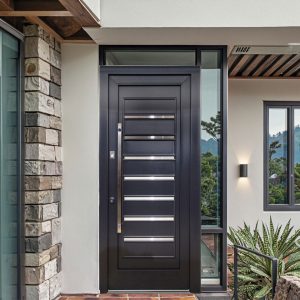
The first thing a visitor notices about a villa in Shenzhen’s coastal districts is rarely the landscaping. It is the entrance — specifically, how the sidelights frame the main door like a picture frame holds a painting. We have built these units for projects from Dubai to Melbourne, and the engineering challenge is always the same: how to deliver that architectural statement while ensuring the assembly survives wind loads, thermal expansion, and years of daily use.
At Jusen Door and Windows Manufacturing Co., Ltd., we manufacture solid wood and thermal-break aluminum entrance systems with sidelights as a standard part of our production line. This guide covers what B2B buyers need to know before sourcing these units — from glass specifications to shipping logistics.
Understanding the Anatomy of Doors with Sidelights
The Main Door vs. The Sidelight Panels
A door with sidelights is not a single product. It is a structural assembly of an active door panel and one or two fixed (or occasionally operable) vertical panels flanking it. The mullion — the vertical post separating the door from the sidelight — carries the real engineering load. If the mullion is undersized, the entire unit will rack over time, causing the door to bind and the glass seals to fail.
Our factory engineers calculate mullion dimensions based on the specific glass weight and the wind load requirements of your project’s location. For thermal-break aluminum systems, we use polyamide strips that separate the interior and exterior frames, preventing cold transfer. For solid wood doors, we reinforce the mullion with a hidden aluminum core — a detail we learned after early projects showed that solid timber alone could twist in humid climates.
Glass Types and Thermal Performance
The sidelight glass is where most performance issues originate. Double-glazing with Low-E coating is the baseline for most of our export orders, but laminated safety glass is increasingly requested for sidelights in commercial storefronts. Why laminated? Because sidelights are often at ground level — a security consideration that architects in urban environments take seriously.
Every sidelight unit we ship undergoes strict pre-shipment inspection including air-tightness and water-tightness tests. These tests matter because the vertical glass seals are more exposed to wind-driven rain than the main door’s gaskets. We have seen competitor products fail these tests at 600 Pa; our aluminum systems are routinely tested at 1200 Pa before we sign off on the batch.
Hardware Integration for High-Traffic Areas
Multi-point locking systems are non-negotiable for sidelight doors. A single-point lock on a tall entrance door creates a leverage point that can be forced — and the sidelight panels multiply the vulnerable surface area.
We offer full customization on hardware accessories, from concealed hinges rated for 100,000 cycles to magnetic door stops that prevent the door from slamming against the sidelight frame. Finish matching is handled in-house: brushed brass, matte black PVD coating, or stainless steel all available to match your project’s specified style.
Design Flexibility and Customization Options for Sidelight Doors
Configurations: Single Sidelight, Double Sidelights, and Transoms
The most common configuration we produce is a single active door with one sidelight on the hinge side. Double sidelights — one on each side — are popular for luxury villas where the entrance width allows it. Transoms (horizontal panels above the door) are an option we frequently combine with sidelights, but they add significant weight to the header — a structural consideration that affects the entire frame design.
Our engineering team adjusts the profile structure to accommodate different glass weights and wind load requirements. For example, a double-sidelight unit with a transom for a coastal project in Florida requires a different mullion profile than the same configuration for an inland project in Texas. The profiles may look identical externally, but the internal reinforcement differs.
Material Selection: Solid Wood, Aluminum, or Hybrid
Solid wood sidelight doors project a warmth that aluminum cannot replicate. Mahogany and oak are our most requested species for villa entrances, typically with a factory-applied UV-resistant finish. However, wood is not always the cheapest option. For high-humidity areas, buyers should prioritize moisture resistance over appearance — in those cases, thermal-break aluminum is the more rational choice.
As a manufacturer of solid wood doors and thermal-break aluminum doors, we can produce matching sets for the entire facade. This means your sidelight door, casement windows, and sliding doors all share the same finish and sightlines — a design consistency that is difficult to achieve when sourcing from separate suppliers.
Color and Finish Matching (RAL & Wood Veneer)
For aluminum systems, powder coating is applied in our facility to any RAL color you specify. For wood, we offer a range of veneers and stains. The key point for B2B buyers is that we control the entire finishing process in-house. We offer full customization on size, color, glass, and hardware, so if your project requires a bronze anodized frame with a walnut veneer sidelight, we can deliver that without subcontracting.
Sourcing Strategy: Why B2B Buyers Choose a Direct Factory
Eliminating Middlemen for Better Cost Efficiency
When you source doors with sidelights through a trading company, you are paying for their overhead, their profit margin, and often their logistics mistakes. Importing directly from our factory removes those layers. We are a direct supply factory — the price we quote is the price we manufacture to, without middleman markup. For a project with 200 entrance units, that difference can fund an entire upgrade from standard hardware to premium European multi-point locks.
Navigating Shipping and Customs (FCL & LCL)
Sidelight doors are large, heavy, and fragile. They do not ship like small components. We handle both FCL & LCL shipment directly from our factory, and our foreign trade team prepares packing lists, proforma invoices, and full customs documents for every order.
One practical note: for LCL shipments, your doors will be loaded alongside other cargo. We design our wooden crates to withstand stacking pressures of at least 3 meters, and we brace the glass internally with foam blocks at every contact point. We have seen what happens when crates are under-specified — shattered glass, bent frames, and a client relationship that takes months to repair. We do not repeat those mistakes.
Compliance with Local Building Codes
Building codes vary significantly between markets. The energy performance requirements for a sidelight door in Germany are different from those in Singapore, and the safety glass regulations differ as well. Our adjustable profile structure and fittings are engineered to match the local building codes of your target market. We have supplied units with CE marking for European projects and units tested to ASTM standards for North American buyers. Tell us your destination market early in the process, and we will adjust the specification accordingly.
Quality Assurance and Inspection Protocols
Pre-Shipment Testing: Air, Water, and Wind
We implement strict pre-shipment inspection procedures in-house — not as a checkbox exercise, but as a gate that every batch must pass. For sidelight doors, the critical tests are:
- Air-tightness: measured at 100 Pa and 600 Pa pressure differentials
- Water-tightness: sprayed at increasing intensity until water ingress is observed
- Wind resistance: tested to the equivalent of your project’s specified wind load
A door with sidelights that fails these tests on site is a costly problem. The glass is custom-cut, the frame is fabricated to exact dimensions, and replacement means weeks of delay. Our testing protocol exists precisely to prevent that scenario.
Packaging for Export
The packaging for sidelight doors requires more care than standard doors because of the large glass surfaces. We use heavy-duty export wooden crates with internal bracing at the top, bottom, and mid-span of each sidelight. The glass is protected with a sacrificial film layer, then foam board, then a rigid plastic corner guard. Each crate is clearly marked with handling instructions and the packing list is itemized per crate — not per container — so your receiving team can verify contents without unpacking everything.
Applications: Where Do Doors with Sidelights Shine?
High-End Villa Entrances
Double sidelights create the “wow” factor that luxury villa buyers expect. We specialize in custom villa doors and windows, and our aluminum alloy entrance doors are frequently specified for modern architectural styles where slim sightlines and large glass areas are essential. For traditional styles, our solid wood sidelight doors with carved mullions are a signature product.
Commercial Storefronts and Offices
Commercial applications demand durability first and aesthetics second. Our system windows and casement doors are often used in conjunction with sidelight doors to create a unified storefront system. In these applications, the sidelight panels are typically fixed (non-operable) to reduce hardware failure points, and the glazing is specified as laminated safety glass.
Sunrooms and Transitional Spaces
Sidelights are effective in transitional spaces — connecting an indoor living area to a sunroom or patio. In these applications, the sidelight panels can be specified as operable to improve cross-ventilation. We have produced several configurations where the “sidelight” is actually a narrow casement window hinged on the outer edge.
—
Q: Can you customize the size of doors with sidelights to fit non-standard openings?
A: Yes. As a factory, we offer full customization on size. Our engineering team can adjust the profile structure to accommodate almost any opening dimension, whether for a residential renovation or a new commercial build. The practical limit is transportation — a unit wider than 2.5 meters will require special logistics planning for road transport and container loading.
Q: What is the typical MOQ (Minimum Order Quantity) for a project?
A: We understand that B2B projects vary in scale. While we handle large construction project bulk supply for developers and contractors, we also support smaller projects with quantities as low as 10 units. The MOQ depends on the level of customization. Standard configurations with our standard finishes can be produced in smaller batches than fully bespoke units with custom hardware and specialty glass.
Q: How do you ensure the doors arrive without damage?
A: We use heavy-duty export wooden crates and secure the glass with proper supports at every contact point. Our team has rich experience in foreign trade and prepares the packing list meticulously — itemized per crate, with photographs of each unit before crating. For high-value orders, we can arrange third-party inspection at our factory before shipment.
Q: Do you provide OEM services for branding?
A: Absolutely. We provide OEM and ODM services. We can apply your private label, specific hardware brands, and unique finishing processes to the doors with sidelights to match your company’s standards. For ODM projects, our engineering team can work from your drawings or adapt our existing profiles to your performance specifications.
Q: Are your doors suitable for coastal climates with high wind and salt exposure?
A: Yes. Our thermal-break aluminum doors are designed for high performance. We conduct wind resistance tests during pre-shipment inspection to ensure the structural integrity of the frames and sidelights can withstand severe weather conditions. For salt exposure, we use stainless steel hardware and a two-coat powder finishing system that resists corrosion better than a single coat.
—
The Decision Guide: Matching Your Project to the Right Sidelight Door
There is no single “best” sidelight door — only the correct specification for your project’s conditions.
Choose thermal-break aluminum if: your project is in a coastal or high-wind zone, you need slim sightlines for maximum glass area, or you require specific RAL color matching for a modern architectural style. Aluminum is also the more cost-effective choice for large quantities where performance consistency matters more than material authenticity.
Choose solid wood if: your project is a traditional or heritage-style villa, the client prioritizes natural material aesthetics, and the local climate is relatively stable in temperature and humidity. Wood requires more maintenance over its lifecycle, but the visual payoff is unmatched for certain architectural styles.
Choose a hybrid (wood interior, aluminum exterior) if: you need the warmth of wood on the interior face but the durability of aluminum on the exterior. This is an increasingly popular option for high-end residential projects in temperate climates.
For specific OEM requirements or to discuss your bill of quantities, Contact Our Team today.
—
References
- Fenestration and Glazing Industry Alliance (FGIA). AAMA/WDMA/CSA 101/I.S.2/A440-17: North American Fenestration Standard. https://fgiaonline.org/“>https://fgiaonline.org/
- European Committee for Standardization. EN 14351-1:2006+A2:2016 — Windows and doors — Product standard, performance characteristics. https://www.cencenelec.eu/“>https://www.cencenelec.eu/
- National Fenestration Rating Council. Certified Product Directory for Doors and Windows. https://www.nfrc.org/“>https://www.nfrc.org/
- American Architectural Manufacturers Association. AAMA 2604: Voluntary Specification for High Performance Organic Coatings on Architectural Extrusions and Panels. https://fgiaonline.org/“>https://fgiaonline.org/
- Glass for Europe. Glass in Buildings: Energy and Daylighting Performance. https://www.glassforeurope.com/“>https://www.glassforeurope.com/