Content Menu
● 1. Why Choose Wooden Exterior Doors with Glass?
● 2. Core Construction & Material Selection
● 3. Customization Capabilities for B2B Buyers
● 4. Quality Assurance: Pre-Shipment Testing and Inspection
● 5. Logistics and Export Experience
● 6. Why Partner with Jusen as Your Manufacturing Partner?
● 7. Frequently Asked Questions
11 min read
The first thing a buyer notices when a container of wooden doors arrives is not the grain pattern in the photographs. It is the weight. A door with a solid core and a properly sealed glass unit feels substantial in a way that a lightweight hollow-core product never will. When an overseas distributor opens the crate and runs a hand across the frame, they are checking for something intangible — whether the factory that built this door understood that it would spend decades swinging in wind, rain, and temperature swings.
We have built wooden exterior doors with glass in our factory for over a decade. Not as a side product line, but as a core part of what we do. This guide walks through what actually matters when sourcing these doors from a manufacturer — not just the aesthetics, but the engineering decisions that determine whether a door lasts five years or fifty.
Why Choose Wooden Exterior Doors with Glass?
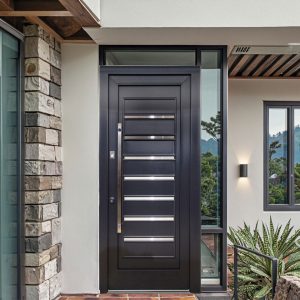
Wooden exterior doors with glass combine two things that seem to contradict each other. Wood offers natural insulation and timeless curb appeal. Glass opens up the entrance to light. Getting both right requires understanding where each material performs and where it needs help.
Our factory offers full customization on size, color, glass, and hardware accessories. That means when a client asks for a specific glass pattern that reduces visibility from the street while still letting morning light through the foyer, we do not point them to a catalog. We work backward from their requirement and build the door around it.
Curb Appeal and Architectural Versatility
The entrance of a building sets the tone. For residential villas, a wooden door with a tall glass sidelight creates an immediate sense of warmth. For commercial projects, the same wood species can be finished in a darker stain to project solidity and permanence.
We match specific architectural styles through custom color finishes. A modern minimalist project might call for a matte finish with narrow aluminum trim. A heritage renovation might require a deep mahogany stain with brass hardware. Our finishing line can replicate both without compromising the wood’s protective coating.
Natural Light and Energy Efficiency
Here is where many buyers get confused. They assume a wooden door with glass is inherently less energy-efficient than a solid door. That depends entirely on the glazing. We use double or triple glazing within the wooden frame, which provides insulation values that rival solid panels.
Our adjustable profile structure and fittings allow us to adapt the glazing and sealing to match the local building codes of target markets. A door heading to Norway needs a different U-value than one heading to Texas. We do not build one standard door and hope it passes inspection. We engineer the profile, glass thickness, and sealing system to meet the specific requirements of the destination market.
Core Construction & Material Selection
The wood species you choose determines everything — the weight, the durability, the price, and how the door responds to humidity. Our engineering team has tested multiple species for exterior use, and we have learned that the most expensive wood is not always the best choice for every climate.
Timber Species and Treatment
For exterior doors, we primarily work with engineered wood cores — laminated veneer lumber or finger-jointed solid cores — rather than single-piece solid timber. Here is why: solid wood moves. It expands and contracts across the grain with humidity changes. A single wide plank will cup or twist over time. An engineered core, built from multiple layers with opposing grain directions, stays dimensionally stable.
We treat all wood with moisture-resistant sealers before assembly. The treatment process involves vacuum-pressure impregnation for the core, followed by multiple coats of exterior-grade finish on visible surfaces. This is not a cosmetic step. It is what prevents the door from absorbing water at the bottom edge where it meets the threshold.
Glass Types for Security and Insulation
Glass is the weakest point of any door if you choose the wrong type. We offer tempered, laminated, and Low-E glass options. Tempered glass breaks into small granules rather than sharp shards. Laminated glass holds together even when shattered, which makes it the preferred choice for security-sensitive applications.
Low-E coatings reflect heat back toward its source. In summer, they keep the interior cool. In winter, they keep warmth inside. For buyers in extreme climates, we recommend double-glazed units with Low-E coating and argon gas fill between the panes. The performance difference is measurable and significant.
Hardware and Hinge Reinforcement
Here is the imperfect insight that many buyers discover too late: a wooden door with a heavy glass panel is heavy. A 40mm thick door with double glazing can weigh 80 to 100 kilograms. Standard hinges will not hold that weight. They will sag within months, and the door will scrape against the frame.
Our engineering team adjusts the profile structure and uses heavy-duty stainless steel hinges rated for the specific weight of each door. We also reinforce the frame at the hinge points with additional blocking. This is not visible in product photos, but it is what determines whether the door still closes smoothly in year ten.
Customization Capabilities for B2B Buyers
Most B2B buyers are not looking for a standard door. They are working on a project with specific dimensions, a specific architectural style, and specific performance requirements. Our OEM and ODM services exist precisely for this reason.
Custom Sizes and Configurations
Non-standard heights are common in villa projects. A 2400mm door height is standard in some markets, but 2700mm or even 3000mm is requested in others. Our factory handles unique dimensional requests without extended lead times because our production line is set up for flexibility rather than mass production of identical units.
We also accommodate configurations beyond single doors — double doors, doors with sidelights, doors with transom windows above. Each configuration affects the structural support needed for the glass panels. Our technical team calculates the reinforcement requirements for each layout.
Glass Design and Hardware Accessories
The options for glass design extend far beyond clear and frosted. Decorative glass with beveled patterns, textured glass that obscures visibility while transmitting light, and even colored glass inserts are all available. Hardware finishes range from brushed nickel to matte black to antique brass.
We do not force clients into a limited catalog. Full customization means we source the specific glass type and hardware finish that the project requires. If a client wants a particular brand of lockset, we will accommodate it as long as the dimensions work with our frame profile.
Private Label and Branding
Distributors often want their own branding on the product. Our experience in foreign trade includes handling discreet OEM shipments where the client’s logo appears on the packaging, the documentation, and sometimes the door hardware itself. We do not advertise our brand on private label orders unless the client requests co-branding.
Quality Assurance: Pre-Shipment Testing and Inspection
A door that looks perfect in a showroom can fail within months if it was not built to withstand real weather conditions. Our factory operates a strict pre-shipment inspection protocol that includes air-tightness, water-tightness, and wind resistance tests on every production batch.
Air and Water Tightness Protocols
We simulate heavy rain and high wind conditions in our testing facility. The door is mounted in a test frame, sealed, and subjected to water spray at controlled pressure. We check for leaks at every joint — where the glass meets the wood, where the frame meets the wall, and along the threshold.
Air-tightness testing measures how much air passes through the closed door under pressure differential. A poorly sealed door will whistle in high winds and allow dust and noise to enter. Our testing ensures the sealing system performs to the specified rating.
Wind Resistance for High-Rise and Coastal Areas
Wind loads on exterior doors vary dramatically by location. A door on a 20th-floor apartment in a coastal city faces forces that a ground-floor door in a protected courtyard will never experience. Our adjustable profile structure allows us to reinforce the core of the wooden door specifically for projects in typhoon-prone or high-wind regions.
This reinforcement involves additional internal bracing and thicker glass. It adds weight and cost, but it is non-negotiable for projects where structural integrity is critical.
The Jusen Factory Inspection Process
Before any door is crated for shipment, it goes through a final inspection that covers:
- Dimensional accuracy against the approved drawings
- Finish quality — no runs, sags, or color mismatches
- Glass installation — no gaps, proper sealant application
- Hardware function — locks engage smoothly, hinges operate without binding
- Moisture content of the wood — verified to be within acceptable range for the destination climate
We photograph and document each inspection step. Buyers receive the inspection report with their shipment documentation.
Logistics and Export Experience
Shipping wooden doors internationally requires more than just putting them in a container. The packaging must protect against moisture, impact, and temperature changes during ocean transit. Our logistics team handles this daily.
FCL vs. LCL: Which is Right for Your Project?
Full Container Load (FCL) is more cost-effective per door when you have enough volume to fill a container. Less than Container Load (LCL) makes sense for smaller orders or when you want to test the market before committing to larger quantities.
We handle both efficiently. For LCL shipments, we ensure the crates are robust enough to handle the additional handling they will experience. For FCL shipments, we optimize the loading plan to maximize the number of doors per container while maintaining proper protection.
Export Documentation and Customs
International buyers need more than just the product. They need packing lists, proforma invoices, and full customs documents that allow their freight forwarder to clear the shipment without delays. Our foreign trade experience means we prepare these documents accurately and provide them in the format required by the destination country’s customs authority.
Packaging for Transit
The wood and glass surfaces need protection during long ocean freight. Each door is wrapped in a protective film, then placed in a wooden crate with foam padding at all contact points. Glass panels are additionally protected with corner guards and edge protectors. The crates are designed to be stackable, which maximizes container space utilization.
Why Partner with Jusen as Your Manufacturing Partner?
The decision of where to source wooden exterior doors with glass comes down to more than just unit price. It comes down to whether the factory can deliver consistent quality at scale, meet project deadlines, and support you when issues arise.
Cost Efficiency vs. Local Sourcing
Purchasing directly from our factory eliminates the middleman markup. We are the manufacturer. The price we quote is the factory price. For distributors and contractors, this translates directly into better margins compared to buying through domestic intermediaries who add their own markup on top of the factory price.
Technical Support and After-Sales Service
Our team supports you during installation. We provide technical drawings, installation guidance, and troubleshooting support. If an installer has a question about adjusting the hinges or sealing the frame, we respond with clear instructions. This level of support is rare among overseas suppliers.
Long-Term Supply Stability
As a construction project bulk supply partner, we are equipped to scale production to meet the demands of large developments. A villa project might require 50 doors. A residential complex might require 500. Our production capacity handles both without compromising quality or delivery schedules.
Frequently Asked Questions
Can you match the wood color to our specific Pantone or RAL code?
Yes. Our factory supports full color customization to match specific architectural palettes. We maintain a library of stain formulas and can adjust the color to your exact specification. We recommend ordering a finish sample before mass production to verify the match under different lighting conditions.
What is the typical lead time for a 40ft container of wooden doors?
Lead times vary based on volume and customization level. Standard sizes with standard finishes typically ship in 25-35 days after sample approval. Highly customized orders — unique dimensions, special glass, custom hardware — may require 45-55 days. We provide a confirmed production schedule with every quotation so you can plan your project timeline.
Do you provide installation instructions for the glass panels?
Yes. We provide detailed technical documentation including installation drawings, step-by-step instructions, and torque specifications for hardware. Our engineering team is also available for video calls if your installation team encounters unexpected conditions on site.
Are your wooden doors with glass suitable for coastal environments?
Yes, with the right specifications. We adjust the profile structure and finish to withstand salt-air corrosion and high humidity. This includes using marine-grade stainless steel hardware and applying additional moisture-resistant sealing to all exposed surfaces. We recommend specifying this requirement at the quotation stage so our engineering team can include the appropriate reinforcement.
Can we mix different styles of doors in one container?
Absolutely. We offer flexible FCL and LCL options to accommodate mixed product orders. Many of our clients combine wooden doors for interior use with wooden exterior doors with glass in a single container to optimize their shipping costs.
What is your MOQ?
Our standard MOQ is 10 doors for custom designs. For standard models from our catalog, we can accommodate smaller trial orders. We understand that B2B buyers often need to test the market before committing to large volumes, and we work with our clients to structure orders that make sense for their business.
Making the Right Sourcing Decision
Choose a factory with direct manufacturing capability if you need consistent quality at scale and competitive pricing. Choose a trading company if you only need a one-off purchase and do not require technical support.
Choose us if you need a partner who can handle full customization, provide pre-shipment testing documentation, and deliver FCL or LCL shipments with complete export paperwork. We have been doing this for over a decade, and we treat every project as a long-term relationship rather than a single transaction.
The right wooden exterior door with glass is not just a product. It is the result of engineering decisions made long before the door reaches your project site. Those decisions determine whether the door performs for decades or fails within years.
When you are ready to discuss your project specifications, our engineering team is available to review your drawings and provide a detailed quotation. We will walk you through the material options, the glass configurations, and the hardware choices that fit your project’s requirements.
References
[1] Energy Efficiency of Glazed Wooden Doors. (2023). U.S. Department of Energy, Office of Energy Efficiency & Renewable Energy. https://www.energy.gov/energysaver/energy-efficient-window-attachments
[2] Wood Movement and Moisture Content. (2022). Wood Products Council, WoodWorks. https://www.woodworks.org/wp-content/uploads/Wood-Design-Audio-Blog-Moisture-Content.pdf
[3] Impact of Glazing on Door Thermal Performance. (2024). National Fenestration Rating Council. https://www.nfrc.org/window-types/
[4] Wind Load Requirements for Exterior Doors. (2023). International Code Council, IBC Chapter 16. https://www.iccsafe.org/codes-tech-support/codes/2018-i-codes-ibc/
[5] Laminated Glass for Security Applications. (2024). Glass Association of North America. https://www.glasswebsite.com/technical/tech-manual