Content Menu
● 1. The Anatomy of a Premium Exterior Entry System
● 2. Choosing the Right Wood Species for Your Exterior Entry
● 3. Custom Exterior Entry Design: Aligning Aesthetics with Structural Integrity
● 4. Manufacturing Precision: How Our Factory Ensures a Perfect Fit
● 5. Why Global Contractors and Developers Partner with JuSen
● 6. Frequently Asked Questions
● 7. Decision Guide: Choosing Your Exterior Entry Configuration
10 min read
When a contractor in Toronto opens a container from our factory, the first thing they check is the edge of the door slab. Not the face. The edge. That is where machining tolerances show. If the stile-to-rail joints have gaps wider than a business card, the door will fail within two seasons. We have spent 20 years ensuring those edges are tight.
This guide is not a brochure. It is a technical walkthrough of how we engineer, build, and ship exterior entry systems for global projects. If you specify doors for commercial buildings, villas, or high-end residential developments, this is the information we would share in a meeting room before you sign a PO.
—
The Anatomy of a Premium Exterior Entry System
An exterior entry is not a single product. It is a system of interdependent components: the slab, the frame, the glazing, the weatherstripping, and the hardware. If any one of these is weak, the whole unit fails. Air leaks. Water penetrates. Energy performance drops.
We design these components as one unified assembly. Our timber frames are machined with grooves that align perfectly with the weatherstripping channels in the door slab. The aluminum cladding overlaps the wood substrate at precise angles to shed water. This is not something you can achieve with off-the-shelf parts from different suppliers.
Solid Wood vs. Aluminum Clad: Structural Core
The core material determines the door’s structural lifespan. Solid wood offers classic aesthetics and natural insulation. Aluminum clad offers a low-maintenance exterior with a wood interior. Both have their place.
Our foundation is solid wood processing. We operate our own wood drying workshop, which is rare among Chinese door factories. Many suppliers buy pre-kilned lumber and hope for the best. We control the drying curve ourselves, bringing moisture content down to 8–12% depending on the destination climate. This prevents warping and twisting that plague exterior doors in extreme temperature swings. [1]
For clients who want the look of wood without the upkeep, we offer aluminum clad systems. The aluminum skin is mechanically attached to the wood core, not just glued. This allows for natural wood movement while protecting the exterior face from UV degradation.
Glazing and Thermal Break Standards
Single glazing has no place in a modern exterior entry. We build our doors to accept double or triple glazing units, depending on the project’s thermal requirements.
Our aluminum alloy windows and door frames incorporate thermal break profiles. These are not cosmetic additions. They physically separate the interior and exterior metal surfaces, stopping thermal bridging. When paired with low-E glass, the complete assembly can achieve U-values that meet passive house standards in many configurations. [2]
Hardware and Weatherproofing Integration
Hardware is where many custom door projects fall apart. If the hinge pockets are not machined to exact depth, the door sags. If the lock bore is off by a millimeter, the deadbolt binds.
We pre-engineer all hardware into the frame during the design phase. Our in-house engineering team specifies the hinge locations, lock types, and threshold heights before we cut a single piece of wood. This ensures the hardware integrates seamlessly with the weatherproofing system, creating a seal that lasts.
—
Choosing the Right Wood Species for Your Exterior Entry
Not all wood is suitable for exterior use. The species dictates dimensional stability, rot resistance, and how well it accepts paint or stain. We guide our clients through this selection based on their climate and architectural style.
Dense Hardwoods for High-Traffic Commercial Projects
For commercial entrances, we typically recommend dense hardwoods like Oak, Mahogany, or Sapele. These species have tight grain structures that resist moisture penetration and handle repeated impact without denting.
Our two decades in solid wood processing have taught us that grain direction matters as much as species. We orient the grain in the stiles to run vertically, which minimizes expansion across the width of the door. We also reject any board with even a hint of heartwood in the outer lamellas, as heartwood is more prone to checking. [3]
Engineered Wood Cores for Stability
For large door slabs—anything over 42 inches wide—solid wood becomes risky. The natural expansion and contraction across a wide slab can cause the frame to bind or the finish to crack.
We use engineered cores for these applications. Our blockboard cores consist of kiln-dried softwood strips glued under high pressure, sandwiched between hardwood veneers. This construction is dimensionally stable, meaning the door will not expand or contract noticeably with seasonal humidity changes.
Finish Application for Exterior Durability
A premium door with a poor finish will fail. The finish is the first line of defense against moisture.
We operate our own spray finishing workshop. This gives us control over the environment, the application process, and the curing time. We apply multiple coats of UV-resistant polyurethane or exterior-grade paint, sanding between each coat. We do not outsource this step because it is too critical to quality. A poorly applied finish leads to peeling, blistering, and callbacks—none of which we are willing to accept. [4]
—
Custom Exterior Entry Design: Aligning Aesthetics with Structural Integrity
Architects love bold designs. Oversized doors. Arched tops. Sidelites that stretch two stories. We love them too, but we also know the physics.
A door that is 8 feet tall and 4 feet wide with a 12-inch sidelite on each side creates enormous structural loads. The frame must be reinforced to carry the weight of the glass and the door slab. We bridge the gap between “vision” and “buildability.”
Custom Sizes, Shapes, and Sidelites
We offer full ODM customization. This means we do not just cut wood to size. We engineer the entire framework to support additional elements like sidelites and transoms.
For arched tops, we use a laminated construction method. We bend thin layers of hardwood around a form and glue them under pressure. This creates a structurally sound arch that will not crack, unlike a solid piece of wood that has been cut to shape, which exposes end grain and invites moisture.
The Role of Shop Drawings in Customization
Shop drawings are the blueprint for your project. They show every dimension, every joint, every hardware location. They are the communication tool between your vision and our factory floor.
Our engineering team provides customized shop drawings and formal quotations within 24 hours of your inquiry. This fast turnaround keeps your project timeline moving. We have seen too many projects stall because a supplier took weeks to respond with a basic drawing. We do not operate that way. [5]
Matching Interior Aesthetics with Exterior Performance
The exterior face of the door must perform. The interior face must look beautiful.
We ensure the interior face of our entry doors matches the finish quality of our interior wooden doors. This creates a cohesive look when the entry door is visible from inside the home or building. You do not want a stunning exterior door with a cheap-looking interior face. We prevent that by finishing both sides to the same standard.
—
Manufacturing Precision: How Our Factory Ensures a Perfect Fit
An exterior entry door is only as good as its manufacturing tolerances. If the gap between the door and the frame is too wide, you get drafts. Too narrow, and the door binds when the wood expands.
We rely on our factory processes to ensure perfection. This is not luck. It is precision machining and rigorous quality control.
In-House Aluminum and Wood Processing
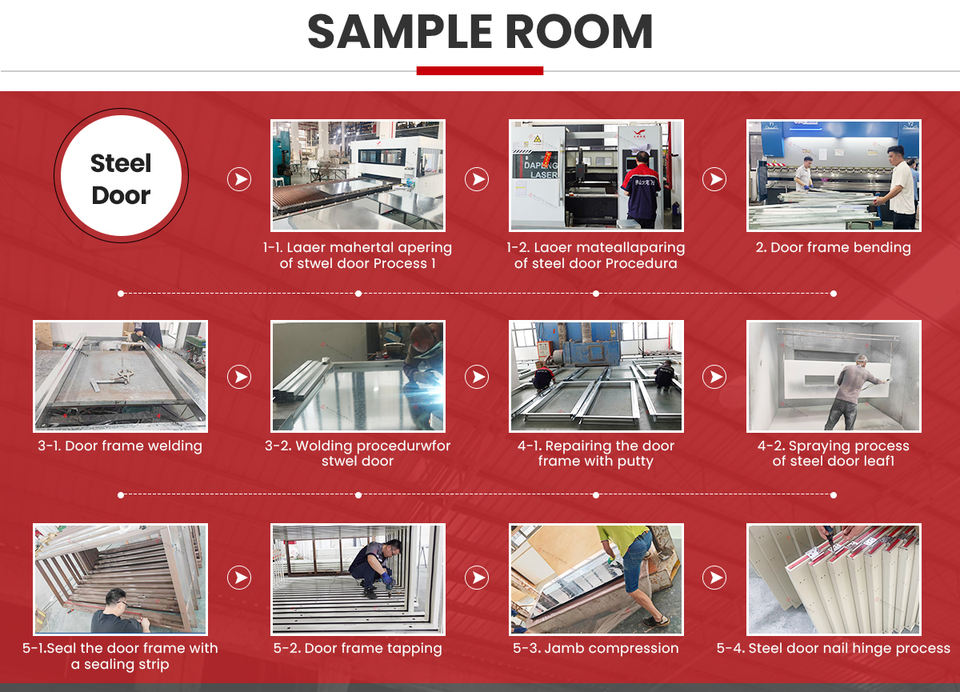
Our factory has both a wood drying workshop and an aluminum processing workshop. This is unusual. Most manufacturers specialize in one or the other.
This dual capability allows us to perfectly join aluminum cladding to the wood substrate. We machine the aluminum profiles to match the exact dimensions of the wood core. The thermal break is integrated during assembly. There is no thermal bridging, no gaps, and no misalignment. [6]
Quality Control at Every Stage
We implement strict quality control from raw material inspection to final production. Our inspectors check the moisture content of every board before it enters the machining line. They verify joinery strength by testing sample joints to destruction. They check glass seal integrity by pressurizing the glazing unit before installation.
Every door is inspected at multiple points during production. If a door does not meet our standards, it does not leave the factory. We would rather scrap a flawed door than ship it and deal with a warranty claim later.
Packaging and Logistics for Export
An exterior entry unit is fragile. Glass can crack. Wood can dent. Aluminum can scratch.
We use robust packaging methods for export. Each door is wrapped in protective film, then covered with a rigid cardboard sleeve. The edges are protected with foam corner protectors. The door is then secured in a wooden crate that is designed to withstand the rigors of ocean freight.
We also provide shipping damage protection as part of our after-sales support. If a door arrives damaged, we work with you to resolve it quickly. We have been shipping globally for two decades, and we have learned how to do it safely.
—
Why Global Contractors and Developers Partner with JuSen
The product quality is only half the story. The other half is the business relationship. We understand the commercial needs of B2B buyers: reliability, cost, and capacity.
Flexible MOQs and Bulk Supply
We offer flexible MOQs for retail dealers who are testing the market. You do not need to order a full container to start working with us.
For construction projects, we scale up to bulk supply. We have supplied doors for entire villa developments, delivering hundreds of units on a schedule. We coordinate production to match your construction timeline, so doors arrive when you need them, not all at once or too late.
Private Label and OEM Solutions
We support retail dealers with private label options. You can brand our doors as your own line. We handle the manufacturing, you handle the marketing and sales. This gives you a competitive edge without the capital investment in a factory.
Our OEM services cover everything from custom designs to custom packaging. We work with your specifications to create a product that fits your market perfectly.
A Dedicated Partner, Not Just a Supplier
We welcome global distributors, builders, architects, and project partners. Our team is structured to provide one-stop service. We handle the design, engineering, manufacturing, and shipping. You handle the installation.
We are honest about limitations. Wooden doors are not always the cheapest option. For high-humidity areas, buyers should prioritize moisture resistance over appearance. We will tell you this during the quoting phase, not after you have placed the order. That honesty is why clients come back.
—
Frequently Asked Questions
What is the typical lead time for a custom exterior entry order?
Lead times vary based on complexity. A standard door with a straightforward design can ship in 4–6 weeks. A complex custom design with special glazing and hardware might take 8–10 weeks. We provide a clear production schedule upon order confirmation. Our 24-hour quotation turnaround ensures you know the timeline early.
Can you manufacture exterior doors to match specific architectural styles like Modern, Victorian, or Mediterranean?
Yes. Our in-house design and engineering team supports full ODM customization. We can replicate specific profiles, panel configurations, and finishes. Send us a photo or a sketch, and we will produce shop drawings for your approval.
How do you ensure the exterior entry doors do not warp or rot in humid climates?
We stabilize the wood to the specific moisture levels required for the destination climate. Our wood drying workshop allows us to control this precisely. For humid climates, we also recommend engineered cores, which are dimensionally stable. We will advise you on the best material for your project’s location.
Do you supply only the door slab, or do you provide the full frame and hardware?
We provide complete systems. We manufacture solid wood entry doors, timber door frames, and supply supporting hardware accessories. This ensures a perfect fit and streamlines procurement. You order from one source, not five different suppliers.
What is the MOQ for wholesale or project-based orders?
We pride ourselves on flexible MOQs. A retail dealer can start with a small initial stock of 10–20 doors. A developer ordering for a large villa project can order hundreds of units. We scale our production to meet your volume requirements.
—
Decision Guide: Choosing Your Exterior Entry Configuration
Choose solid wood if: You prioritize classic aesthetics, natural insulation, and you are working with a climate that has moderate humidity. Solid wood offers timeless beauty that many high-end clients demand.
Choose aluminum clad if: You need low maintenance, maximum weather protection, and you are working in a harsh coastal or extreme climate. The aluminum exterior will outlast any paint or stain system.
Choose an engineered core if: You are specifying a door wider than 42 inches, or you are working in a climate with extreme seasonal humidity swings. The dimensional stability is worth the slight reduction in “solid wood” appeal.
Choose our OEM/ODM service if: You need a custom design, private labeling, or a complete system solution. We handle the engineering so you can focus on the installation.
—
When you are ready to move forward, the next step is simple. Send us your project details, and we will respond with shop drawings and a formal quotation within 24 hours. That is our commitment.
Contact Our Team today to start your project.
—
References
[1] Wood Database. “Moisture Content and Wood Stability.” https://www.wood-database.com/wood-articles/moisture-content-and-wood-stability/
[2] Efficient Windows Collaborative. “U-Factor and Thermal Performance.” https://www.efficientwindows.org/ufactor.php
[3] Forest Products Laboratory, USDA. “Wood Handbook: Wood as an Engineering Material.” https://www.fpl.fs.usda.gov/documnts/fplgtr/fplgtr190/fplgtr190.pdf
[4] Paint Quality Institute. “Exterior Wood Finishing Guide.” https://www.paintquality.com/en/guides/exterior-wood-finishing
[5] American Institute of Architects. “Shop Drawings in Construction.” https://www.aia.org/
[6] AAMA (American Architectural Manufacturers Association). “Thermal Break Performance Standards.” https://aamanet.org/