Content Menu
● 1. Why “Doors Glass” Is a Structural Decision, Not a Decorative One
● 2. The Main Types of Doors Glass & Frame Combinations We Manufacture
● 3. Customization Capabilities: How OEM & ODM Services Work for Glass Door Projects
● 4. The Manufacturing Process: How We Control Quality in Glass Door Production
● 5. Lead Times, MOQs, and Logistics for Glass Door Orders
● 6. Why Global Contractors and Developers Choose JuSen for Glass Doors
● 7. Common Questions Buyers Ask About Doors Glass
12 min read
The first question a contractor asks us about glass doors is rarely about the glass itself. It is about the frame.
You can order tempered glass from any glazier. But when that glass panel needs to swing, slide, or fold within a frame that must survive ocean freight and a decade of daily use, the frame becomes the real product. The glass is just the visible surface.
At Jusen Doors & Windows Manufacturing Co., Ltd., we have spent over 20 years building those frames — in solid wood, in aluminum, and in combinations of both. This guide covers what we have learned about doors glass from the factory floor, not from a catalog.
—
Why “Doors Glass” Is a Structural Decision, Not a Decorative One
Glass in a door does three jobs simultaneously. It transmits light, it creates visual depth, and — if specified wrong — it becomes a maintenance liability.
The shift we have observed across our projects over the past two decades is clear: architects no longer treat glass as a hole in the door. They treat it as a design element that dictates the door’s proportions. A 400mm-wide stile on a solid wood door can hide a mediocre hinge. It cannot hide a glass panel that was cut 3mm undersized and rattles in its groove.
Our engineering team looks at glass doors as a system. The glass thickness must match the frame’s groove depth. The glass weight must match the hinge rating. The sealant must match the climate of the destination country. A door that performs in Dubai’s dry heat will behave differently in Singapore’s humidity. We know this because our clients ship to both places — and we adjust our material specifications accordingly.
The market insight we bring to the table is simple: the demand for glass doors has shifted from “a window in the door” to “a door that is mostly glass.” That changes the engineering. The frame must now provide the structural rigidity that the glass panel cannot.
—
The Main Types of Doors Glass & Frame Combinations We Manufacture
We categorize our glass door production into three distinct lines. Each uses different manufacturing processes and serves a different buyer profile.
Aluminum Alloy Glass Doors for Patio and Commercial Applications
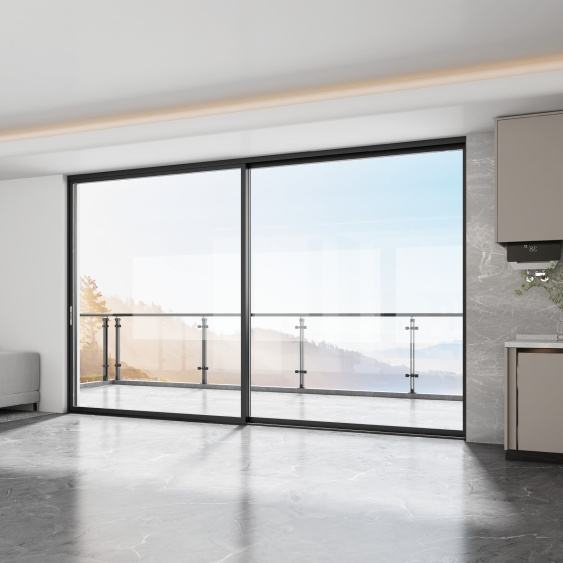
Our aluminum processing workshop handles this product line. We cut, mill, and assemble profiles that house glass panels weighing up to 80 kilograms per leaf for sliding systems.
For commercial storefronts and hotel patios, we produce:
- Sliding glass doors with multi-point locking and bottom rollers rated for daily use
- Folding glass systems that stack panels to one side, opening up entire walls
- Fixed glass panels with aluminum frames for entrance lobbies
The advantage of in-house aluminum processing is dimensional accuracy. Our CNC machines cut the frame grooves to a tolerance of ±0.5mm. When a glass panel seats into a groove that precise, the weather seal performs as intended. Air leakage and water ingress are the two most common complaints about poorly made aluminum glass doors. Both trace back to sloppy frame machining.
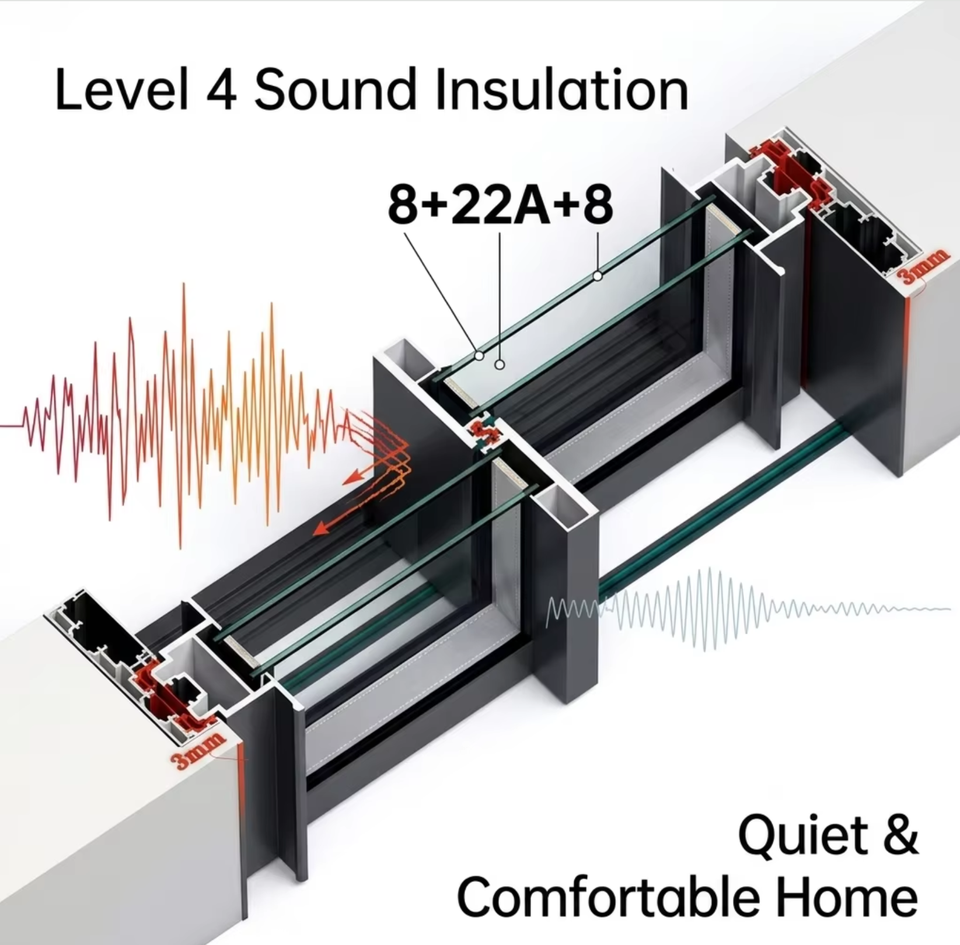
For high-rise residential projects, we offer thermally broken aluminum profiles. These separate the interior and exterior metal surfaces with a polyamide strip, reducing heat transfer. Combined with double-glazed low-E glass, these doors achieve thermal performance suitable for passive house standards.
Solid Wood Entry Doors with Glass Inserts
This is our heritage product line. Our solid wood processing capabilities — including our own wood drying kilns — allow us to build entry doors that carry heavy glass panels without warping.
The process starts with engineered wood stiles and rails. We use laminated construction, not single-piece timber, because laminated members resist twisting better when supporting asymmetrical loads. A glass insert on one side of a door creates an uneven weight distribution. Single-piece wood will eventually cup or bow. Laminated stiles hold their shape.
Glass options for our wood entry doors include:
- Double-glazed tempered units with argon gas fill for thermal efficiency
- Beveled or leaded glass for traditional architectural styles
- Opaque or frosted glass for privacy while maintaining light transmission
- Decorative metal grilles between glass panes for a custom look
The critical detail here is the glazing bead — the trim piece that holds the glass in the frame. We machine our glazing beads from the same wood species as the door, then finish them in our spray finishing workshop. This ensures color match and prevents the “plastic-looking trim” problem common with imported composite beads.
Interior Wooden Doors with Glass Panels
For offices, conference rooms, and luxury residences, we produce interior doors that incorporate glass in various configurations. The range includes:
- Full-glass interior doors with minimal wood framing — a modern aesthetic
- French doors with multiple glass panels for between-room transitions
- Single-pane doors with clear, fluted, or acid-etched glass
Fluted glass has become particularly popular in our recent projects. The vertical ridges obscure visibility while allowing light through, making it ideal for office privacy without the clinical feel of frosted film.
All our interior glass doors use the same wood species options as our solid doors: oak, walnut, mahogany, maple, and engineered alternatives. The finish — whether matte lacquer, open-pore oil, or high-gloss paint — is applied in our spray finishing workshop after the glass is fitted.
—
Customization Capabilities: How OEM & ODM Services Work for Glass Door Projects
Off-the-shelf glass doors fail on major projects. The opening is never exactly 900mm. The architect specified a transom window that requires a non-standard frame height. The client wants a glass shape that follows a curved arch.
This is where our OEM and ODM services become relevant.
Our in-house design and engineering team handles the technical translation. You send us architectural drawings, a sketch, or even a photo with rough dimensions. Within 24 hours, we return customized shop drawings and a formal quotation. These drawings show the door elevation, section details, glass specification, and hardware schedule. You approve the design before we cut any material.
Custom Sizes and Glass Shapes
We routinely produce doors that are not standard sizes. For villa projects, we have manufactured entry doors at 1200mm width and 2400mm height with glass inserts occupying 60% of the door leaf. For commercial projects, we have supplied sliding glass doors spanning 6 meters across.
The engineering constraint is always the same: the glass panel must be supported at all edges. Oversized glass flexes under wind load. Our frames account for this with deeper grooves and additional reinforcement.
Private Label and Branding
Retail dealers and distributors can sell our glass doors under their own brand. We handle the manufacturing, quality control, and packaging. You handle the marketing and local installation. This arrangement works well for partners who want a complete product line without investing in factory capacity.
Hardware Integration
A glass door is only as good as its hinges. We supply matching hardware — hinges, handles, locks, and door closers — selected to match the door weight and usage frequency. For heavy glass entry doors, we recommend multi-point locking systems that engage at multiple points along the door edge, preventing warpage over time.
—
The Manufacturing Process: How We Control Quality in Glass Door Production
Buyers often assume glass doors are purchased from a glass supplier and then framed. That is true for small shops. It is not how we operate.
Our factory controls the entire process, from raw lumber to finished door assembly. Here is what that means for quality.
In-House Wood Drying and Aluminum Processing
Wood moves. It absorbs moisture and expands. It loses moisture and shrinks. When a solid wood door carries a fixed glass panel, the frame must remain stable. If the wood twists, the glass will crack.
Our wood drying kilns reduce moisture content to 8-12%, the range specified for interior and protected exterior applications. This process takes days, not hours. We do not rush it, because rushing creates internal stresses in the lumber that manifest later as warping.
For aluminum doors, our workshop uses CNC machining centers to cut and mill profiles. The precision here determines how well the glass seats. We also perform the anodizing or powder coating in-house, which gives us control over color consistency across large orders.
Spray Finishing and Assembly
Our spray finishing workshop applies stains, paints, and clear coats to wood frames. The process uses multiple coats with sanding between each application. For aluminum frames, we apply powder coating in a controlled environment to prevent dust contamination.
Assembly is where glass and frame finally meet. Our team sets the glass into the frame with setting blocks — small rubber pads that prevent direct glass-to-frame contact. Then we apply structural sealant, insert the glazing bead, and secure it with stainless steel pins.
One detail we insist on: the glass must be able to expand and contract with temperature changes. If the sealant bonds the glass rigidly to the frame, thermal stress will eventually crack the panel. We leave a controlled gap and use sealant that remains flexible over a wide temperature range.
Quality Control from Raw Materials to Final Production
Every glass panel is checked for thickness, edge quality, and certification marks upon arrival. Tempered glass must have the required safety marking. Laminated glass must show the interlayer is free of bubbles. We reject panels that fail visual inspection before they reach the assembly line.
After assembly, each door undergoes a functional check. We hang the door, test the hinges, verify the lock alignment, and check the glass for any signs of stress. Only then does the door move to packaging.
—
Lead Times, MOQs, and Logistics for Glass Door Orders
Glass doors present a logistics challenge that solid doors do not: fragility. We address this with specific packaging protocols and shipping terms.
Flexible MOQs for Project Partners
We understand that not every buyer starts with a container-load order. Our minimum order quantities are flexible, allowing retail dealers to test the market with a small pilot order before committing to bulk quantities. For large construction projects, we supply in phased shipments that match the construction schedule.
Production Lead Times
Standard production takes 20-35 days depending on order size and complexity. Custom designs with non-standard glass shapes require additional time for glass sourcing and frame machining. We provide accurate production schedules at the quotation stage and update you throughout the manufacturing process.
Shipping Damage Protection
Glass breaks in transit. It happens even with the best packaging. Our after-sales support includes shipping damage protection, which means we replace damaged panels or doors at no cost to you. This warranty covers damage that occurs during ocean freight and inland transport.
Our packaging uses reinforced plywood crates with internal bracing. Glass surfaces receive protective film before being placed in the crate. Doors are separated by foam layers to prevent contact during transit.
—
Why Global Contractors and Developers Choose JuSen for Glass Doors
The decision to source doors glass from a specific manufacturer comes down to consistency. Contractors need to know that the 200th door matches the first door. Developers need to know that delivery dates are honored. Dealers need to know that warranty claims are handled without argument.
Our one-stop service covers the full chain: wood drying, aluminum processing, spray finishing, glass fitting, hardware supply, and export packaging. This vertical integration is rare among Chinese door manufacturers. Most factories outsource at least one step. We do not, because outsourcing creates quality gaps that we cannot control.
Engineering Support for Complex Projects
Our engineering team is available for technical consultation throughout your project. If you are unsure about the glass specification for a coastal installation (salt air corrodes certain hardware finishes), ask us. If you need a door that meets a specific fire rating, we can guide you on the frame and glass combination required.
We provide customized shop drawings and formal quotations within 24 hours. This speed keeps your project on schedule.
A Note on Limitations
Glass doors are not the right choice for every application. For high-security environments, solid doors with minimal glazing are safer. For extreme climate zones, the thermal performance of a glass-heavy door will always be inferior to an insulated solid door. We tell our clients this before they order, not after. It saves everyone time.
—
Common Questions Buyers Ask About Doors Glass
What types of glass do you recommend for exterior solid wood entry doors?
For exterior applications, we recommend double-glazed tempered or laminated glass. Tempered glass breaks into small granules rather than sharp shards, making it safer for entry areas. Laminated glass holds together even when broken, providing additional security. The choice between them depends on your security requirements and budget. Our engineering team can advise on the optimal glass weight to match your door frame’s hinge capacity.
Can you provide ODM services for a custom glass door design we have in mind?
Yes. Our in-house design team reviews your sketches or architectural drawings and produces customized shop drawings within 24 hours. We handle the engineering details — glass thickness, frame profiles, hardware selection — and present a complete package for your approval before production begins.
How do you prevent glass damage during international shipping?
We use heavy-duty export-grade plywood crates with reinforced corners. The glass surfaces receive protective film, and doors are separated by foam layers. Our shipping damage protection covers replacement costs if damage occurs during transit.
What are your MOQs for custom aluminum glass doors?
While we serve large construction projects with bulk supply, we also offer flexible MOQs for dealers and designers. You can start with a pilot order to verify quality before scaling up.
How does your aluminum frame production improve glass door performance?
Our in-house aluminum processing uses CNC machining with tight tolerances. This ensures the frame grooves are precisely aligned to seat the glass correctly, preventing air leakage and structural stress on the glass panel. The result is a door that operates smoothly and maintains its weather seal for years.
—
Choosing the Right Glass Door Configuration
Choose an aluminum glass door if you need wide spans, sliding or folding operation, and high durability in commercial settings. Aluminum frames handle heavy glass panels and require minimal maintenance.
Choose a solid wood entry door with glass inserts if your project demands classic aesthetics, custom wood finishes, and the curb appeal that timber provides. Wood doors with glass offer a balance of privacy and light that aluminum cannot replicate.
Choose an interior wooden door with glass panels if you are outfitting offices, conference rooms, or residential interiors where acoustic separation and visual connection are both required.
Choose our OEM/ODM service if you have a custom design that does not fit standard product categories. We will engineer it for you.
—
The glass in a door is a component. The door is a system. When you work with a manufacturer who controls the entire system — wood, aluminum, glass, hardware, and finish — you get a product that performs as designed.
We build doors glass systems for contractors, designers, dealers, and developers worldwide. If you have a project in mind, send us your drawings. We will respond with shop drawings and a quotation within 24 hours.
For more information on our full range of doors and windows, visit our website or Contact Our Team to discuss your project specifications.
—
References
- Glass for Europe. (2023). Glass in Buildings: Thermal Efficiency and Safety. https://www.glassforeurope.com/
- National Glass Association. (2024). Tempered vs. Laminated Glass: Safety Performance Comparison. https://www.glass.org/
- American Architectural Manufacturers Association. (2023). AAMA/WDMA/CSA 101/I.S.2/A440-17: Standard Specification for Windows, Doors, and Unit Skylights. https://www.aamanet.org/
- International Code Council. (2024). International Building Code: Glazing Requirements. https://www.iccsafe.org/
- Fenestration and Glazing Industry Alliance. (2023). Thermal Performance of Fenestration Systems. https://fgiaonline.org/