Content Menu
● 1. Understanding Acoustic Ratings: What Contractors and Designers Must Know
● 2. Acoustic Door Solutions for Commercial Projects: Meeting STC Standards
● 3. Residential Soundproofing: The JuSen Solid Wood Advantage
● 4. Why Choose Jusen as Your Acoustic Door Manufacturing Partner?
● 5. Frequently Asked Questions
17 min read
The last time we shipped a container of acoustic doors to a hotel project in the Middle East, the buyer’s first question wasn’t about the STC rating. It was about the seals. “Are you sure these will survive the shipping?” He had been burned before by rubber gaskets that arrived cracked, or drop seals that were misaligned after a rough ocean crossing. That question tells you everything about why acoustic doors fail — not because of the core, but because of the details.
Standard hollow-core doors are a compromise. They look fine in a showroom. They save money. But when you install them in a hotel guest room corridor or a corporate meeting room, the sound bleeding through the perimeter makes the whole project feel cheap. Soundproof doors are not a single product. They are a system — the slab, the frame, the seals, and the installation all have to work together. If any one of those components fails, your STC rating drops faster than a poorly hung door.
At Jusen Doors & Windows Manufacturing Co., Ltd., we have spent over 20 years solving this problem for global contractors, architects, and retail dealers. We operate our own wood drying, spray finishing, and aluminum processing workshops. That vertical integration matters when you are building acoustic door solutions — because we control the core density, the frame tolerances, and the seal alignment under one roof. This article explains what you need to know about soundproof doors, from STC ratings to core construction, and how our factory can support your next project.
Understanding Acoustic Ratings: What Contractors and Designers Must Know
Decoding STC and OITC Ratings for Door Assemblies
STC (Sound Transmission Class) measures how well a building element reduces airborne noise. For doors, the scale typically runs from 25 (a hollow-core interior door) to 60+ (a heavy lead-lined studio door). OITC (Outdoor-Indoor Transmission Class) is a different metric that accounts for low-frequency noises like traffic or aircraft rumble. If your project is near a highway or an airport, OITC matters more than STC.
Here is the part that surprises many buyers: the STC rating of the door slab alone is almost irrelevant. What matters is the whole assembly — the slab, the frame, the seals, and the threshold. You can have a door core rated at STC 45, but if the perimeter gap is 3 millimeters too wide, the actual installed performance drops to STC 30. We have seen this happen on projects where the architect specified a high-performance door but the contractor installed it with standard frames and no drop seal. The result was a very expensive disappointment.
Our in-house design and engineering team works with clients to select the correct STC rating based on the actual project blueprint, not a generic spec sheet. If you are building a hotel, we can talk about which corridor walls and doors combine to meet the local building code. If you are doing a residential villa with a home theater, the requirements are different. We provide shop drawings and technical recommendations within 24 hours of receiving your project details.
The Difference Between “Acoustic” and “Sound-Resistant” Doors
There is a lot of marketing language around soundproofing, and the difference between “acoustic” and “sound-resistant” is not just semantics. A true acoustic door has a dense core — typically particleboard, mineral core, or solid wood — combined with perimeter gasketing and a specialized frame. A sound-resistant door is usually a standard hollow-core door with a thin layer of acoustic foam glued to the surface. The latter might reduce noise by a few decibels. The former can cut noise transmission by 90% or more.
In our factory, we manufacture both solid wood doors and engineered acoustic doors. For our acoustic line, the core construction is the critical element. We use high-density particleboard or our own kiln-dried solid wood, depending on the client’s aesthetic and budget requirements. The core is not just dense — it is also dimensionally stable. That stability matters because a door that warps after installation will create gaps that ruin the acoustic seal.
For the best acoustic performance, we also offer doors with mass-loaded vinyl (MLV) layers laminated into the core. MLV is a thin, flexible material with high mass that blocks sound transmission without adding excessive thickness. It is not the right choice for every project — solid wood is more aesthetically versatile — but for maximum noise reduction in a thin profile, MLV is a proven solution.
Common Acoustic Weak Points: Seals, Gaps, and Frames
A door is only as quiet as its weakest point. In our experience, the perimeter seal is where most acoustic systems fail. A standard door frame has a gap of 3 to 5 millimeters around the slab. Sound waves are like water — they will find any crack and flow through it. An STC 40 door with a 3-millimeter gap can perform like an STC 25 door in real-world installation.
The solution is a combination of perimeter gasketing and automatic drop seals. Perimeter gaskets are compression seals that fit into the frame and compress against the door slab when it closes. Drop seals are mounted on the bottom of the door and automatically descend when the door closes, sealing the gap between the door and the floor.
This is where our capability to supply timber door frames and supporting hardware accessories becomes an advantage. When we sell an acoustic door system, we can provide the frame with the gaskets pre-installed and the drop seal pre-aligned. We have seen too many projects where a client bought a good door slab and then matched it with a cheap frame from a different supplier. The seals never aligned properly, and the acoustic performance was compromised from day one. If you buy the complete system from us, we take responsibility for the fit.
Acoustic Door Solutions for Commercial Projects: Meeting STC Standards
High-Traffic Applications (Hotels, Offices, and Healthcare)
Commercial projects have different acoustic demands than residential ones, and the failures are more visible. In a hotel, a guest who can hear the television from the room next door will leave a bad review. In an office, a meeting room that leaks confidential conversations is a liability. In a hospital, patient privacy is not just a comfort issue — it is a legal requirement under HIPAA in the United States and similar regulations elsewhere.
For these applications, we typically recommend our engineered acoustic doors with STC ratings in the 35 to 50 range. The exact rating depends on the wall construction and the level of privacy required. A standard interior door in a hotel might be STC 35, which is sufficient for a quiet conversation in the hallway to be unintelligible. A conference room or a medical consultation room might require STC 45 or higher.
We also integrate fire-rated requirements into our acoustic doors for commercial egress. In many jurisdictions, doors in corridors and stairwells must meet both acoustic and fire codes. Our doors can be manufactured with fire-rated cores that also provide acoustic insulation. This dual compliance is not standard across the industry — many factories can do one or the other, but not both. Because we control the core formulation in our own workshop, we can balance the density needed for soundproofing against the fire-retardant properties required for certification.
Custom Sizes and Fire-Rating Compliance
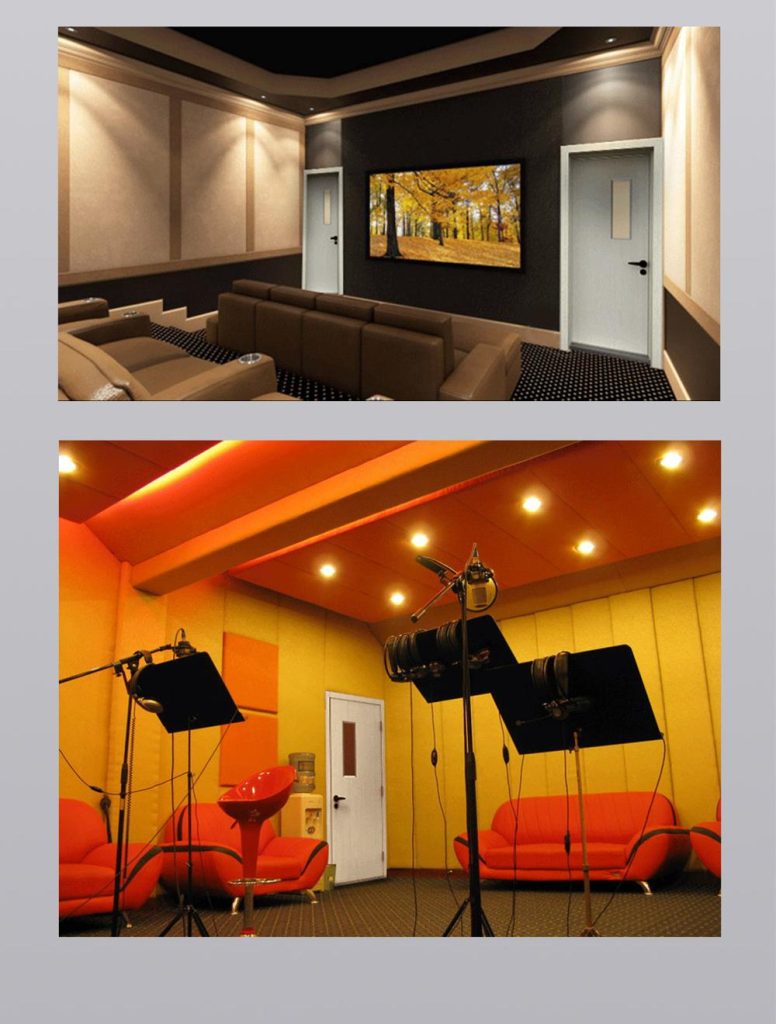
Commercial projects rarely use standard door sizes. Theaters need oversized double doors for sound isolation. Offices need extra-wide doors for accessibility. Hotels often require doors that match specific European or American dimensional standards. Our custom size and design service handles these requirements as standard practice, not as a special request.
Our OEM and ODM services are particularly valuable for commercial projects. We can take your existing door design and modify the internal core construction to meet specific acoustic and fire codes. We can also take our existing acoustic door designs and modify the veneer, the finish, or the hardware to match your project specification. This is not a generic “we can customize anything” claim — we have an in-house design and engineering team that produces shop drawings for every custom project. Those drawings are sent to you for approval before we start production, so there are no surprises on the delivery end.
One honest caveat: fire-rated acoustic doors are more expensive than standard acoustic doors. The fire-resistant core materials are more costly, and the certification testing adds lead time. If your project does not require fire ratings, you should not pay for them. We will tell you when a requirement is unnecessary — that is part of the engineering consultation we provide.
Bulk Supply and Logistics for Contractors
When you are supplying doors for a 200-room hotel or a 50-story office building, consistency matters as much as performance. A single door that arrives with a damaged seal can delay the entire floor. Our construction project bulk supply capability is built on two things: consistent quality control and reliable logistics.
We operate our own wood drying and spray finishing workshops, which means every door in your order goes through the same processes with the same quality checks. We do not outsource finishing to a third-party shop that might use different materials or application methods halfway through your order. This consistency is one of the reasons we are able to maintain flexible MOQs — we can handle both small custom orders and large bulk shipments without a drop in quality.
Our production lead times are designed to keep your construction schedule on track. Standard orders typically ship within 3 to 4 weeks, and custom acoustic door systems may take 5 to 6 weeks depending on the complexity. We also provide shipping damage protection on all orders. For acoustic doors, this is critical — a damaged frame or a misaligned drop seal is not something you can fix on site easily.
Residential Soundproofing: The JuSen Solid Wood Advantage
The Aesthetics of Quiet: Luxury Interior Wooden Doors
Here is the challenge with acoustic doors in residential projects: they should not look like acoustic doors. In a commercial building, a utilitarian door with visible gaskets is acceptable. In a luxury villa or a high-end apartment, the door needs to blend with the interior design. This is where our identity as a professional solid wood door manufacturer gives us an advantage.
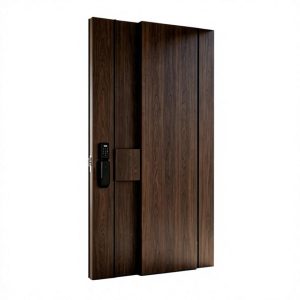
We can manufacture acoustic doors with solid wood veneers — oak, walnut, maple, or any species you specify — that look indistinguishable from a premium interior door. The acoustic core is hidden inside, and the perimeter gaskets are concealed within the frame and the door edge. The result is a door that provides STC 40+ performance while looking like a natural wood door.
We have worked on villa projects where the homeowner wanted a home theater in the basement and a quiet bedroom wing on the second floor. The acoustic doors we supplied in both locations looked identical to the standard interior doors throughout the house. The only difference was the weight and the way they closed with a soft, solid thud instead of a hollow rattle.
Core Construction: From Solid Wood to Engineered Acoustic Layers
For residential acoustic doors, we offer two core options. The first is a high-density particleboard core, which provides excellent acoustic performance at a lower price point. The second is a solid wood core, which offers superior dimensional stability and a more premium feel. Both options can be combined with MLV layers for additional soundproofing.
The critical detail in residential acoustic doors is the wood moisture content. A door that is not properly kiln-dried will warp or twist after installation. When a door warps, the perimeter seal breaks, and the acoustic performance drops dramatically. This is why we invested in our own wood drying workshops — we control the moisture content from the raw lumber stage through to the finished product. Our kiln-drying process brings the wood to the optimal moisture content for the destination climate, which prevents warping and maintains the acoustic seal for the life of the door.
One thing we have learned from residential projects is that the door is only part of the acoustic equation. A quiet room requires the walls, the ceiling, and the windows to work together. This is why our capability as an aluminum window manufacturer matters for residential acoustic solutions.
Matching Acoustic Doors with Aluminum Window Systems
Noise enters a home through more than just doors. In urban settings, windows are often the weakest point in the building envelope. A villa with acoustic doors but standard single-glazed windows will still feel noisy. Conversely, a well-sealed window system can dramatically reduce the overall noise level in a room, which means the door does not need to work as hard.
Because we manufacture both aluminum alloy windows and wooden doors, we can provide a complete acoustic envelope solution for residential projects. Our aluminum windows can be specified with laminated glass or double-glazed units that provide high sound insulation. When the windows and doors are designed as a system, the acoustic performance of the entire building is greater than the sum of its parts.
This dual capability is rare in the industry. Most door factories do not manufacture windows, and most window factories do not manufacture doors. When you work with us, you get a single supplier who can coordinate the acoustic performance of both elements. We have seen this happen with villa projects in Southeast Asia and the Middle East, where traffic noise is a constant issue. The combination of our acoustic wooden doors and our aluminum windows with acoustic glazing reduced interior noise levels by 25 to 30 decibels — the difference between a distracting environment and a peaceful one.
Why Choose Jusen as Your Acoustic Door Manufacturing Partner?
Vertical Integration and Strict Quality Control
The main reason buyers choose us for acoustic door solutions is vertical integration. We operate our own wood drying, spray finishing, and aluminum processing workshops. This means we control the entire manufacturing process from raw lumber to finished product. We do not buy pre-made door slabs and slap our label on them — we manufacture the doors ourselves.
This vertical integration has a direct impact on acoustic performance. The acoustic core must remain intact during the finishing process. If the core is damaged during veneering or painting, the acoustic performance is compromised. Because we control the finishing process in our own workshop, we can ensure that the core is not damaged and that the hardware installation (seals, drop bolts, hinges) is precise.
We also maintain strict quality control at every stage. Our quality team inspects the wood moisture content before processing, checks the core density after pressing, verifies the seal alignment after hardware installation, and does a final quality check before packaging. This is not a generic “we have quality control” claim — it is a specific process that we have refined over 20 years of manufacturing.
OEM and ODM Customization for Global Brands
We support interior designers, retail dealers, and distributors with private label and OEM services. If you want your brand name on the door or the hardware, we can handle that. If you want a specific design that is not in our standard catalog, our ODM service can bring your concept to production.
Our full one-stop OEM & ODM service covers everything from initial design consultation to final packaging. We provide shop drawings and formal quotations within 24 hours of your inquiry. This rapid response is not just a sales tactic — it is a practical necessity for construction projects with tight timelines. We have seen too many projects delayed because a supplier took two weeks to provide a quotation. We do not operate that way.
From our experience working with global brands, the key is communication. We assign a dedicated project manager to each client. That person coordinates the engineering team, the production schedule, and the logistics. You are not left to guess what is happening with your order — you get regular updates until the container is loaded.
Reliability, Lead Times, and After-Sales Support
Reliability is the most undervalued quality in a door manufacturer. A beautiful door that arrives one month late is a useless door. We maintain stable quality, flexible MOQs, and fast production lead times because we know construction schedules do not wait for suppliers.
Our after-sales support includes shipping damage protection. If a door arrives damaged, we replace it — no lengthy dispute process. This is particularly important for acoustic doors because the seals and frames are more delicate than a standard door slab. We have seen shipments arrive with a cracked frame or a bent drop seal, and we handle these issues quickly so the construction site does not stall.
One honest caveat about acoustic doors: they are heavier than standard doors. A solid wood acoustic door can weigh 80 to 120 kilograms, depending on the core and the size. This weight affects the hardware — you need heavier hinges and a more robust frame. Our engineering team will specify the correct hardware for your door weight, and we can supply the hinges and frames as part of the complete system.
Frequently Asked Questions
What is the maximum STC rating achievable with your custom wooden doors?
We can achieve STC ratings from 35 to 50+ depending on the core construction, door thickness, and seal package. For most commercial and residential applications, STC 40-45 is sufficient. Our engineering team will recommend the specific configuration based on your project requirements and the wall construction the door is paired with. If you need higher ratings, we can discuss additional mass layers or specialized sealing systems.
Can I integrate your acoustic doors with my existing aluminum window systems for a full villa project?
Yes. We manufacture both solid wood doors and aluminum alloy windows, so we can coordinate the acoustic performance of both systems. If you already have a window supplier, we can still provide doors that match the acoustic performance of your existing windows. We recommend sharing your window specifications so we can ensure the door system does not become the weak point in your acoustic envelope.
Do you offer OEM services if I want my brand name on the acoustic door hardware?
Yes. We offer private label and ODM services for retail dealers and distributors. We can apply your brand to the door slab, the frame, and the hardware. We can also modify our existing acoustic door designs to meet your specific aesthetic or performance requirements. Send us your brand guidelines and design specifications, and we will provide a formal quotation within 24 hours.
How do you ensure the acoustic seals don’t fail during shipping?
Our packaging process for acoustic doors is designed to protect the door slab and the frame from impact and moisture. We use reinforced edge protectors and moisture-resistant wrapping. The drop seals are secured in the open position during shipping so they do not get bent or damaged. Our shipping damage protection means that if a seal is damaged in transit, we replace the affected components at no cost to you.
What is the minimum order quantity for a custom acoustic door project?
Our MOQs are flexible. For standard doors, we can accommodate smaller orders. For fully custom acoustic doors with unique cores or fire ratings, the MOQ is typically higher because of the engineering and tooling involved. Contact us with your project details, and we will provide a specific MOQ and quotation for your requirements.
How to Choose the Right Acoustic Door Configuration
Choosing the right acoustic door is not a one-size-fits-all decision. Here is a practical guide based on our experience:
Choose a solid wood core acoustic door if: You are working on a luxury residential project where aesthetics are paramount, and you want a premium feel. Solid wood offers superior dimensional stability, which means the acoustic seal will last longer. The downside is cost — solid wood doors are more expensive than engineered alternatives.
Choose a particleboard core acoustic door if: You are working on a commercial project with a tight budget, and the door will be painted or finished with a veneer. Particleboard cores offer excellent acoustic performance at a lower price point. The tradeoff is that they are less dimensionally stable than solid wood, so they are not ideal for environments with high humidity swings.
Choose an MLV-laminated core if: You need maximum acoustic performance in a thin door profile. MLV adds mass without excessive thickness, which is useful for retrofits where the existing frame cannot accommodate a thicker door.
Choose a complete acoustic door system from a single supplier if: You want to avoid the risk of mismatched components. A door slab from one supplier, a frame from another, and seals from a third — this is a recipe for acoustic failure. When you buy the complete system from us, we take responsibility for the fit and performance.
Choose a factory with vertical integration if: You care about consistency across large orders. A factory that outsources finishing or hardware installation cannot guarantee that every door in your order will perform identically. Our in-house processes ensure the same quality from the first door to the last.
Choose a supplier with flexible MOQs and fast lead times if: Your construction schedule is tight, and you cannot afford to wait 12 weeks for a container. Our standard production lead time is 3 to 4 weeks, and custom acoustic systems typically ship within 5 to 6 weeks.
—
Acoustic door solutions are not a commodity product. They require engineering precision, material expertise, and a deep understanding of how sound behaves. At Jusen Doors & Windows Manufacturing Co., Ltd., we have spent over 20 years developing that expertise. We operate our own workshops, we control our quality, and we stand behind our products with comprehensive after-sales support.
If you have a project that requires soundproof doors, we would like to hear about it. Send us your project details, your STC requirements, and your timeline. Our engineering team will review your specifications and provide shop drawings and a formal quotation within 24 hours.
—
References
[1] Acoustical Door Solutions for Commercial Buildings. Acoustical Surfaces. https://www.acousticalsurfaces.com/acoustic-doors/
[2] Sound Transmission Class (STC) Rating Guide. CertainTeed. https://www.certainteed.com/insulation/sound-transmission-class-stc-rating-guide/
[3] Understanding OITC Ratings for Windows and Doors. Window & Door Magazine. https://www.windowanddoor.com/article/understanding-oitc-ratings
[4] Door Seals and Acoustic Performance: Best Practices. BuildingGreen. https://www.buildinggreen.com/feature/door-seals-and-acoustic-performance
[5] Fire-Rated Acoustic Doors: Meeting Dual Compliance. NFPA Journal. https://www.nfpa.org/News-and-Research/Publications-and-media/NFPA-Journal