
12 min read
Best Windows for Hot Climate: Engineering Solutions from a Factory That Understands Solar Load
If you’re building in Dubai, Phoenix, Singapore, or any region where summer temperatures routinely exceed 40°C, you’ve likely faced the same frustrating conversation with clients: “Why is the east-facing room so hot by 10 a.m.?” “Why are our HVAC bills double what we projected?” “Why is the furniture already fading?”
Standard windows fail in these environments. They turn buildings into greenhouses, force cooling systems into overdrive, and create comfort complaints that follow you long after project handover. As a manufacturer with over 20 years of experience in aluminum window production, our team at Jusen Doors & Windows Manufacturing Co., Ltd. has seen these problems play out across dozens of climate-challenged projects. This guide breaks down what actually makes a window perform in hot climates—and how our factory engineers those solutions into every unit we ship.
Why Standard Windows Fail in High-Temperature Regions
Heat enters a building through windows in three ways: conduction through the frame, radiation through the glass, and air infiltration through gaps. Standard window designs don’t adequately address any of these in extreme heat—and the consequences compound quickly.
The Problem of Solar Heat Gain Coefficient (SHGC)
Solar Heat Gain Coefficient measures how much solar radiation passes through a window. A standard clear double-pane window might have an SHGC of 0.70—meaning 70% of the sun’s heat enters the building. In a hot climate, that’s catastrophic. The interior becomes a passive solar collector, and your HVAC system fights an unwinnable battle.
Our in-house design and engineering team regularly reviews project specifications to calculate the required SHGC for specific latitudes and orientations. We don’t recommend one-size-fits-all products because we understand that a window facing west in Riyadh needs different glass than one facing north in Miami. When you send us your project details, we can help you determine the right SHGC target before we produce a single frame [1].
Frame Material Conductivity (Aluminum vs. Alternatives)
Standard aluminum frames are excellent conductors of heat. In direct sunlight, an untreated aluminum frame can reach temperatures that turn the frame itself into a thermal bridge—transferring outdoor heat directly to your interior walls and ceiling.
This is why we manufacture thermally broken aluminum windows in our own processing workshops. The thermal break—typically a polyamide strip inserted between the interior and exterior aluminum profiles—interrupts the heat flow path. Our team precisely inserts these strips during fabrication, ensuring consistent break widths across every unit. A proper thermal break can reduce frame heat transfer by up to 60% compared to standard aluminum profiles [2].
Air Infiltration and Pressure Differentials
Hot climates often bring dust storms, high winds, and dramatic pressure differentials between interior conditioned spaces and the outside environment. Poorly sealed windows allow hot air to leak in and cooled air to escape—undermining even the best glass and frame specifications.
Our strict quality control from raw materials to final production ensures tight tolerances on every seal and gasket. We pressure-test our window assemblies to verify they maintain their seal integrity under the kind of wind loads common in coastal or desert environments. This isn’t a feature we add for specific projects—it’s our standard manufacturing practice.
Critical Window Specifications for Hot Climates (What We Engineer)
The “best” window for a hot climate isn’t a single product—it’s a combination of specifications engineered to work together. Here’s what we configure for projects in high-temperature regions.
Low-E Coating and Double/Triple Glazing
Low-emissivity (Low-E) glass has a microscopic metallic coating that reflects solar radiation while allowing visible light to pass through. Combined with double or triple glazing, it dramatically reduces both SHGC and U-factor (heat transfer rate).
We offer fully customized glass configurations through our OEM & ODM services. Whether you need a specific Low-E coating for a villa development or a standard high-performance unit for a hotel chain, our team sources and assembles glass exactly to your spec sheet. We work with major glass suppliers to ensure consistent quality across bulk orders—critical when you’re installing 500+ windows in a single phase.
For projects in extreme climates, we also offer argon gas-filled glazing. Argon is denser than air, which reduces convective heat transfer between the glass panes. Combined with Low-E coating, this can cut solar heat gain by up to 50% compared to standard double glazing [3].
Insulated Aluminum Profiles and Thermal Breaks
The width of the thermal break matters. A 14.8mm polyamide strip performs differently than a 24mm strip—wider breaks provide better insulation but require deeper frame profiles.
Our high-end aluminum alloy windows support custom size and design, allowing architects to specify deeper profiles for structural integrity without sacrificing thermal performance. We’ve produced frames with thermal breaks up to 34mm for projects in extreme desert climates, where every degree of insulation matters.
Reflective and Tinted Glass Options
Beyond Low-E coatings, tinted and reflective glass options reduce glare and solar load. These are particularly valuable for buildings with large glass facades in sunny regions.
With over 20 years in the industry, our team has perfected the handling and processing of these delicate glass types. We understand the coating durability requirements, the proper edge deletion techniques for sealed units, and the handling protocols that prevent micro-scratches during manufacturing. This experience reduces breakage and warranty claims for our global partners—which means fewer headaches for you.
Supply Chain Advantages: Sourcing Hot-Climate Windows from Jusen
Product specifications matter, but so does the reliability of your supplier. Here’s how our factory ensures you get consistent, high-quality windows when you need them.
In-House Manufacturing and Strict Quality Control
We operate our own wood drying, spray finishing, and aluminum processing workshops. This vertical integration means we don’t outsource critical steps—including thermal break assembly and sealing, the two most important processes for hot-climate window performance.
Our quality control team inspects at multiple checkpoints: raw material intake, profile cutting, thermal break insertion, glass assembly, and final unit testing. This isn’t a random sampling approach—every unit is checked for dimensional accuracy and seal integrity before it’s packed for shipping.
Stable Supply for Construction Project Bulk Supply
Construction schedules don’t wait for manufacturing delays. We understand this because we’ve supplied windows for villa developments, high-rise residential towers, and commercial complexes across multiple continents.
We offer flexible MOQs for B2B partners—we’re willing to work with you on initial orders to build a long-term relationship, and we’re fully equipped for large-scale bulk supply. Our production planning team coordinates with your construction milestones to ensure windows arrive when you need them, not weeks late after your installation crew has already moved to another site.
Engineering Support for Custom Sizes
Hot climates often require non-standard window configurations: larger shading devices, reinforced frames for hurricane zones, or special glazing for acoustic insulation in dense urban areas.
Our engineering team provides customized shop drawings and formal quotations within 24 hours of receiving your inquiry. We’ve produced everything from standard casement windows to complex custom shapes for architectural landmarks. When you work with us, you’re not just ordering windows—you’re getting engineering support that helps you solve design challenges before they become site problems.
Our Product Lineup for Warm Climates
Here’s what we manufacture for hot-climate projects:
Thermally Broken Aluminum Casement Windows
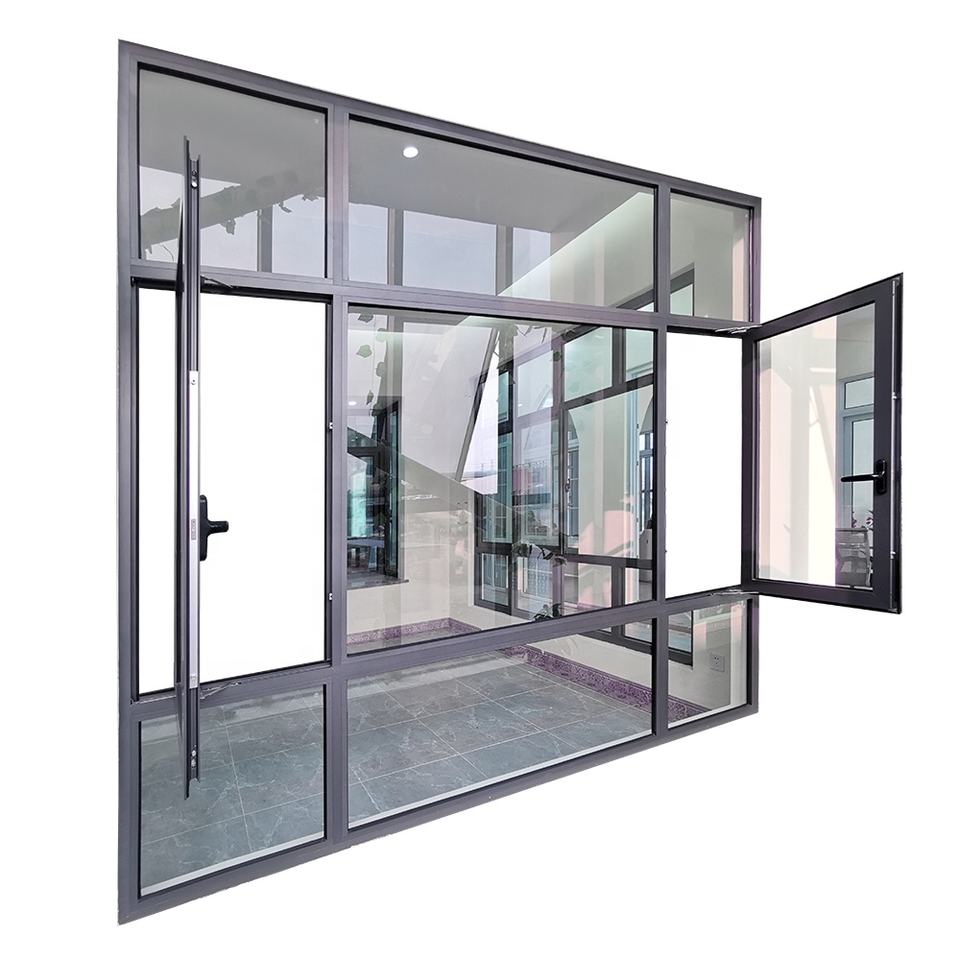
Casement windows are ideal for humid climates because they open fully, allowing maximum cross-ventilation when conditions permit. Our casement windows feature multi-point locking systems and heavy-duty hinges that resist warping—even when installed in dark-colored frames that absorb significant solar heat.
We manufacture these in our aluminum processing workshops, where we control the entire production process from profile extrusion to hardware installation.
Sliding and Tilt-and-Slide Aluminum Windows
Sliding windows are popular in coastal areas where you want to capture ocean breezes. They’re also space-efficient, making them suitable for high-rise residential projects where exterior cleaning access is limited.
We offer these in a variety of finishes and colors, supporting Private Label for retail dealers who need a specific brand aesthetic. Whether you need standard white, bronze anodized, or custom powder-coated colors, our spray finishing workshop ensures durable, UV-resistant coatings that won’t fade in harsh sunlight.
Aluminum-Clad Wood Windows (Hybrid Option)
As a manufacturer of both solid wood doors and aluminum windows, we’re uniquely positioned to offer hybrid windows that combine the best of both materials. Our aluminum-clad wood windows feature a timber interior—for the warmth and aesthetic appeal that high-end residential clients expect—with an aluminum exterior that provides weather resistance and low maintenance.
This is a premium option for villa real estate developers looking for luxury finishes that perform technically. The wood interior can be matched to interior doors we manufacture, creating a cohesive design throughout the property.
The Jusen Partnership Model: OEM, ODM, and Private Label
Different partners need different collaboration models. Here’s how we work with each type of client:
OEM Customization for Architects and Builders
If you have detailed drawings and specifications, we build exactly to your requirements. Our production team works from your technical documents, manufacturing windows that match your design intent precisely.
We’re a professional manufacturer serving global contractors—we handle the technical production, allowing you to focus on site management and client relationships. You don’t need to worry about whether the factory “understands” your drawings; our engineers review every spec before production begins.
ODM Design Support for Importers
Importers often don’t have in-house design teams. That’s where our ODM services come in. We use our 20 years of experience to suggest designs that are not only visually appealing but also optimized for shipping and assembly in hot climates.
Our design team considers factors you might not think about: how the window will be installed in local construction conditions, whether the hardware is compatible with regional standards, and how the glazing should be specified for local climate data. We provide complete technical packages, including installation instructions and spare parts lists.
Private Label for Retail Dealers
Retail dealers need products they can confidently put their name on. Our Private Label service allows you to brand our windows as your own, backed by our manufacturing quality and after-sales support.
We understand that your reputation is on the line with every product you sell. That’s why we maintain consistent quality across production runs, support dealers with technical documentation, and respond quickly when issues arise. We help retail dealers build trust with their local customers by delivering products that perform as promised.
Protecting Your Investment: Packaging, Shipping, and After-Sales Support
International B2B buyers worry about two things: damaged goods in transit and lack of support after delivery. Here’s how we address both concerns.
Export Packaging for Ocean Freight
Aluminum windows are durable, but they’re also precision products—a bent frame or scratched glass renders a unit unusable. We’ve refined our packaging methods over years of international shipping:
- Heavy-duty cartons with internal bracing for each window unit
- Wooden frames for large orders to prevent stacking damage
- Protective film on all visible surfaces to prevent scratches during handling
- Desiccant packs to prevent moisture damage during long ocean transits
We include shipping damage protection in our standard operating procedure. If a unit arrives damaged, we document it, replace it, and work with our logistics partners to file claims—so your project doesn’t stall waiting for resolution.
Global Logistics Network
We ship to markets across North America, Europe, the Middle East, and Australia. Our logistics team manages the documentation and coordination required for smooth customs clearance, including:
- Commercial invoices with correct HS codes
- Packing lists that match cargo exactly
- Certificate of origin documentation
- Coordination with freight forwarders for timely vessel booking
This experience means fewer surprises at the port and faster delivery to your site.
Comprehensive After-Sales Support
We welcome global distributors, builders, and project partners to work with us long-term. If an issue arises after delivery—a damaged unit, a missing component, or a technical question—our team responds immediately.
We maintain spare parts inventory for common components, allowing us to ship replacements quickly. Our technical team provides installation guidance and troubleshooting support, ensuring your project isn’t delayed by avoidable issues.
What Is the Best Glass for a House in a Hot Climate?
Low-E coated, double-glazed glass with a low Solar Heat Gain Coefficient (SHGC) is the standard recommendation. For extreme climates, triple glazing or specialized coatings may be appropriate.
Our engineering team can help you select the right coating based on your specific project location and orientation. We consider factors like latitude, prevailing winds, and building shading when making recommendations—because the “best” glass for a north-facing window in Singapore differs from a west-facing window in Phoenix.
Are Aluminum Windows Good for Hot Climates?
Yes—but only if they’re thermally broken. Standard aluminum frames conduct heat efficiently, which is exactly what you don’t want. Thermally broken aluminum windows interrupt that heat flow, making them suitable for even the hottest environments.
Our aluminum processing workshops ensure high-quality thermal break assembly. We use precision insertion equipment and quality-check every frame to verify the break is continuous and correctly positioned. This attention to detail is why our thermally broken windows perform reliably in desert and tropical climates.
Can You Customize Window Frame Colors to Match Our Project?
Yes. We support OEM & ODM customization, including custom colors and finishes. Our spray finishing workshop uses high-quality powder coatings that are UV-resistant and won’t fade in harsh sunlight.
We can match specific RAL colors, provide wood-grain finishes that mimic timber, or apply special textures for architectural projects. If you need a custom color for a specific project, send us your requirement and we’ll provide samples before production begins.
What Is the Minimum Order Quantity for a Construction Project?
We offer flexible MOQs for B2B partners. For initial orders, we’re willing to work with you to establish a relationship—whether that means a smaller pilot order or a phased delivery schedule.
Once we’re in production, we have the capacity to handle large-scale bulk supply. Our factory can produce thousands of window units per month, and we coordinate with your construction schedule to ensure timely delivery.
How Quickly Can We Get a Quote and Shop Drawings?
We provide customized shop drawings and formal quotations within 24 hours of receiving your inquiry. This rapid response allows architects and contractors to keep their project timelines on track.
Send us your project specifications—window sizes, quantities, performance requirements, and any special features—and our team will prepare a detailed quotation with technical drawings for your review.
—
Choosing the Right Partner for Hot-Climate Window Supply
When you’re sourcing windows for hot climates, you’re not just buying a product—you’re buying performance, reliability, and partnership. Here’s how to decide:
Choose a manufacturer with in-house production control if you need consistent quality across large orders. When a factory outsources critical processes, quality varies. Our in-house workshops ensure every thermal break, every seal, and every finish meets the same standard.
Choose a partner with engineering support if you need help specifying the right glass and frame configuration. We don’t just take orders—we help you solve technical challenges before they become site problems.
Choose a supplier with flexible collaboration models if you’re an importer, dealer, or developer with different needs. Whether you need OEM production to your drawings, ODM design support, or Private Label branding, we adapt to your business model.
Choose a factory with export experience if you’re shipping internationally. Logistics coordination, packaging protection, and after-sales support make the difference between a smooth project and a nightmare.
At Jusen Doors & Windows Manufacturing Co., Ltd., we combine 20+ years of manufacturing expertise with a genuine understanding of what makes windows perform in challenging climates. Our thermally broken aluminum windows, customized glass configurations, and reliable supply chain have supported projects across the globe—and we’re ready to support yours.
Stop researching and start spec’ing. Send us your project requirements, and we’ll provide the technical guidance and quotation you need to move forward.
—
References
[1] U.S. Department of Energy. “Solar Heat Gain Coefficient (SHGC).” Energy.gov. https://www.energy.gov/energysaver/energy-efficient-windows
[2] Efficient Windows Collaborative. “Frame Types and Thermal Performance.” EfficientWindows.org. https://efficientwindows.org/frames/
[3] International Energy Agency. “Advanced Glazing Technologies.” IEA SHC Task 34. https://task34.iea-shc.org/





