
Soundproof Doors: Acoustic Door Solutions for Commercial & Residential Projects
Lab-tested acoustic doors rated STC 30 to STC 52. Engineered systems — not just thick slabs — with automatic seals, acoustic thresholds, and certified performance data for hotels, offices, studios, and residential projects.
✓ ASTM E90 Lab Tested
✓ STC 30-52 Range
✓ Combined Fire + Acoustic Available
✓ UL/CE Dual-Certified Options
✓ 20+ Years Acoustic Engineering
Why Standard Doors Fail at Sound Isolation
A standard hollow-core interior door provides approximately STC 20-25 — meaning normal conversation is clearly audible through the door. Simply upgrading to a solid-core slab improves this to roughly STC 30, but still falls short of what hotels, offices, and recording environments require.
True soundproofing requires an engineered system: a high-mass door core, perimeter acoustic seals on all four edges, an automatic drop-down bottom seal, properly sealed frame-to-wall connections, and correctly specified hinges that maintain seal compression over thousands of cycles. Jusen manufactures complete acoustic door assemblies — not just door leaves — with every component designed to work together as a tested system.
Understanding STC Ratings
| STC Rating | Performance Level | Typical Application |
|---|---|---|
| STC 25-30 | Basic — normal conversation easily audible | Standard interior doors, closets |
| STC 30-35 | Moderate — loud speech audible but not intelligible | Residential bedrooms, home offices |
| STC 35-40 | Good — loud speech barely audible | Hotel guest room entry doors (industry standard) |
| STC 40-45 | Very Good — loud speech inaudible | Hotel corridors, conference rooms, executive offices |
| STC 45-50 | Excellent — only very loud sounds faintly audible | Recording studios, luxury hotel suites, secure meeting rooms |
| STC 50+ | Professional — near-total sound isolation | Broadcast facilities, music studios, government secure rooms |
Jusen manufactures acoustic doors rated from STC 30 to STC 52, with custom configurations available for specialized applications. All ratings verified by independent laboratory testing per ASTM E90 / ISO 10140.
How Our Acoustic Doors Are Engineered
High-Mass Core Construction
Door cores use high-density particleboard, mineral-filled composite, or laminated timber to maximize mass. Mass is the primary factor in blocking sound transmission. Typical acoustic door weights range from 60 kg to 120 kg per leaf.
Perimeter Acoustic Seals
Compression gaskets around all four edges of the door frame. Sound travels through gaps — even a 1mm gap can reduce STC by 10 points. Our seals maintain compression across temperature changes and thousands of cycles.
Automatic Bottom Seals
Drop-down seals that activate when the door closes, creating an airtight barrier at the threshold. Retracts automatically when the door opens for unobstructed passage. Essential for achieving STC 40+.
Heavy-Duty Ball-Bearing Hinges
Acoustic doors are significantly heavier than standard doors. Ball-bearing hinges rated for 100+ kg ensure smooth operation and maintain seal alignment over the door’s service life.
Acoustic Thresholds
Specialized thresholds that create a tight seal at the bottom without impeding wheelchair access. ADA-compliant options available with maximum 13mm rise height.
Sealed Frame-to-Wall Connection
Acoustic caulk between the frame and wall construction prevents flanking sound transmission. Installation instructions specify exact sealant types and application methods for certified performance.
Acoustic Door Applications by Industry
Hotels & Hospitality
Guest room entry doors typically require STC 35-40. Corridor doors need STC 40-45. Connecting room doors and ballroom partitions often require STC 48-52. Major hotel brands (Marriott, Hilton, IHG) specify minimum STC ratings in their design standards.
Office & Commercial
Executive offices and boardrooms require STC 40-45 for confidential conversations. Open-plan phone booths and focus rooms need STC 35-40. Medical and legal offices require STC 45+ for client confidentiality compliance.
Residential
Home theaters, music rooms, and dedicated work-from-home spaces benefit from STC 35-45 doors. Luxury residential projects increasingly specify acoustic doors for master suites and multi-generational living arrangements.
Recording Studios & Performance Venues
Professional audio environments require STC 50+ doors. These are specialized double-door assemblies with air gaps between doors, heavy mass, and multiple seal layers. Jusen manufactures custom acoustic doors for studio applications.
Combined Fire-Rated & Acoustic Doors
Many projects require both fire rating and acoustic performance in the same door. Hotel corridors, for example, need doors that are both fire-rated (45-60 minutes) and acoustically rated (STC 40-45).
Jusen’s combined fire-acoustic doors are tested to both standards simultaneously, with full dual-certification documentation provided. No compromise on either performance criterion.
Maximum combined rating
Dual certification available
ASTM E90 + UL 10C combined
Acoustic Door Product Range
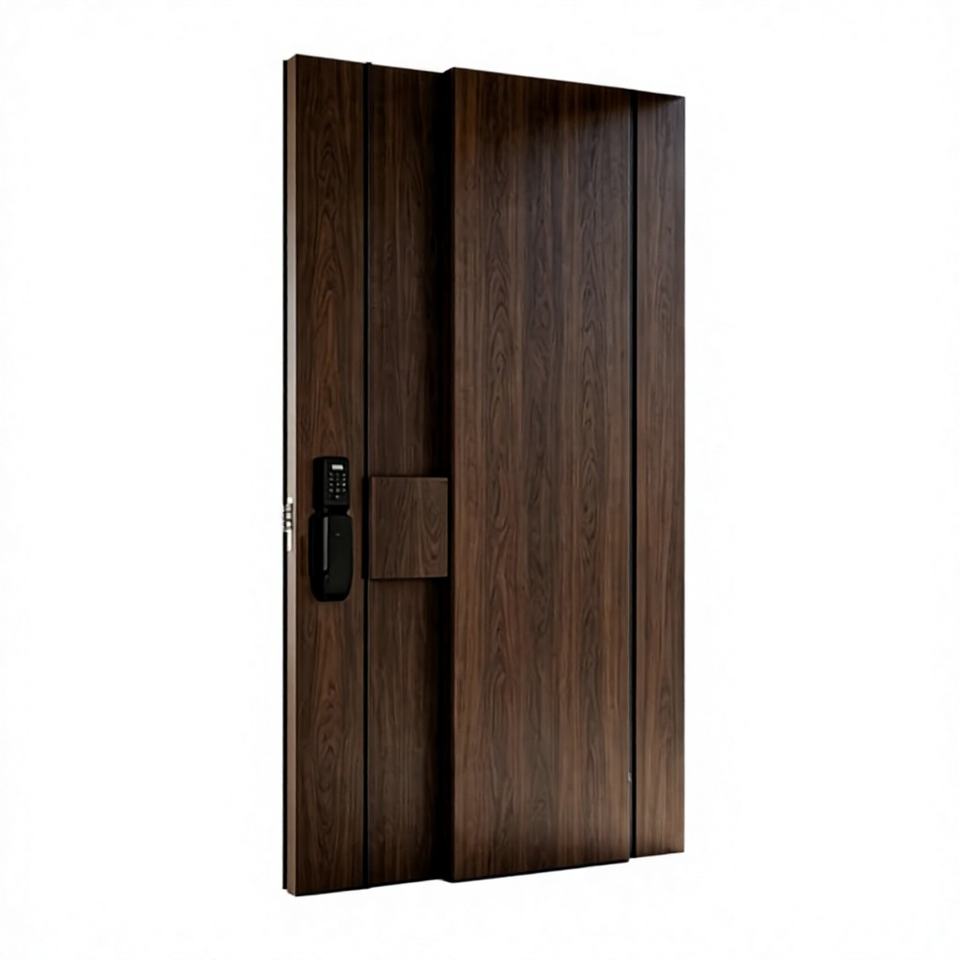
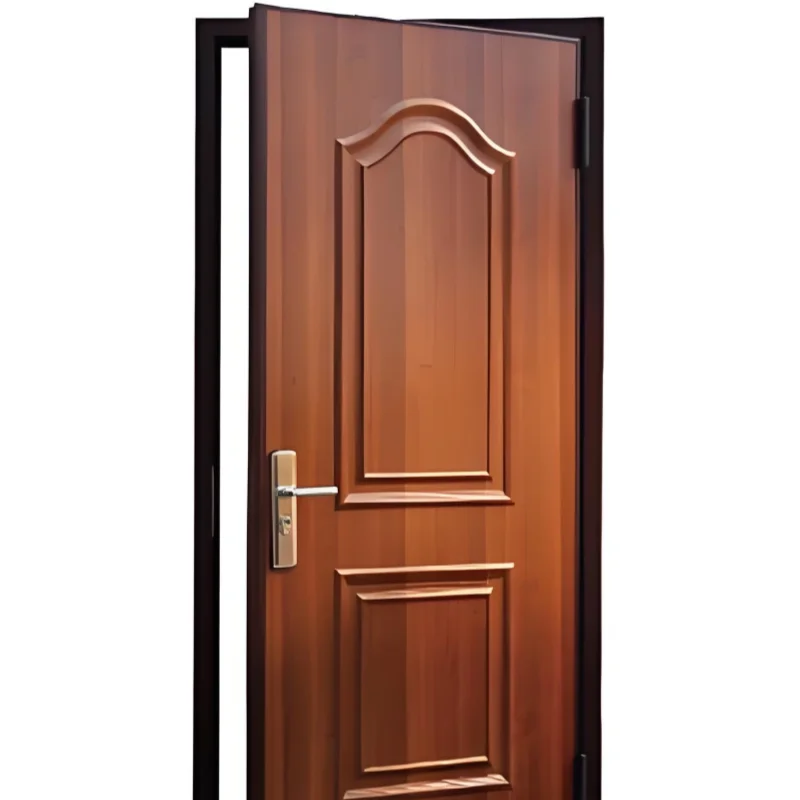
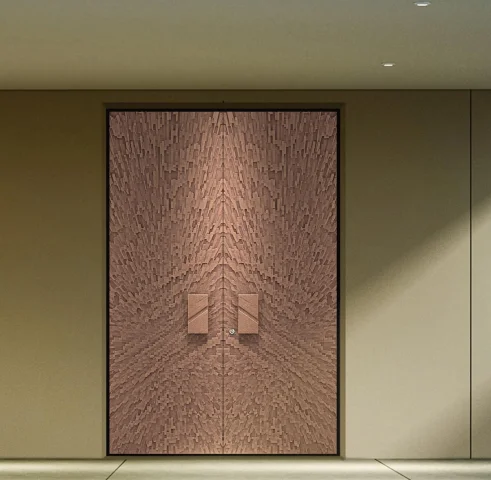
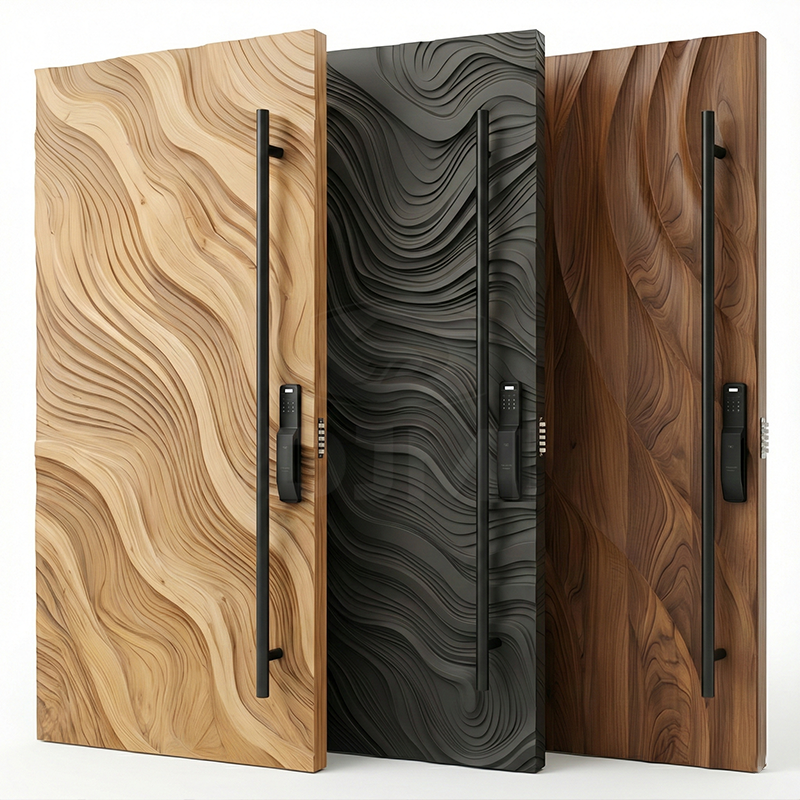
Acoustic Door Selection Checklist
- Determine required STC rating — based on noise source, adjacent space sensitivity, and industry standards for your building type.
- Check fire rating requirements — if the door is in a fire-rated wall, you need a combined fire-acoustic door with dual certification.
- Verify frame compatibility — acoustic doors require properly sealed frames. Existing frames may need modification or replacement.
- Consider door weight — acoustic doors are heavy (60-120 kg). Verify hinges, frames, and wall construction can support the weight.
- Plan for bottom seal clearance — automatic bottom seals require specific threshold profiles and floor flatness tolerances.
- Specify hardware carefully — standard lightweight hinges will fail under acoustic door weight. Specify ball-bearing hinges rated for the actual door mass.
- Budget for the complete system — the door leaf alone does not provide rated performance. Budget must include frame, seals, threshold, and installation labor.
Client Feedback
“We field-tested Jusen’s STC 45 doors after installation and they exceeded the lab rating by 2 points. The automatic bottom seals and perimeter gaskets were perfectly installed thanks to their detailed instructions.”
— Acoustic Consultant, International Hotel Project
“Our recording studio needed STC 52 doors. Jusen engineered a double-leaf assembly that achieved STC 53 in independent testing. The attention to seal detail was exceptional.”
— Studio Designer, Professional Audio Facility
“The combined fire-acoustic doors passed both UL fire test and ASTM E90 acoustic test on first submission. Having dual certification from one manufacturer simplified our approval process enormously.”
— Fire Safety Engineer, Commercial High-Rise
Frequently Asked Questions
What is the difference between STC and Rw ratings?
STC (Sound Transmission Class) is the US/Canadian standard per ASTM E90. Rw (Weighted Sound Reduction Index) is the European/international standard per ISO 10140. They measure similar properties but use different calculation methods. Roughly, Rw ≈ STC – 2 to 3 points. We can provide ratings in either or both standards.
Can I upgrade an existing door to improve its STC rating?
Partial improvement is possible by adding perimeter seals and an automatic bottom seal (typically +5-8 STC points). However, achieving STC 40+ usually requires replacing the door leaf with a purpose-built acoustic door because mass and core construction cannot be retrofitted.
Do you provide lab test reports for your acoustic doors?
Yes. Every acoustic door model is tested by an independent accredited laboratory per ASTM E90 and/or ISO 10140. Full test reports including frequency-band transmission loss data are provided with every quotation and shipment.
What is the MOQ for acoustic door orders?
For standard acoustic door models (STC 35-45), MOQ is 50 units. For high-performance models (STC 48-52) and custom configurations, MOQ is 20 units. Single samples available for evaluation and on-site testing.
How important is installation quality for acoustic performance?
Critical. A lab-tested STC 45 door installed with poor sealing will perform at STC 30-35 in the field. We provide detailed installation guides specifying sealant types, gap tolerances, hinge adjustment procedures, and verification methods. On-site installation supervision is available for large projects.
Can acoustic doors include vision lites or glass panels?
Yes, but glass reduces STC performance. Vision lites with acoustic-rated glazing (laminated glass with PVB interlayer) typically reduce STC by 3-5 points compared to a solid door. We engineer the glazing rebate with acoustic seals to minimize the performance penalty.
Need Acoustic Doors for Your Project?
Tell us your STC requirements, application, and quantity. Receive a technical proposal with test reports, product recommendations, and pricing within 48 hours.