Content Menu
● 1. What Is a Light Front Door?
● 2. Why Choose a Light Front Door? Design and Functional Benefits
● 3. Core Materials for Light Front Doors: Aluminum vs. Alternatives
● 4. Types of Glass for Light Front Doors: A Technical Breakdown
● 5. Structural Performance and Key Technical Specifications
● 6. How Much Does a Light Front Door Cost? Pricing Framework for Buyers
● 7. Maintenance and Care for Light Front Doors
● 8. How to Evaluate Light Front Door Suppliers
● 9. Our Door Manufacturing Capabilities
● 10. Production Process: From Raw Material to Finished Door
11 min read
When a buyer in Rotterdam orders their first container of aluminum entry doors, the question they ask is rarely about price. It is about whether the factory can replicate the sample quality at scale. That concern is legitimate. Door manufacturing involves dozens of variables — frame tolerances, glass sealing, hardware alignment — and any one of them can fail under volume production.
This guide covers what a light front door is, the materials and glass that define its performance, and the specific criteria you should use to evaluate a factory before committing to a bulk order.
What Is a Light Front Door?
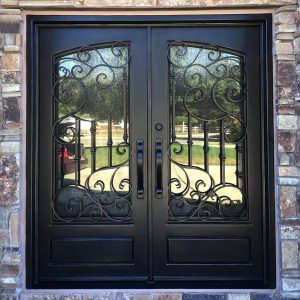
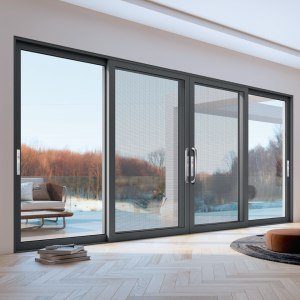
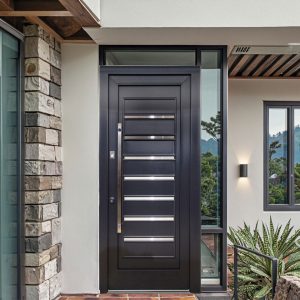
A light front door is an entry door designed with large glass panels or translucent materials to maximize natural daylight entry while maintaining security and thermal performance. The term “light” refers to both the glass panes (called “lites” in the industry) and the visual weight of the door itself.
Why Choose a Light Front Door? Design and Functional Benefits
The demand for light front doors has grown steadily over the past decade. Architects specify them for modern and minimalist projects. Homeowners want brighter entryways. Builders use them to differentiate properties in competitive markets.
Architectural Appeal
A full-lite or half-lite door creates a welcoming entrance. Natural daylight transforms a narrow hallway or townhouse entry, making the space feel larger than it is. For Scandinavian and contemporary design languages, the slim sightlines of aluminum frames — sometimes as narrow as 20 mm — allow the glass to become the dominant visual element.
Energy and Well-being Benefits
Daylight entering through the door reduces reliance on artificial lighting during daytime hours. High-performance glazing manages heat transfer: low-E coatings reflect heat back inside during winter and block solar gain in summer. UV-filtering glass protects interior furnishings from fading.
Property Value
Entry doors are a focal point in real estate appraisals. A well-designed light front door improves curb appeal. For contractors and developers, this translates to faster sales and higher perceived property value.
Core Materials for Light Front Doors: Aluminum vs. Alternatives
The frame material determines the door’s structural limits, thermal performance, and design flexibility. For a light front door specifically, the choice matters more than for solid doors because the frame must support large glass panels without compromising the slim profiles that maximize daylight.
Aluminum Light Front Doors
Aluminum offers the best strength-to-weight ratio among door frame materials. This allows for thinner frames — meaning more glass and more light — without sacrificing structural rigidity. Thermal-break aluminum construction, where a polyamide strip separates the interior and exterior frames, significantly improves insulation and meets modern energy codes.
Finish options include powder coating in any RAL color, anodized finishes, and wood-grain foil. Maintenance is minimal: no warping, cracking, or rotting compared to wood.
Steel Light Front Doors
Steel provides high security and impact resistance. But it is heavier, limits frame profile slimness, and is prone to dents. Customization for large glass configurations is more restricted than with aluminum.
uPVC Light Front Doors
uPVC is the low-cost option with good insulation. The trade-offs: lower structural rigidity, limited color options, and larger frame profiles that reduce the glass area. In extreme climates, uPVC has a shorter lifespan than aluminum.
Wood Light Front Doors
Wood offers classic aesthetics and natural insulation. The downsides are significant for modern buyers: high maintenance (repainting, sealing), susceptibility to moisture damage, and higher cost for quality hardwoods. Solid wood doors are also heavy, requiring stronger hinges and frames.
Material Comparison Table
| Material | Light Transmission | Insulation | Maintenance | Cost | Customization |
|---|---|---|---|---|---|
| Aluminum (thermal break) | Excellent | Good to Excellent | Low | Medium-High | Excellent |
| Steel | Good | Moderate | Medium | Medium | Limited |
| uPVC | Moderate | Good | Low | Low | Limited |
| Wood | Moderate | Good | High | High | Good |
For a light front door, aluminum with thermal break offers the best balance of slim profiles, large glass area, thermal efficiency, and long-term durability. This is why it dominates the premium entry door segment.
Types of Glass for Light Front Doors: A Technical Breakdown
Glass selection is the single most important decision for a light front door. The wrong specification can lead to heat loss, safety hazards, or condensation between panes. Here are the options.
Tempered Glass (Safety Glass)
Tempered glass is 4–5 times stronger than annealed glass. When it breaks, it shatters into small, blunt pieces rather than dangerous shards. Most building codes mandate tempered glass for door panels (ASTM E2190, EN 12150).
Laminated Glass
Laminated glass consists of two or more glass layers bonded with a PVB (polyvinyl butyral) interlayer. If broken, fragments adhere to the interlayer, preventing injury and maintaining a barrier. Acoustic and hurricane-rated variants are available.
Insulated Glass Units (IGU / Double Glazing)
IGUs use two or more panes separated by a spacer and sealed, with argon or krypton gas fill. This dramatically improves thermal insulation (U-value). For cold climates, low-E coatings reflect heat back inside.
Low-E (Low-Emissivity) Glass
Low-E glass has a microscopically thin metallic coating that reflects long-wave infrared (heat) while allowing visible light to pass. Hard-coat Low-E is durable and suitable for single glazing. Soft-coat Low-E performs better and is used in sealed IGUs.
Decorative and Privacy Glass
- Frosted / sandblasted glass: Diffuses light while providing privacy.
- Patterned / textured glass: Aesthetic variety with varying transparency.
- Smart glass (switchable PDLC): Electronically transitions between clear and opaque — a premium niche option.
Factors to Consider When Choosing Glass for Front Doors
| Factor | What It Measures | Why It Matters |
|---|---|---|
| U-value | Heat transfer rate | Lower is better for insulation |
| SHGC (Solar Heat Gain Coefficient) | Solar radiation passing through | Relevant for warm climates |
| VLT (Visible Light Transmittance) | Daylight entering | Higher for more natural light |
| Safety ratings | Tempered or laminated | Mandatory in most jurisdictions |
| Acoustic performance | Noise reduction | For homes near roads or airports |
| Local building codes | Specific glazing requirements | Hurricane or seismic zones |
The glass specification must be matched to the climate zone and local building code. A factory that can source and assemble multiple glass configurations — from standard tempered to triple-glazed low-E — is a valuable partner.
Structural Performance and Key Technical Specifications
Three performance metrics define an exterior door’s quality: air tightness, water tightness, and wind load resistance. These are tested per EN 12207, EN 12208, EN 12210, or ASTM equivalents.
- Air tightness (Class 8 is highest): Prevents drafts and energy loss.
- Water tightness (Class 9A is highest): Critical for rain-exposed entrances.
- Wind load resistance (Class C5 is highest): Frame deflection limits under pressure — essential for high-rise or coastal applications.
A complete light front door (frame + glass) should target a U-value of 1.0–1.6 W/m²K depending on climate zone. Thermal-break aluminum frames with polyamide strips are the industry standard for achieving low U-values.
Hardware matters equally. Multi-point locking systems distribute locking force across multiple points for security. Heavy-duty stainless steel or aluminum hinges must be rated for the door’s weight. Thermally broken thresholds prevent cold bridging.
How Much Does a Light Front Door Cost? Pricing Framework for Buyers
The cost of a light front door varies significantly based on material, glass configuration, size, and finish. Here is a factor-based framework rather than fixed prices.
Cost Drivers
- Frame material: Aluminum generally costs more than uPVC but less than premium solid wood.
- Glass configuration: Single tempered glass is cheapest; double-glazed low-E with argon is mid-range; triple-glazed or smart glass is premium.
- Size: Larger doors require more material and thicker profiles.
- Finish: Powder coating (any RAL color) is economical; wood-grain foil or anodized finishes add cost.
- Hardware: Multi-point locks, premium handles, and hinges add cost.
- Certifications: Doors tested and certified to specific standards (e.g., CE, ASTM) command higher prices.
Typical Price Ranges (Indicative, FOB China)
| Tier | Specification | Price per Unit |
|---|---|---|
| Entry-level | Single glass, standard size | $150–$300 |
| Mid-range | Double-glazed low-E, thermal break | $300–$600 |
| Premium | Large format, triple-glazed, custom finish | $600–$1,200+ |
Bulk Pricing Logic
Volume discounts typically apply at 50+ units per order. MOQ ranges from 10–50 units for custom products. Shipping cost (FCL vs. LCL) significantly affects total landed cost — larger orders favor FCL containers.
The lowest unit price is not always the lowest total cost. Evaluate the landed cost (unit + freight + customs + local installation) and the factory’s ability to meet your specification without cutting corners.
Maintenance and Care for Light Front Doors
End customers rarely ask about maintenance — until something fails. Here is what they need to know.
Frame Maintenance
Aluminum frames require minimal upkeep: wipe with mild soap and water. No painting or sealing is needed. Powder-coated finishes are highly durable, but avoid abrasive cleaners. Keep the bottom frame drainage holes clear of debris to prevent water pooling.
Glass Maintenance
Clean with standard glass cleaner and a soft microfiber cloth. Avoid ammonia-based cleaners on low-E coated glass — they can degrade the coating over time. Check the IGU seals annually for condensation between panes, which indicates seal failure.
Hardware Maintenance
Lubricate multi-point locks and hinges every 6–12 months with a silicone-based lubricant. Check and adjust door alignment seasonally — thermal expansion can slightly shift the door in extreme climates.
How to Evaluate Light Front Door Suppliers
Sourcing a light front door from overseas requires a structured evaluation. Here is a framework that works across markets.
Manufacturing Capability
Does the factory produce the frames in-house, or do they source from third parties? What is their monthly production capacity? Can they handle mixed containers with different sizes and models in one shipment?
Quality Control Process
Ask for test reports: air tightness, water tightness, wind load resistance. Inquire about inspection protocols — is there a pre-shipment inspection? What happens if a batch fails inspection?
Customization Flexibility
Can they match custom sizes, colors (RAL), glass configurations, and hardware brands? Do they offer OEM (your brand on the product) and ODM (your design, their manufacturing) services?
Export and Logistics Experience
Do they provide full export documentation (packing list, proforma invoice, customs clearance)? Can they arrange FCL and LCL shipping? Are they experienced with your target market’s building codes and certification requirements?
Red Flags to Avoid
- Factories that cannot provide test reports or certification documentation.
- Suppliers who quote significantly below market rates without explaining the cost difference.
- Manufacturers who cannot name the specific glass suppliers or hardware brands they use.
- Factories that require full payment before production without a third-party inspection option.
Buyer Checklist: Questions to Ask Before Ordering
- What is your monthly production capacity for aluminum light front doors?
- Can you provide test reports for air tightness, water tightness, and wind load resistance?
- What glass configurations can you assemble in-house?
- What is your MOQ for custom sizes and finishes?
- Can you handle LCL shipments for mixed product containers?
- What documentation do you provide for customs clearance?
- What is your typical lead time from order confirmation to shipment?
Choose A if… Choose B if…
- Choose aluminum if you need slim profiles, large glass areas, and long-term durability with low maintenance.
- Choose steel if security is the absolute priority and design flexibility is secondary.
- Choose a factory with in-house production if you need consistent quality control and custom specifications.
- Choose a trading company only if you have verified their quality control processes and they can provide the same documentation.
Our Door Manufacturing Capabilities
Here is how the industry standards described above translate into our production approach at Jusen Door and Windows Manufacturing Co., Ltd.
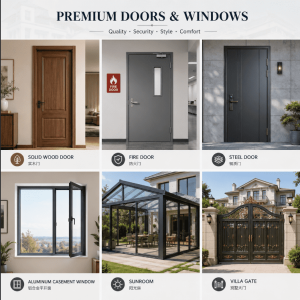
As a direct factory supplier, we sell to importers, distributors, and construction firms without intermediary markup. Our product range includes thermal-break aluminum doors, system windows, casement doors, sliding doors, aluminum alloy entrance doors, and custom villa doors.
Full Customization: Size, Color, Glass, and Hardware
We support OEM and ODM projects. This means custom dimensions, any RAL color, multiple glass configurations (tempered, laminated, low-E, insulated), and a selection of hardware accessories. Our adjustable profile structure and fittings can be adapted to match local building codes in your target market.
Strict Pre-Shipment Inspection
Every order undergoes testing for air tightness, water tightness, and wind resistance before leaving the factory. We provide test documentation so you have verifiable performance data for your compliance records.
Export Experience and Logistics Support
With experience in foreign trade, we issue full documentation: packing lists, proforma invoices, and customs clearance documents. We arrange both FCL and LCL shipments with direct delivery from our China factory, simplifying your supply chain.
Production Process: From Raw Material to Finished Door
Understanding how a light front door is manufactured helps you evaluate whether a factory can meet your specifications. Here is the typical process.
- Profile extrusion: Aluminum billets are heated and extruded through dies to create frame profiles with precise tolerances.
- Thermal break insertion: Polyamide strips are inserted and crimped to separate interior and exterior frames, reducing thermal transfer.
- Cutting and machining: Profiles are cut to length and machined for drainage, hardware, and glazing.
- Surface finishing: Powder coating or anodizing is applied for corrosion resistance and color.
- Glass preparation: Glass is cut, tempered or laminated, and assembled into IGUs with spacers and sealants.
- Assembly: Frames are assembled, hardware installed, and glass fitted with gaskets.
- Quality inspection: Each door is checked for dimensions, hardware function, and seal integrity.
Frequently Asked Questions
What is a glass door in front of a front door called?
A glass door installed in front of a solid door is called a “storm door.” A door that is itself made of glass is called a “full-lite door” (entire surface is glass) or a “half-lite door” (glass in the upper portion only).
Is it okay to have a glass front door?
Yes, provided the glass is safety-rated (tempered or laminated) and the frame is structurally sound. Modern light front doors use high-performance glazing to manage heat transfer and multi-point locking systems for security. For privacy, frosted or patterned glass options are available.
What type of glass is best for a front door?
For most applications, tempered laminated glass is the best combination — tempered for impact resistance and laminated for security. For thermal performance, choose double-glazed insulated glass units with a low-E coating. In cold climates, argon gas fill with a U-value below 1.3 W/m²K is recommended.
How much does a light front door cost?
Entry-level single-glazed aluminum doors start around $150–$300 per unit (FOB China). Mid-range double-glazed thermal-break doors range from $300–$600. Premium large-format or triple-glazed doors can exceed $1,200 per unit. Bulk orders of 50+ units typically receive volume discounts.
What is the difference between a full-lite door and a half-lite door?
A full-lite door has glass covering the entire door surface. A half-lite door has glass only in the upper portion, with a solid panel below. Full-lite doors maximize natural light but offer less privacy; half-lite doors balance light with a more traditional appearance.
Conclusion and Next Steps
A light front door is a structural and aesthetic investment. Material and glass selection should be driven by climate, building codes, and design intent. Aluminum with thermal break is the leading material for maximizing light while maintaining performance. Evaluate factories on capability, quality control, customization, and export experience — not just unit price.
If you are planning a light front door project and need a factory partner that can meet your specifications, discuss your requirements with our team.
References
- EN 12207:2016 — Windows and doors. Air permeability. Classification. https://www.en-standard.eu/
- EN 12208:2000 — Windows and doors. Watertightness. Classification. https://www.en-standard.eu/
- EN 12210:2016 — Windows and doors. Wind load resistance. Classification. https://www.en-standard.eu/
- ASTM E2190 — Standard Specification for Insulating Glass Unit Performance. https://www.astm.org/
- EN 12150 — Glass in building. Thermally toughened soda lime silicate safety glass. https://www.en-standard.eu/