Content Menu
● 1. 1. Understanding Glass Front Door Systems: Types and Applications
● 2. 2. Types of Glass for Front Doors: A Technical Selection Framework
● 3. 3. Glass Front Door Quality and Performance Factors
● 4. 4. Relevant Industry Standards and Certifications
● 5. 5. Glass Front Door Pricing: Cost Breakdown and Budgeting
● 6. 6. Production Process: From Raw Material to Finished Door
● 7. 7. How to Evaluate Glass Front Door Suppliers
● 8. 8. Customization and OEM/ODM Options
● 9. 9. Our Door Manufacturing Capabilities
● 10. 10. Quality Control: Our Multi-Stage Inspection Process
9 min read
A contractor in Miami once ordered 200 aluminum entry doors with clear glass. The units arrived on schedule. But the local building inspector flagged them — the glass was not impact-rated, and the entire shipment had to be re-glazed at the contractor’s expense. That mistake cost more than the doors themselves.
This is why B2B buyers need a structured sourcing framework for glass front doors. A glass front door is not a single product. It is a system — a combination of frame material, glass type, hardware, and performance characteristics that must align with the building code, climate, and security requirements of the destination market.
This guide covers the product categories, glass selection criteria, performance standards, pricing structure, and supplier evaluation framework. The goal is to give procurement professionals, architects, and developers the technical vocabulary to specify correctly and source confidently.
1. Understanding Glass Front Door Systems: Types and Applications
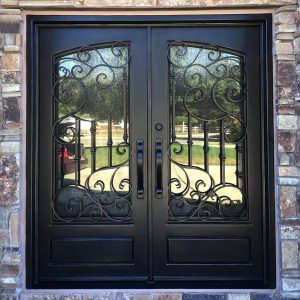
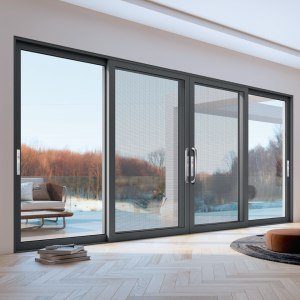
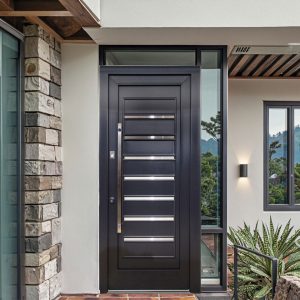
A glass front door is an entry door system where glass panels form a significant portion of the door leaf, framed in aluminum, wood, or composite material. Configurations range from full-lite (the entire door is glass) to half-lite (glass in the upper or lower portion) and include sidelites (fixed glass panels beside the door) and transoms (glass above the door).
1.1 Aluminum Glass Front Doors
Aluminum frames with thermal-break strips — polyamide or PVC bars inserted between the interior and exterior aluminum profiles — reduce thermal conductivity. Profile thickness typically ranges from 1.4mm to 2.0mm. Surface treatments include powder coating, anodizing, and wood-grain foil.
Buyers choose aluminum for durability, slim sightlines, and corrosion resistance. It is the standard choice for commercial buildings, modern villas, and storefronts.
1.2 Solid Wood Glass Front Doors
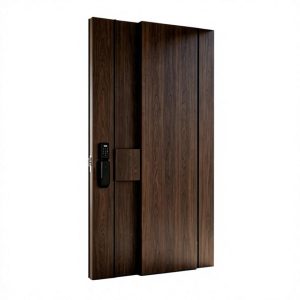
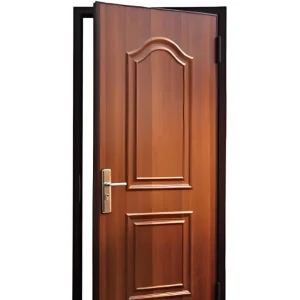
Solid wood frames — oak, mahogany, teak, or engineered wood — are joined with mortise and tenon construction. Wood moisture content should be 8–12% for export to prevent warping. Finishes include PU lacquer, UV paint, or oil.
Wood doors deliver acoustic insulation and visual warmth. They are specified for luxury villas, heritage projects, and hotel entrances. The trade-off is maintenance — wood requires periodic refinishing, especially in coastal or high-humidity climates.
1.3 Full-Lite vs. Half-Lite vs. Sidelite Configurations
The configuration affects glass thickness requirements, frame reinforcement, hardware selection, and cost per unit. Sidelite and transom combinations are almost always project-specific, which requires custom manufacturing capability.
A good rule: the larger the glass panel, the thicker the glass must be, and the more reinforcement the frame needs.
2. Types of Glass for Front Doors: A Technical Selection Framework
The glass is not an accessory. It is a structural and safety component. Selecting the wrong glass type can fail a building inspection or create a liability issue.
2.1 Tempered Glass — The Baseline
Tempered glass is heated to approximately 650°C and rapidly cooled, creating compressive stress on the surface. When broken, it shatters into small, blunt granules rather than sharp shards. Global benchmarks include EN 12150, ANSI Z97.1, and AS/NZS 2208. Door applications typically use 6mm, 8mm, 10mm, or 12mm thickness.
2.2 Laminated Glass — Security and Acoustic Performance
Laminated glass consists of two or more glass layers bonded with a PVB (polyvinyl butyral) or SGP (SentryGlas) interlayer. It holds together when broken, which resists burglary. It also reduces sound transmission and blocks up to 99% of UV radiation. For hurricane-prone regions, specify SGP interlayer.
2.3 Low-E Coated Glass — Energy Efficiency
Low-emissivity glass has a microscopically thin metallic coating that reflects heat while allowing visible light through. Verify the U-value (W/m²K), solar heat gain coefficient (SHGC), and visible transmittance (VT). Low-E can be combined with tempered or laminated glass for dual performance.
2.4 Insulated Glass Units — Thermal and Acoustic Insulation
IGUs use two or three panes separated by a spacer, sealed to create an air or argon-filled gap. Typical door specifications are 5mm + 12A + 5mm or 6mm + 15A + 6mm. Cold-climate building codes often require IGU, and it reduces condensation.
2.5 Factors to Consider When Choosing Glass
- Safety codes: US IBC requires tempered or laminated glass in doors
- Climate: coastal areas need corrosion-resistant coatings; cold climates need IGU with Low-E
- Security requirements: laminated or multi-layer glass for high-risk locations
- Acoustic environment: near airports or highways, specify laminated with acoustic PVB
- Budget: glass can account for 20–40% of total door cost
3. Glass Front Door Quality and Performance Factors
A front door is a building envelope component. Failure means energy loss, water damage, and liability. Three performance tests matter most.
3.1 Air-Tightness
Air-tightness measures air leakage through the closed door assembly. Standards include EN 1026 and ASTM E283. Poor air-tightness leads to energy loss and drafts.
3.2 Water-Tightness
Water-tightness tests resistance to water penetration under pressure. Standards include EN 1027 and ASTM E547. Inadequate water-tightness causes interior damage and mold growth.
3.3 Wind Load Resistance
Wind load resistance evaluates structural integrity under wind pressure. Standards include EN 12211 and ASTM E330. This is critical for high-rise buildings and hurricane-prone regions.
Buyer action: request test reports or certification documents before placing bulk orders. A verbal assurance is not a compliance document.
4. Relevant Industry Standards and Certifications
| Standard | Purpose | Region |
|---|---|---|
| EN 12150 | Tempered glass safety | Europe |
| ANSI Z97.1 | Safety glazing | USA |
| AS/NZS 2208 | Safety glazing | Australia/NZ |
| EN 1026 / ASTM E283 | Air-tightness | Europe/USA |
| EN 1027 / ASTM E547 | Water-tightness | Europe/USA |
| EN 12211 / ASTM E330 | Wind load resistance | Europe/USA |
| IECC / EPBD | Energy efficiency | USA/Europe |
Thermal performance, measured by U-value, typically ranges from 1.8–3.0 W/m²K for aluminum thermal-break, 1.5–2.5 W/m²K for wood, and 1.0–2.0 W/m²K for composite. Non-compliant doors fail inspections and delay project handover.
5. Glass Front Door Pricing: Cost Breakdown and Budgeting
Cost drivers include frame material, glass type, size, hardware grade, finishing, and order quantity. Tempered glass is the baseline; laminated adds 15–25%, and Low-E IGU adds 30–50%.
B2B wholesale price ranges (factory-direct):
- Entry-level aluminum glass door: $150–$350 per unit
- Mid-range thermal-break aluminum or composite: $350–$700 per unit
- Premium solid wood glass door: $700–$1,500+ per unit
Distributor or retail markup can add 30–60% on top of these figures. Hidden costs include shipping (FCL vs. LCL), customs duties (HS codes 4418.20 or 7308.30 depending on material), and lead time buffers for custom glass and finishes.
6. Production Process: From Raw Material to Finished Door
Understanding how a glass front door is manufactured helps buyers evaluate supplier claims.
- Profile cutting: aluminum profiles are cut to length with CNC machines
- Machining: holes for hardware and drainage slots are drilled and milled
- Thermal-break assembly: polyamide strips are inserted and crimped
- Surface treatment: powder coating, anodizing, or wood-grain foil application
- Glass processing: cutting, edge polishing, tempering, lamination, or IGU assembly
- Frame assembly: profiles are joined with corner connectors and sealed
- Hardware installation: locks, hinges, and handles are fitted and adjusted
- Quality inspection: dimensional, visual, and functional checks
The glass is often processed by specialized partners. Buyers should verify whether the factory owns tempering furnaces or outsources this step.
7. How to Evaluate Glass Front Door Suppliers
The evaluation framework below is a practical tool for procurement professionals.
7.1 Factory Audit Checklist
- Request photos and videos of production lines, not just showroom photos
- Verify CNC cutting and finishing line capabilities
- Ask for bill of lading samples and export documentation examples
- Request references from similar markets
7.2 Communication and Responsiveness
- Industry standard response time is 24–48 hours
- Do they provide technical drawings without excessive follow-up?
- Can they explain why a specific glass type fits your climate?
7.3 Pricing Transparency
- Are quotes itemized (frame, glass, hardware, finishing, packaging, shipping)?
- Are hidden fees (tooling, sample charges, inspection fees) disclosed upfront?
7.4 Red Flags — Avoid Suppliers Who:
- Cannot provide test reports or certification documents
- Quote prices that are significantly below market average
- Have no export documentation experience
- Respond slowly to technical questions during the inquiry stage
7.5 Questions to Ask Before Ordering
- What is the MOQ for standard and custom models?
- What is the production lead time for my configuration?
- Can you provide a pre-shipment inspection report?
- What is the warranty policy for frames, glass, and hardware?
- Can you adjust profile structures to meet my local building code?
Choose a factory that offers engineering adjustments if your project requires code compliance. Choose a trading company only if you have local technical support to verify compliance independently.
8. Customization and OEM/ODM Options
Standard sizes rarely fit project requirements. Door openings vary by building code, architectural design, and existing rough openings.
A capable supplier should offer:
- Custom width, height, and thickness
- Non-standard sidelite and transom combinations
- RAL color matching and wood-grain foil finishes
- Custom hardware selection with brand options
- Private label branding on hardware, packaging, and documentation
ODM services mean the manufacturer designs a door system from scratch based on performance requirements. This is valuable for unique architectural styles or specialized needs like hurricane-rated doors. Verify engineering capability — CAD drawings and structural calculations — before committing.
9. Our Door Manufacturing Capabilities
As a manufacturer, our approach to glass front door production is direct. We supply factory-direct to contractors, developers, and distributors, which means competitive pricing without middleman markups.
Our product lines cover the categories described earlier: thermal-break aluminum doors, solid wood glass front doors, and composite configurations. We support full customization on size, color, glass type, and hardware accessories — including the tempered, laminated, Low-E, and IGU glass options discussed in Section 2.
Our engineering team can adjust profile structures and fittings to match local building codes in your target market. This is not a standard service; it requires understanding the specific compliance framework of each destination country.
10. Quality Control: Our Multi-Stage Inspection Process
Every order undergoes pre-shipment inspection for air-tightness, water-tightness, and wind resistance — the performance standards detailed in Section 3. We provide packing lists, proforma invoices, and full customs documentation to support import clearance.
With experience in foreign trade, we handle both FCL and LCL shipments with direct delivery from our China factory. Lead times follow industry benchmarks: 15–25 days for standard products, 25–35 days for custom, and 40–60 days for ODM projects.
11. Ordering Process: MOQ, Lead Time, and Shipping
- MOQ: typically 10–50 units for standard models; higher for custom or ODM
- Samples: 1–2 units, paid separately, credited against bulk orders
- FCL shipping: 20ft container holds ~250–350 doors; 40ft holds ~500–700 doors
- LCL shipping: for smaller orders, charged per cubic meter
Frequently Asked Questions
What is a glass front door?
An entry door system where the primary panel or a significant portion is glass, framed in aluminum, wood, or composite. Used in residential, commercial, and mixed-use buildings.
What is a glass door in front of a front door called?
A storm door (installed outside a primary door) or a screen door (with mesh). In commercial contexts, it may be a vestibule door or outer entry door. A glass front door itself is the primary door.
How much does a glass front door cost?
B2B wholesale ranges: $150–$350 for entry-level aluminum, $350–$700 for thermal-break or composite, $700–$1,500+ for premium wood. Retail prices are 30–60% higher.
Is it okay to have a glass front door?
Yes, provided the glass is tempered or laminated for safety, the frame is thermally efficient, and the hardware meets security requirements. Frosted or tinted options address privacy concerns; Low-E or IGU handles energy efficiency.
What glass is best for a front door?
Laminated glass for security and acoustic performance, or tempered Low-E IGU for energy efficiency. The best choice depends on climate, security needs, and building codes.
Can I order a sample before a bulk order?
Yes. Sample costs are typically paid separately and credited against the bulk order.
Glass front door sourcing is a technical process. The buyers who succeed are those who specify correctly, verify supplier claims, and plan logistics with buffer time. The framework above gives you the vocabulary and checklist to do that.
If you have a project in hand — whether you need a quote, technical advice, or samples — our team can discuss the specifics of your market and requirements.
References
- EN 12150 – Glass in building. Thermally toughened soda lime silicate safety glass. https://www.en-standard.eu
- ANSI Z97.1 – American National Standard for Safety Glazing Materials Used in Buildings. https://www.ansi.org
- ASTM E283 – Standard Test Method for Determining Rate of Air Leakage Through Exterior Windows, Curtain Walls, and Doors. https://www.astm.org
- ASTM E330 – Standard Test Method for Structural Performance of Exterior Windows, Doors, Skylights and Curtain Walls. https://www.astm.org
- International Energy Conservation Code (IECC). https://www.iccsafe.org
- EN 1627 – Pedestrian doorsets. Resistance to burglary. https://www.en-standard.eu