Content Menu
● 1. What Are Front Entry Double Doors with Glass?
● 2. Why Double Doors with Glass Are Becoming Standard in Higher-End Builds
● 3. Comparing Material Platforms: Wood, Aluminum, and Hybrid Systems
● 4. Glass Selection: Performance Metrics Buyers Must Specify
● 5. Hardware Systems: The Difference Between 5-Year and 30-Year Performance
● 6. Customization: What “Custom” Actually Means in Door Manufacturing
● 7. Manufacturing Quality: The Checklist Before You Order
● 8. How to Evaluate Front Entry Double Doors with Glass Suppliers
● 9. Production Process: From Raw Material to Finished Door
● 10. Ordering Process: MOQ, Lead Time, and Shipping
● 11. How We Meet These Standards: Our Factory-Direct Approach
13 min read
A project manager in Miami once told me his biggest headache wasn’t finding a door manufacturer. It was finding one that understood why his high-rise project needed impact-rated glazing — and could actually prove they could deliver it. The conversation wasn’t about aesthetics. It was about wind load calculations, test reports, and whether the factory’s quality control could hold across 400 units.
That is the reality of sourcing front entry double doors with glass for commercial and residential projects. The product sits at the intersection of design, structural performance, and building code compliance. Getting it wrong means rework, delays, and liability.
This guide covers what B2B buyers need to know before sending an RFQ: material platforms, glass specifications, hardware systems, manufacturing quality checks, and procurement models. You will finish with a clear framework for evaluating suppliers and the specific data points to request during quoting.
What Are Front Entry Double Doors with Glass?
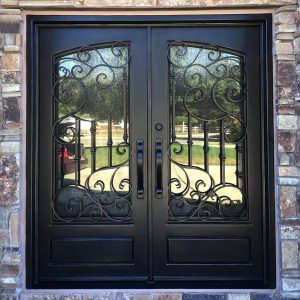
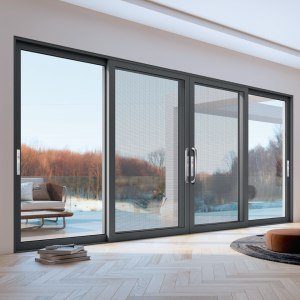
Front entry double doors with glass are paired door leaves installed at a building’s main entrance, incorporating glazed panels for natural light and visibility. They typically provide a total opening width of 60 to 72 inches, with each leaf ranging from 30 to 36 inches wide. The glass content varies from small decorative inserts to full-height panels.
The B2B relevance is straightforward. Property developers and architects specify double entry doors to create a more imposing entrance and allow daylight into foyers. For contractors, the wider opening simplifies moving furniture and equipment during occupancy. But the glass changes everything: thermal performance, security requirements, and structural rigidity all depend on how the glazing is engineered into the door system.
Why Double Doors with Glass Are Becoming Standard in Higher-End Builds
The shift from single to double entry doors is visible across townhome developments, villa projects, and commercial lobbies. Three factors drive this specification trend.
First, curb appeal directly affects property valuation. A 2023 Zillow analysis found that homes with upgraded entryways sold for 4–6% more than comparable properties [1]. Double doors with glass read as premium — they widen the visual mass of the facade and create a sense of arrival.
Second, natural light is a functional asset. Glass panels in entry doors reduce daytime lighting loads in foyers and hallways. In colder climates, south-facing entry glazing can contribute passive solar gain, lowering heating demand during winter months.
Third, the operational width matters. A 60-inch clear opening accommodates sofas, appliances, and hospital beds without special handling. For commercial buildings, double doors meet accessibility requirements more easily than oversized single leaves, which become heavy and difficult to operate.
Comparing Material Platforms: Wood, Aluminum, and Hybrid Systems
Solid Wood Double Doors
The traditional choice for luxury residential and historical renovation work. Mahogany, oak, and walnut are the most common species, each offering distinct grain patterns and natural insulation properties.
Performance considerations: wood provides excellent thermal insulation, but it requires maintenance. Finishes need reapplication every 2–3 years, especially on exterior surfaces exposed to UV and moisture. For procurement, the critical specification is moisture content — properly conditioned wood should read 8–12% at time of delivery. Anything higher risks warping and splitting after installation.
Sourcing lead times run longer for wood doors because of the conditioning and finishing process. Expect 30–45 days for custom work.
Thermal-Break Aluminum Double Doors
This is the engineered high-performer in the category. The key construction detail is a polyamide thermal break — a structural insert that separates the interior and exterior aluminum profiles, interrupting the heat transfer path.
Performance metrics are where aluminum wins. A properly designed thermal-break system achieves air-tightness ratings up to Class 4 per EN 12207 (the highest classification) and water-tightness up to Class 9A per EN 12208. Wind load resistance varies by profile depth, but 2000–3000 Pa is achievable with reinforced mullions [2].
The system is designed for double or triple glazing. Heavy glass panels — 100 lbs per leaf or more — are supported without sagging because aluminum’s structural rigidity exceeds wood at equivalent dimensions. Powder-coated finishes in any RAL color provide corrosion resistance and eliminate the maintenance cycle entirely.
For coastal projects, high-rise buildings, and commercial applications, thermal-break aluminum is increasingly the default specification.
Aluminum-Clad Wood
A hybrid option that pairs a wood interior (for aesthetics and warmth) with an aluminum exterior (for durability). The aluminum shell protects the wood from weather exposure, extending the maintenance interval to 8–10 years.
The trade-off is cost. Aluminum-clad wood systems typically run 20–30% higher than solid wood alone. For projects where the client demands wood aesthetics but the building envelope is exposed to harsh conditions, this is the specification to recommend.
Material Comparison Table
| Parameter | Solid Wood | Thermal-Break Aluminum | Aluminum-Clad Wood |
|---|---|---|---|
| Thermal Insulation | High | Medium-High | High |
| Maintenance Frequency | Every 2–3 years | Minimal | Every 8–10 years |
| Wind Load Resistance | Medium | High | Medium-High |
| Color Options | Stains/paints | Any RAL color | Hybrid |
| Typical Lifespan | 30+ years | 40+ years | 40+ years |
| Relative Cost | $$$$ | $$$ | $$$$ |
Glass Selection: Performance Metrics Buyers Must Specify
The glass is the most misunderstood component in entry door systems. A door that looks identical from the outside can have dramatically different thermal, safety, and acoustic performance depending on the glazing specification.
Safety Glass Types
Tempered glass is mandatory for door panels in most jurisdictions. It is 4–5 times stronger than annealed glass and shatters into small granules on impact, reducing injury risk. Laminated glass adds a PVB interlayer between two panes — the glass remains intact when broken, which is critical for security and hurricane-prone regions.
For hurricane zones (Florida, Texas Gulf Coast, Caribbean), impact-resistant glazing is not optional. The testing protocol is typically TAS 201/202/203 in Florida or ASTM E1886/E1996 for the ICC codes [3]. Specify this at RFQ stage — retrofitting impact glazing after manufacturing is not feasible.
Thermal Performance Coatings
Low-E (low-emissivity) coatings reflect infrared heat while transmitting visible light. The coating is applied to the interior surface of the outer pane in an insulated glass unit (IGU). Combined with argon or krypton gas fills between panes, Low-E coatings reduce the U-factor significantly.
Key metrics to specify:
- U-factor: lower is better. For entry doors, 0.25–0.50 depending on climate zone.
- SHGC (Solar Heat Gain Coefficient): relevant for warm climates. Lower SHGC reduces cooling loads.
- Visible Transmittance (VT): how much daylight passes through. Higher VT for foyers, lower for privacy.
Decorative Glass Options
Beyond performance, the glass aesthetic defines the door’s character. Clear glass maximizes light transmission but offers zero privacy. Frosted or obscured glass trades some light for privacy. Textured options — reeded, fluted, hammered — are trending in modern residential design. Bronze or black tinted glass provides a contemporary look while reducing solar heat gain.
The B2B point: when sending an RFQ, specify the glass build-up exactly. “Double glazed” is not a specification. It is the starting point of a conversation. A complete specification reads: “5mm tempered + 12mm argon gap + 5mm tempered with Low-E coating on surface #2, U-factor 0.30, SHGC 0.25, VT 0.60.”
Hardware Systems: The Difference Between 5-Year and 30-Year Performance
Door hardware is where cost-cutting causes the most problems. A well-built door with cheap hinges or locks will fail within five years. The frame, seals, and moving parts determine the door’s actual lifespan.
Locking Mechanisms
Multi-point locking systems engage at multiple points along the door height — typically 3–5 locking points. This provides superior security (a burglar must defeat several points, not one) and better weather sealing (the door is pulled evenly against the frame). Mortise locks remain the standard for premium entry doors, offering a solid, mechanical feel that cylindrical locks cannot match.
Smart locks are increasingly specified in modern builds. These integrate electronic access — keypad, fingerprint, or smartphone control — and require power and connectivity planning at the rough opening stage.
Hinges for Glass Doors
Standard butt hinges (3 per leaf) are acceptable for residential doors under 60 lbs. Once glass panels push the weight above that threshold, heavy-duty ball-bearing hinges are required. For oversized or heavy glass doors, pivot systems allow 180-degree opening and distribute the weight more evenly.
Weather Seals
Compression seals and magnetic seals perform differently over time. Magnetic seals offer better long-term performance because the magnetic force maintains consistent contact even as the door settles. Sweep and threshold systems are critical for water-tightness at the door bottom.
Request test reports for air-tightness (EN 12207), water-tightness (EN 12208), and wind load resistance (EN 12210). These are not optional documentation — they are the measurable proof that the door system performs as engineered.
Customization: What “Custom” Actually Means in Door Manufacturing
When a buyer says “custom,” they usually mean one of three things:
- Custom dimensions. Non-standard widths or heights. Manufacturing capability typically allows up to 48″ × 120″ per leaf, but oversized doors require thicker profiles and larger glass — both add cost.
- Custom finishes. Powder coating in any RAL color for aluminum. Stain ranges from clear to espresso for wood. Two-tone finishes — different colors inside vs. outside — are increasingly popular.
- Custom glass and hardware coordination. Matching the glass style to the door material (reeded glass + black aluminum frame = contemporary; beveled glass + mahogany = traditional).
The procurement discipline is to specify everything in writing. Ambiguity in an RFQ leads to mismatched expectations. A good manufacturer will ask clarifying questions — that is a signal of competence, not inconvenience.
Manufacturing Quality: The Checklist Before You Order
Material Certifications
- Wood: FSC certification for sustainable sourcing. Moisture content reports (8–12% target).
- Aluminum: Alloy grade 6063-T5 or T6. Anodizing thickness AA15 or AA25 for corrosion resistance.
- Glass: Tempered/laminated certification per local codes (SGCC in the US, CE marking in the EU).
Performance Test Reports
Every door assembly should have documented test results for:
- Air-tightness (EN 12207)
- Water-tightness (EN 12208)
- Wind load resistance (EN 12210)
- Acoustic performance (if noise reduction is a requirement)
Visual and Dimensional Inspection
Before shipment, verify:
- Surface defects, scratches, coating inconsistencies
- Squareness and flatness of leaves and frames
- Glass edge quality (polished vs. seamed edges)
How to Evaluate Front Entry Double Doors with Glass Suppliers
The evaluation framework has four pillars:
1. Manufacturing capability. Does the factory actually produce the doors, or do they buy from subcontractors? Ask for production line photos and video. A factory that controls the full process — extrusion, fabrication, assembly, glazing — has better quality control than one that assembles purchased components.
2. Testing and documentation. Request test reports before committing to an order. A manufacturer who cannot provide air-tightness and water-tightness data for their standard products will not suddenly produce it for your custom order.
3. Customization flexibility. Can they adjust profile structures to meet your local building codes? This is a critical capability for international buyers. A factory with rigid, non-adjustable product lines will struggle to meet code requirements in different markets.
4. Communication and process discipline. How quickly do they respond to RFQs? Do they ask clarifying questions about your project requirements, or do they send a generic quote? The latter is a red flag.
Red Flags to Avoid
- No test reports available. Performance claims without documentation are marketing, not engineering.
- Vague lead times. If a factory cannot articulate a production timeline with specific milestones, they do not have a controlled process.
- No sample policy. Every serious manufacturer offers pre-production samples. Refusal to provide samples suggests they are not confident in their product.
- Unwillingness to adjust profiles. For international buyers, code compliance is non-negotiable. A manufacturer who cannot adapt their product to your market’s building codes is a dead end.
Decision Guide: Choose A If, Choose B If
Choose thermal-break aluminum if: your project is in a coastal or high-wind zone, the building has strict energy codes, or you need a low-maintenance solution for commercial applications.
Choose solid wood if: the project is a luxury residential build, a historical renovation, or the client specifically demands wood aesthetics and is prepared for the maintenance cycle.
Choose aluminum-clad wood if: you need wood aesthetics with aluminum durability, and the project budget allows for the 20–30% premium.
Production Process: From Raw Material to Finished Door
Understanding the manufacturing sequence helps buyers identify where quality is built in — and where it can fail.
Step 1: Profile extrusion (aluminum) or wood conditioning (wood). Aluminum profiles are extruded from billets at temperatures above 500°C, then cooled and aged to achieve T5 or T6 temper. Wood is kiln-dried to the target moisture content (8–12%) and conditioned for 2–3 weeks.
Step 2: Thermal break insertion (aluminum). Polyamide strips are inserted between the interior and exterior profiles, then the assembly is roll-formed or crimped to create the structural bond.
Step 3: Cutting and machining. Profiles are cut to length, and drainage holes, hardware cutouts, and screw ports are machined. Precision here determines how well the door assembles and seals.
Step 4: Surface treatment. Aluminum is powder-coated (for color) or anodized (for natural finish). Wood receives stain or paint in multiple coats with sanding between layers.
Step 5: Glass fabrication and IGU assembly. Glass is cut, edge-worked, tempered or laminated, and assembled into insulated glass units with spacers and gas fills.
Step 6: Door assembly. Profiles are assembled into leaves, hardware is installed, glazing beads are fitted, and the glass is secured with structural sealant.
Step 7: Quality inspection. Every door undergoes dimensional checks, hardware function tests, and visual inspection. Sample doors from each batch undergo performance testing.
Step 8: Packaging. Doors are wrapped in protective film, edge-protected, and crated for sea freight. Moisture-barrier film is essential for container shipping.
Ordering Process: MOQ, Lead Time, and Shipping
Minimum Order Quantities
Typical MOQs for custom double doors range from 20–50 units. Some factories accept trial orders of 5–10 units for new buyers, but this varies. If you need a lower MOQ, ask for stock designs or semi-custom options.
Lead Times
- Standard sizes with common glass and hardware: 15–25 days after sample approval.
- Fully custom doors (non-standard size, custom color, special glass): 30–45 days.
- Shipping time: 2–5 weeks depending on destination and shipping method.
Recommendation: order 45–60 days before installation date to accommodate production, shipping, and customs clearance.
Shipping Options
- FCL (Full Container Load): cost-effective for large orders. A 40-foot container holds 40–80 doors depending on size.
- LCL (Less than Container Load): suitable for samples, trial orders, or smaller quantities. Higher per-unit freight cost.
Documentation for International Shipments
All of these are required for customs clearance in most markets:
- Commercial invoice and packing list
- Bill of lading (B/L)
- Certificate of origin (may be required for preferential tariff treatment)
- Proforma invoice (for L/C transactions)
A factory with foreign trade experience provides these documents as part of the standard export process.
How We Meet These Standards: Our Factory-Direct Approach
The specifications and procurement models above represent what serious buyers should expect from a door manufacturer. Here is how we deliver against those expectations.
As a door and window manufacturing factory, we supply directly to contractors, developers, and importers. There are no distributor layers between our production line and your project. Our pricing reflects factory production costs — not a reseller’s margin — and we are transparent about what you are paying for.
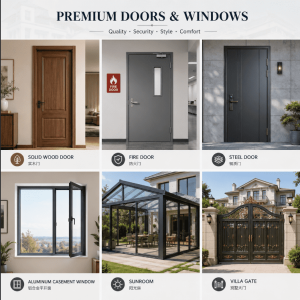
We manufacture solid wood doors, thermal-break aluminum doors, and system windows to exact specifications. Custom dimensions, RAL colors, wood finishes, glass types (tempered, laminated, Low-E, decorative), and hardware brands are all configurable per project. Our OEM and ODM support means we produce to your drawings or adapt our proven designs to your market requirements. Private label is available — your brand, your packaging, your market.
Every batch undergoes air-tightness, water-tightness, and wind resistance testing before shipment. Visual and dimensional inspections are performed on each door leaf and frame. Test reports and inspection documentation are provided as part of the shipping package.
With years of foreign trade experience, we provide complete shipping documentation: packing lists, proforma invoices, commercial invoices, and customs paperwork. FCL and LCL shipping are available with direct delivery from our China factory. We work with your freight forwarder or arrange shipping on your behalf.
Our profile structures and fittings can be adjusted to meet the building codes of your target market. Whether you need impact-rated glazing for hurricane zones, specific U-factor ratings for cold climates, or fire-rated assemblies — we adapt the product to the requirement.
Questions to Ask Before Ordering
- What is the U-factor and SHGC of your standard double-glazed door assembly?
- Can you provide EN 12207, EN 12208, and EN 12210 test reports for your standard products?
- What is your MOQ for custom double doors with glass?
- What is your lead time from sample approval to shipment?
- Can you adjust profile structures to meet our local building codes?
- Do you provide pre-production samples before mass production?
- What is your warranty policy on structural integrity and finishes?
- What packaging standards do you use for sea freight?
References
[1] Zillow Research. “The Impact of Entryway Upgrades on Home Value.” 2023. https://www.zillow.com/research/
[2] European Committee for Standardization. “EN 12207:2016 — Windows and doors — Air permeability — Classification.” https://www.cen.eu/
[3] International Code Council. “ASTM E1886/E1996 — Standard Test Methods for Performance of Exterior Windows, Curtain Walls, Doors, and Impact Protective Systems Impacted by Missile(s) and Exposed to Pressure Differentials.” https://www.iccsafe.org/
https://doorwoodendoors.com/contact-us/” style=”display:inline-block;padding:12px 24px;background:#2563eb;color:#fff;text-decoration:none;border-radius:6px;font-weight:600″>Get a Free Quote