Content Menu
● 1. What Is a Front Door with Window and Screen?
● 2. How Does the Screen Mechanism Work?
● 3. What Technical Specifications Matter Most?
● 4. How to Evaluate Front Door with Window and Screen Suppliers
● 5. Front Door with Window and Screen: Key Quality Indicators for Buyers
● 6. What Industry Standards and Certifications Apply?
● 7. How We Approach Manufacturing: The Factory-Direct Difference
● 8. Questions to Ask Before Ordering
11 min read
A procurement manager for a hotel chain in the Caribbean once told me the problem with standard entry doors. The salt air corroded hardware within two years, and guests wanted fresh air at night but refused to sleep with the door wide open. What they needed was not a door and a separate screen. They needed a single unit engineered for that specific environment.
That conversation captures what a front door with window and screen actually demands. It is not a catalog item. It is a piece of building physics that must balance ventilation, light, security, and weather resistance. When you source these for a construction project or a distribution line, the specifications matter more than the brochure photos.
What Is a Front Door with Window and Screen?
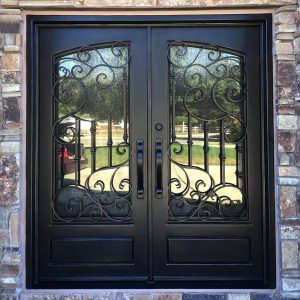
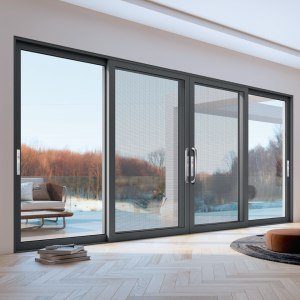
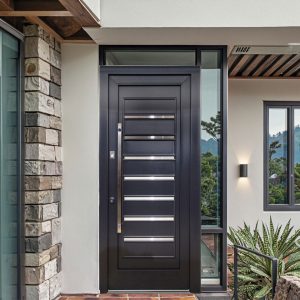
A front door with window and screen combines three functions in one unit: a weather-resistant exterior door, a glazed opening for natural light, and an integrated screen panel for ventilation. Unlike a traditional setup where a separate storm door or screen door is mounted alongside the main door, integrated versions build the screen mechanism directly into the door frame or door leaf.
There are two primary configurations on the market. The first is a single door unit with a sliding or retractable screen integrated into the frame. The second uses a primary door with an additional screen door mounted on the exterior — sometimes called a storm door system. For B2B buyers, the distinction matters because it changes the installation profile, the hardware requirements, and the long-term maintenance plan.
Integrated units are becoming the default choice for modern architecture. They eliminate the visual clutter of a second door, reduce the number of moving parts exposed to weather, and allow for slimmer sightlines. But they also concentrate more engineering into a single frame — which means the quality of the profile structure, the screen mechanism, and the glazing seals determines whether the product lasts five years or twenty.
How Does the Screen Mechanism Work?
The screen mechanism is the component that fails most often in these doors, so it deserves close attention during supplier evaluation.
Retractable screens roll up into a housing hidden in the door frame when not in use. A spring-loaded roller keeps the mesh taut, and a handle on the edge pulls it across the opening. The advantages are aesthetic — no visible track, no exposed screen when closed — and protective, since the screen is shielded from weather and debris when retracted. The disadvantage is mechanical complexity. The tensioning system must be precise, and cheap spring mechanisms lose tension within months of regular use.
Sliding screens run on visible tracks, either top-mounted or bottom-mounted. They are mechanically simpler, easier to repair, and generally more durable in high-traffic applications. The trade-off is aesthetic and functional: the track collects dust and debris, and the screen panel always remains visible. For commercial applications like hotels or rental properties, sliding screens are often the pragmatically better choice because maintenance staff can service them without specialized tools.
Mesh material is the second decision point. Standard fiberglass mesh costs less and provides adequate insect protection. Stainless steel mesh costs more but resists pet damage, offers better security, and maintains tension longer. For coastal installations, stainless steel is worth the premium because salt air degrades fiberglass mesh over time.
What Technical Specifications Matter Most?
Three performance areas determine whether a front door with window and screen will perform acceptably: weather resistance, thermal performance, and structural integrity.
Air, Water, and Wind Resistance
The whole-door assembly — not just the raw profiles — needs to pass standardized testing. In North America, the relevant standards are AAMA/WDMA/CSA 101/I.S.2/A440. In Europe, EN 14351-1 governs. These tests measure air infiltration, water penetration under wind-driven rain, and structural deflection under wind load.
The screen mechanism creates a specific vulnerability. The track or housing for the screen is an additional joint in the frame, and every joint is a potential water entry point. A door that passes water resistance tests with a solid panel may fail when the screen housing is added. Buyers should ask for test data on the specific configuration they intend to purchase, not generic figures from the manufacturer’s broader product range.
Thermal Break and U-Value
A front door with a large glass lite is already a thermal weak point in the building envelope. If the frame is non-thermally-broken aluminum, the heat loss through the frame itself compounds the problem. Polyamide thermal-break profiles separate the interior and exterior aluminum sections with a structural polymer, reducing thermal transmittance through the frame.
The U-value of the complete door — frame plus glazing — is the number that matters for energy code compliance. Double glazing with Low-E coating and argon gas fill typically achieves U-values between 1.4 and 2.0 W/m²K depending on the frame design. Triple glazing pushes lower but adds weight, which brings us to the next spec.
Hardware and Hinge Load Capacity
A door with a full-lite glass panel and integrated screen is heavy. A 1000mm × 2100mm door with double glazing can easily weigh 80–100 kg. Standard hinges rated for 60 kg will sag within a year. Buyers should specify heavy-duty hinges with a load rating of at least 120 kg, and multi-point locking systems that distribute the locking force across the full door height to prevent warping.
This is not an area where cost-cutting makes sense. Replacing sagging hinges on a heavy glass door is a labor-intensive job that requires removing the entire door leaf.
How to Evaluate Front Door with Window and Screen Suppliers
The evaluation framework below applies whether you are buying fifty units for a villa project or five hundred for a distribution line.
Production Capability Assessment
A supplier that fabricates doors from imported profiles is different from one that controls the full manufacturing chain. Ask specifically:
- Do you extrude your own profiles or purchase them? If purchased, from which mill?
- What is your monthly production capacity for this specific door type?
- Can you produce non-standard sizes without significant lead time penalties?
- What glazing line do you have in-house? Double glazing should be assembled and sealed in a controlled environment, not outsourced to a third party.
Quality Control Process
The critical question is not “do you have QC?” — every factory will say yes. The question is what exactly gets inspected, and at what stage.
A credible pre-shipment inspection for these doors includes:
- Air-tightness testing on finished units, not just profile samples
- Water-tightness testing under simulated wind-driven rain
- Hardware function testing (each lock, hinge, and screen mechanism cycled multiple times)
- Glass seal integrity inspection
- Cosmetic inspection under standardized lighting
Documentation and Compliance
For export purchases, the supplier must provide technical documentation that supports your local building code compliance. This includes:
- Test reports from accredited laboratories
- Product specifications with U-values and performance grades
- Installation instructions
- Customs documentation (packing list, proforma invoice, certificate of origin)
A supplier who cannot produce test reports for the specific profile structure you are buying is asking you to absorb the compliance risk.
Front Door with Window and Screen: Key Quality Indicators for Buyers
When comparing quotes, look beyond the unit price. The following indicators separate competent manufacturers from traders who simply assemble components.
| Quality Indicator | What to Verify | Why It Matters |
|---|---|---|
| Profile wall thickness | ASTM B221 or EN 755 specifications | Thin walls flex under wind load and hinge weight |
| Thermal break material | Polyamide 66 with glass fiber reinforcement | Cheap nylon breaks down under UV exposure |
| Screen mesh type | Stainless steel vs. fiberglass specification | Determines lifespan and security level |
| Glazing sealant | Butyl primary seal + polysulfide/silicone secondary seal | Prevents seal failure and fogging between panes |
| Hardware brand | Specify brand or grade (e.g., Roto, Siegenia, or equivalent) | Unknown hardware fails faster and is hard to replace |
| Finish system | Powder coating thickness (60–80 microns minimum) | Thin coating corrodes, especially in coastal areas |
What Industry Standards and Certifications Apply?
The standards that apply to a front door with window and screen depend on the target market. Familiarity with these is a baseline requirement for any export-oriented supplier.
- North America: AAMA/WDMA/CSA 101/I.S.2/A440 — the primary specification for windows and doors. For hurricane-prone regions, Miami-Dade County’s TAS 201/202/203 protocols are the gold standard.
- Europe: EN 14351-1 covers windows and pedestrian doorsets. It includes CE marking requirements.
- Energy performance: NFRC certification in the US, or the relevant local energy code (e.g., Title 24 in California, Part L in the UK).
The honest caveat here is that certification is expensive and time-consuming. Many Chinese factories hold certifications for their domestic market but not for export destinations. A supplier who offers to “adjust the profile structure” to meet your local code is making a commitment that requires re-testing — verify that they understand the cost and timeline implications.
How We Approach Manufacturing: The Factory-Direct Difference
The door industry works in layers. Trading companies source from multiple factories, add a margin, and pass the quality risk to you. When defects appear, the trading company blames the factory, and the factory says the specifications were misinterpreted. You are left coordinating between parties who do not communicate directly.
As a manufacturing facility, our approach is different because the entire chain — profile cutting, machining, glazing assembly, hardware installation, and testing — happens under one roof. When you order a front door with window and screen from us, the unit that passes the pre-shipment inspection is the same unit that arrives at your project site. There is no third party translating your requirements.
Production Process: From Raw Material to Finished Door
The production process for our aluminum doors follows a sequence that determines the final quality:
- Profile cutting and machining — Aluminum profiles are cut to exact length, then CNC-machined for hinge pockets, lock channels, and drainage slots. Accuracy at this stage prevents assembly issues later.
- Frame assembly — Corner joints are cut and assembled using corner keys or welding, depending on the profile system. Thermal break strips are inserted before assembly.
- Glazing unit fabrication — Double or triple glazing is assembled in-house, with desiccant-filled spacers and dual-seal systems. This in-house capability eliminates the coordination risk of outsourcing glass to a third party.
- Door leaf assembly — Hardware, hinges, multi-point locks, and the screen mechanism are installed. The screen track is checked for smooth operation.
- Final inspection — Every finished door undergoes air-tightness, water-tightness, and wind resistance testing. Hardware function is cycled, and glass seals are inspected.
Quality Control: Our Multi-Stage Inspection Process
The inspection system follows a simple principle: catch defects before they become someone else’s problem. Each production stage has a checkpoint, and the final pre-shipment inspection is documented with photographs and test results sent to the buyer.
For screen doors specifically, we cycle the screen mechanism twenty times during inspection to verify smooth operation. This catches tensioning issues that would otherwise appear in the first month of use.
Customization and OEM/ODM Options
We produce fully customized doors. Size, color (any RAL number), glass specification, and hardware brand are all configurable. For distributors, private labeling is available — your brand name goes on the product and packaging, and we handle the manufacturing.
The adjustable profile structure is a specific capability worth understanding. Different markets have different wind load requirements and energy codes. Rather than maintaining a separate production line for each market, we adjust the profile wall thickness, thermal break width, and glazing specification to match the target market’s requirements. This keeps costs down without compromising performance where it matters.
Ordering Process: MOQ, Lead Time, and Shipping
Standard production lead time for custom-sized doors is 3–6 weeks depending on quantity and glass type. For container-load orders, we optimize the schedule around your project timeline.
Shipping options include FCL (Full Container Load) for large projects and LCL (Less than Container Load) for distributors testing the market with smaller initial orders. We handle all export documentation — packing lists, proforma invoices, certificates of origin — and our foreign trade team has experience with customs clearance across North America, Europe, and the Middle East.
Questions to Ask Before Ordering
Before you commit to a supplier, run through this checklist:
- Can I see test data for this exact configuration — including the screen mechanism — not just the base product?
- What happens if a unit arrives damaged? What is your replacement policy?
- Can you ship spare parts (screen mesh, springs, rollers) for field maintenance?
- What is the warranty period, and what does it cover? Screens and hardware wear out faster than frames.
- Can you adjust the profile structure to meet our local wind load requirements without a major lead time increase?
Avoid Suppliers Who…
- Cannot provide test reports for the finished door assembly
- Quote prices significantly below market rate for thermally-broken aluminum — the profiles cost what they cost
- Claim “one size fits all” compliance with international standards
- Cannot explain the difference between their profile system and a cheaper alternative
- Offer no customization options on hardware or color
Choose A if… Choose B if…
Choose a direct factory supplier if you are buying container quantities, need custom sizes or colors, and require consistent quality across large orders. The factory-direct relationship also gives you better access to spare parts and technical support after delivery.
Choose a trading company if you are buying a single unit for a personal project, or if you need a supplier who can source multiple product types from different factories. The convenience of one contact for diverse products may justify the 20–30% markup.
For bulk procurement of front doors with window and screen units — where every unit must perform identically — the direct factory model is the safer choice.
—
When you are ready to discuss your project requirements, our team can provide detailed specifications, samples, and pricing for your specific door configuration. We work with contractors, builders, distributors, and property developers worldwide.
References
- AAMA/WDMA/CSA 101/I.S.2/A440 — North American Fenestration Standard. https://www.aamanet.org/
- EN 14351-1:2006+A2:2016 — Windows and doors — Product standard. https://www.en-standard.eu/
- American Architectural Manufacturers Association (AAMA) — Thermal Break Specifications. https://www.aamanet.org/technical-resources
- National Fenestration Rating Council (NFRC) — Energy Performance Ratings. https://www.nfrc.org/
- Miami-Dade County Product Control — TAS Testing Protocols. https://www.miamidade.gov/building/tas-testing-protocols.asp