Key Takeaways: What to Know Before Buying a Wooden Front Door
A wooden front door is not a single product category. It is a combination of species, construction method, style, glass configuration, and hardware. Before comparing designs, you need to understand that the wood species and how the door is built determine durability and maintenance far more than the visual style does. A rustic oak door and a modern walnut door can perform identically if the core construction and finishing are done properly.
The most common mistake buyers make is choosing a design first and evaluating construction second. That order should be reversed. The style is the last variable to lock in, because nearly any style can be executed in nearly any wood species. What you cannot easily change later is the quality of the core, the frame system, and the glazing.
Wooden Front Door Styles: From Rustic to Modern
Rustic Wooden Front Doors
Rustic designs typically use heavy timber, visible wood grain, and handcrafted details. Common features include wrought iron hinges, distressed finishes, and thick stiles and rails. These doors suit log homes, mountain properties, and traditional country houses. The wood species most often used are oak, cedar, and reclaimed pine. Rustic doors are usually single-panel or two-panel designs with minimal glass, because the wood itself is the visual statement.
Farmhouse Wooden Front Doors
Farmhouse style is a more refined version of rustic. It uses board-and-batten construction or simple panel layouts, often painted in white, black, or sage green. The key differentiator is the hardware: barn-style handles, black hinges, and occasionally a small window or half-lite glass insert. Farmhouse doors work well on modern suburban homes that want a nostalgic feel without the heavy timber look.
Modern Wooden Front Doors
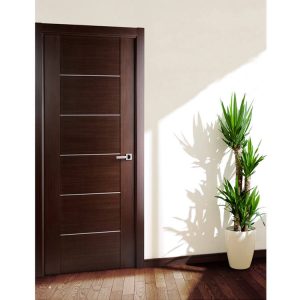
Modern designs emphasize clean lines, flat panels, and minimal ornamentation. The wood is often a smooth-faced species like walnut, oak, or ash with a matte or satin finish. Glass plays a larger role: full-height sidelites, horizontal strip windows, or a single large pane. Modern doors are typically wider and taller than traditional options, often reaching 36 to 42 inches in width. They pair well with minimalist architecture, mid-century modern homes, and contemporary urban builds.
Craftsman and Traditional Styles
Craftsman doors feature a distinctive lower panel and a large upper glass lite, often with a Prairie-style or geometric grid. Traditional designs use raised panels, typically three to six per door, with more ornate molding. These are the safest choices for colonial, Victorian, and classic suburban homes because they match a broad range of architectural periods.
The practical distinction for buyers: rustic and farmhouse styles hide minor surface wear well, while modern flat-panel doors show every scratch and fingerprint. If the door will face heavy daily use or harsh weather, factor that into your style choice.
Wooden Front Door with Sidelights and Double Doors: Design Options
A wooden front door with sidelights is one of the most popular configurations because it solves two problems at once: it brings natural light into the entryway and it visually widens a narrow entrance. Sidelites are narrow fixed panels, typically 12 to 18 inches wide, flanking one or both sides of the door.
The trade-off is straightforward. Sidelights increase the overall opening width, which affects the structural header above the door. A single door with one sidelight requires a rough opening of roughly 46 to 48 inches. Two sidelites push that to 60 inches or more. This matters for new construction where the framing can be planned, but it is a significant modification for existing homes.
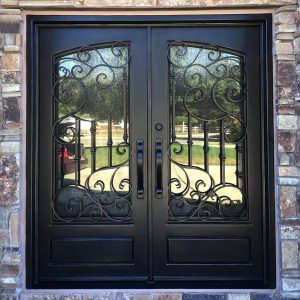
Double wooden front doors with glass are a different decision. They are chosen for aesthetics and statement-making, not for practical entry. One leaf is typically fixed, and the other is active. Double doors work best on homes with a wide facade and a large foyer inside. The glass configuration is usually a single large pane or divided lites in the upper half of each door.
For both sidelites and double doors, glass specification is critical. Single-pane glass negates the insulation value of the wood door entirely. Double-glazed or triple-glazed units with low-emissivity coatings are the minimum standard for energy efficiency. Tempered or laminated glass is recommended for security and safety, especially in sidelites where the glass is close to the handle and lock.
Wooden Front Door Materials and Construction: What Matters
Solid Wood vs. Engineered Wood
Solid wood doors are milled from a single piece of timber or from stiles and rails joined together. They offer the most authentic appearance and can be refinished many times over their lifespan. The drawbacks are cost, weight, and susceptibility to movement. Solid wood expands and contracts with humidity changes, which can cause warping if the door is not properly sealed or if the climate is extreme.
Engineered wood doors use a solid wood frame with a veneer surface over a composite or laminated core. They are dimensionally more stable, which makes them a better choice for climates with significant seasonal humidity swings. The trade-off is that the veneer thickness limits how many times the door can be sanded and refinished. Most quality engineered doors still offer a 10- to 15-year refinishing cycle, which is acceptable for most residential applications.
Wood Species Comparison
| Species | Janka Hardness | Rot Resistance | Best Climate | Typical Cost Level |
|---|---|---|---|---|
| Oak | 1,290 | Good | Temperate | Mid |
| Mahogany | 800–900 | Excellent | Humid, coastal | High |
| Walnut | 1,010 | Moderate | Dry, temperate | High |
| Cedar | 350–900 | Excellent | Humid, wet | Low–Mid |
| Maple | 1,450 | Moderate | Dry, cold | Mid |
| Teak | 1,000–1,155 | Excellent | Coastal, tropical | Very High |
Janka hardness measures resistance to denting and wear. A higher number means the door will resist scratches from pets, furniture, and daily traffic better. Rot resistance is about the wood’s natural ability to withstand moisture and fungal decay. This is the more important number for exterior doors.
For humid or coastal regions, mahogany, teak, or cedar are the safest choices. For dry inland climates, oak and walnut offer a better balance of durability and appearance. In cold climates with heavy snow and road salt, any species will work if the finish is well-maintained, but harder woods resist salt damage better.
Frame and Threshold
The wooden front door and frame must be evaluated as one system. A door is only as weathertight as its frame. Look for frames made from the same species as the door, or from a composite material that will not rot at the sill. The threshold should have a thermal break and a weatherstrip channel. Ask whether the frame is pre-hung, meaning the door comes assembled in its frame with hinges and hardware installed. Pre-hung units are more reliable than slab-only doors because the alignment is set at the factory.
Cost Comparison: Budget vs. Premium Wooden Front Doors
Wooden front door pricing varies widely based on species, construction, glass, and customization. Expect a range from budget-friendly options to premium custom builds. The figures below are estimates and vary by region, labor, and level of customization.
| Configuration | Budget Range | Mid-Range | Premium |
|---|---|---|---|
| Solid pine or cedar slab door | $800–$1,500 | $1,500–$2,500 | $2,500+ |
| Oak or maple pre-hung door | $1,500–$2,500 | $2,500–$4,000 | $4,000–$6,000 |
| Mahogany or walnut with sidelites | $2,500–$4,000 | $4,000–$7,000 | $7,000–$12,000 |
| Double doors with glass | $3,000–$5,000 | $5,000–$9,000 | $9,000–$15,000+ |
Cheap wooden front doors are available, but the savings usually come from thinner veneers, softer woods, or simpler construction. A budget door is a reasonable choice in mild climates or for a secondary entrance. For a primary entrance in a harsh climate, the lifecycle cost of a cheap door—refinishing, warping, weatherstripping replacement—often exceeds the initial savings within five to seven years.
The better cost strategy is to spend on the construction core and frame, then economize on finish and hardware. A mid-range oak door with a high-quality factory finish will outperform a premium mahogany door that was poorly sealed.
Comparison Table: Top Wooden Front Door Configurations
| Configuration | Best Home Style | Glass Options | Durability | Maintenance Level | Relative Cost |
|---|---|---|---|---|---|
| Single rustic oak door | Log home, mountain cabin | None or small lite | High | Medium | Mid |
| Farmhouse painted door | Modern suburban, traditional | Half-lite or 6-pane grid | Medium | High (paint needs touch-up) | Low–Mid |
| Modern flat-panel walnut | Contemporary, mid-century | Full-height sidelites | Medium | Medium | High |
| Craftsman with glass lite | Bungalow, craftsman | Large upper lite with grid | High | Medium | Mid |
| Double mahogany with glass | Large traditional or colonial | Divided lites or single pane | High | Medium | Very High |
How to Choose a Reliable Wooden Front Door Manufacturer
The manufacturer evaluation comes after you have settled on style, species, and configuration. This is where the buying process shifts from design to quality control.
First, verify the factory’s testing standards. A reputable manufacturer should be able to document air-tightness, water-tightness, and wind resistance tests for their door systems. These tests are not marketing language; they are measurable performance criteria. Air-tightness measures how much air leaks through the closed door assembly. Water-tightness measures resistance to rain penetration under pressure. Wind resistance tests the structural integrity of the door under wind load. If a manufacturer cannot provide test data for these three parameters, treat their quality claims with caution.
Second, evaluate customization capability. A manufacturer that only produces standard sizes will force you to adapt your opening to their product. A manufacturer that can adjust profile structure and fittings to match local building codes is more valuable, especially for projects outside their home market. This matters for hardware compatibility, glazing standards, and frame dimensions.
Third, consider the supply chain. Factory-direct purchasing eliminates the middleman markup, which is significant on wooden doors because of their weight and shipping cost. A factory that handles both FCL and LCL shipments can accommodate both large construction orders and single-door replacements. Request a packing list, proforma invoice, and full customs documentation before committing, and confirm that pre-shipment inspection is part of the process.
As a manufacturer ourselves, this is how we approach these requirements at Jusen Door and Windows. We build solid wood doors, thermal-break aluminum doors and windows, and system windows for both residential and commercial projects. Our factory supports OEM and ODM orders, meaning we can match your drawings or adapt our standard profiles to your local building code requirements. We handle full customization on size, color, glass, and hardware, and every order goes through pre-shipment testing for air-tightness, water-tightness, and wind resistance. For overseas buyers, we provide complete export documentation and ship via FCL or LCL directly from our factory. If you are comparing manufacturers, ask them how they handle code compliance and what testing data they can share for their door assemblies.
Frequently Asked Questions About Wooden Front Doors
What is the best wood for a front door?
The best wood depends on your climate and maintenance tolerance. Mahogany and teak are the most rot-resistant and suit humid or coastal environments. Oak is the best all-around choice for durability, hardness, and cost. Cedar is a budget option that performs well in wet climates but dents more easily.
Are wooden front doors energy efficient?
A wooden front door can be energy efficient, but the wood itself is not the main factor. The door’s U-factor is determined by the core construction, the glass type, and the weatherstripping. Solid wood doors with double-glazed, low-E glass and a well-sealed frame perform comparably to fiberglass or steel doors. A single-pane glass insert will undermine the insulation value regardless of the wood species.
How long do wooden front doors last?
With proper maintenance, a solid wood door can last 30 to 50 years or more. Engineered wood doors typically last 20 to 30 years. The limiting factor is the finish, not the wood. A door that is refinished every 3 to 5 years will outlast one that is neglected for a decade.
How do I protect a wooden front door from weather damage?
The finish is the primary defense. Use a high-quality exterior-grade finish, either paint or a UV-resistant stain, and reapply it on schedule. Install a storm door or an overhang to reduce direct rain exposure. Check the weatherstripping and threshold seal annually, especially before winter. In coastal areas, rinse the door periodically to remove salt residue.
What is the difference between solid wood and engineered wood doors?
Solid wood doors are made entirely from timber and offer the most authentic appearance and longest refinishing life. Engineered wood doors have a solid wood frame with a veneer over a composite core. Engineered doors resist warping better in humid climates but have a shorter refinishing cycle because the veneer is thinner than solid wood.
Can I customize the size and design of a wooden front door?
Yes, but the level of customization varies by manufacturer. Standard sizes are 36 inches by 80 inches, but most factories can produce custom widths, heights, and configurations including sidelites and double doors. Custom sizes increase cost and lead time, typically adding 2 to 4 weeks to production. If you need a non-standard opening, confirm the manufacturer’s custom size capability and their frame adjustment options before ordering.
What type of glass is best for a wooden front door?
Double-glazed, low-emissivity glass is the minimum for energy efficiency. For safety, use tempered or laminated glass, especially in sidelites or any panel near the handle. Laminated glass also provides better sound insulation. If the door faces direct sun, consider glass with a low solar heat gain coefficient to reduce heat buildup.