Content Menu
● 1. 1. Understanding Glass Pane Doors: Types and Applications
● 2. 2. Glass Selection: Technical Specifications Buyers Must Know
● 3. 3. Frame Materials and Structural Performance
● 4. 4. Pricing Framework: What Drives the Cost of Glass Pane Doors?
● 5. 5. How to Evaluate Glass Pane Door Suppliers
● 6. 6. How a Factory-Direct Supplier Meets These Requirements
● 7. 7. Production Process: From Raw Material to Finished Door
● 8. 8. Quality Control: Our Multi-Stage Inspection Process
● 9. 9. Customization and OEM/ODM Options
● 10. 10. Ordering Process: MOQ, Lead Time, and Shipping
● 11. 11. Certifications and Industry Standards
12 min read
Sourcing glass pane doors internationally starts with a drawing, not a price. A buyer in Melbourne sends a 2400mm aluminum door spec with Low-E double glazing and a wind-load rating to a factory in Foshan. The question is whether the factory can build it to spec and prove it.
The product looks simple — a frame, glass, hardware. But each technical decision determines whether the door performs for years or fails within months. This guide covers glass types, frame systems, cost drivers, supplier evaluation, and the manufacturing processes that separate reliable factories from trading companies.
1. Understanding Glass Pane Doors: Types and Applications
A glass pane door is a door system where glass infill panels form part or all of the door leaf. These doors transmit natural light, define space, and maintain visual connection between interior and exterior.
Direct answer: A glass pane door is any door system incorporating glass panels within its structure, used in commercial buildings, hotels, offices, and residential projects to allow light transmission while maintaining security and thermal performance.
1.1 Aluminum Glass Pane Doors
Aluminum-framed glass doors dominate the commercial sector. Extruded aluminum profiles form the frame, with glass panels fitted using gaskets and pressure plates. Configurations include:
- Casement doors — hinged on one side, suitable for standard doorways
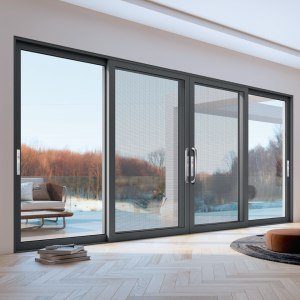
- Sliding doors — panels slide horizontally, ideal for wide openings
- Folding doors — multiple panels fold back, maximizing the opening width
- Tilt-and-turn doors — a European system allowing inward tilting for ventilation and side-hinged opening
Thermal-break aluminum profiles — where a polyamide strip separates interior and exterior sections — are standard in most export markets. They reduce heat transfer and prevent condensation.
1.2 Wood and Wood-Clad Glass Pane Doors
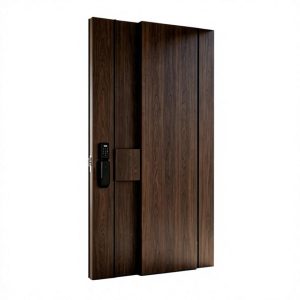
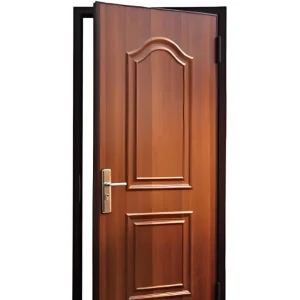
Solid wood doors with integrated glass panels suit villa entrances, hotels, and warmer aesthetics. Oak, mahogany, and teak are common species. A 40mm solid wood door with a single glass panel weighs more than aluminum, requiring heavier hinges and frame reinforcement. Buyers should verify load-bearing capacity for larger glass inserts.
1.3 System Doors with Pre-Engineered Glass Units
System doors are engineered as complete systems — frame, glass, gaskets, and hardware designed to work together. Lift-and-slide systems lift the panel when the handle is turned, achieving higher air-tightness and water-tightness ratings than field-assembled alternatives.
2. Glass Selection: Technical Specifications Buyers Must Know
The glass pane is the most visible component and where cost and performance vary most dramatically.
Direct answer: Glass selection depends on safety requirements, thermal performance targets, acoustic needs, and privacy preferences. Tempered or laminated glass is mandatory for door panels in most building codes.
2.1 Glass Types and Their Properties
| Glass Type | Key Properties | Typical Applications |
|---|---|---|
| Tempered (toughened) | 4-5x stronger than annealed glass; shatters into small blunt pieces | Safety glazing in doors, side lites |
| Laminated | Two glass layers bonded with PVB interlayer; holds together when broken | Security doors, acoustic insulation, overhead glazing |
| Low-E coated | Microscopic metallic coating reflects heat; reduces U-value | Energy-efficient doors |
| Insulated glass unit (IGU) | Two or three panes with sealed air gap; argon-filled options | All exterior doors in temperate and cold climates |
| Frosted/tinted/patterned | Privacy or decorative finish | Bathroom doors, office partitions |
Tempered glass is the baseline safety requirement in most jurisdictions, fragmenting into small blunt pieces when broken. Laminated glass adds security — the interlayer holds the glass together after impact, delaying forced entry.
2.2 Factors to Consider When Choosing Glass
Safety regulations. Building codes in most developed markets require tempered or laminated glass in doors. Check your target market’s code before specifying.
Thermal performance. The U-value measures heat transfer. A single 6mm pane has a U-value around 5.8 W/m²K. A double-glazed unit with Low-E and argon drops to 1.1–1.3 W/m²K. For LEED or Passive House projects, glass specification is critical.
Acoustic insulation. STC ratings measure sound blocking. Standard double glazing achieves STC 28–32. Acoustic laminated glass can reach STC 35–38. Hotels near highways and offices in noisy districts should specify acoustic laminated glass.
Privacy requirements. Frosted, tinted, or patterned glass provides privacy while maintaining light. Decorative finishes reduce visibility — request samples before committing.
Climate conditions. In humid environments, Low-E coatings and warm-edge spacers reduce condensation risk. In coastal areas, salt spray corrodes untreated aluminum — powder coating or anodizing is essential.
2.3 Maintenance and Care
Seals and gaskets degrade over time from UV exposure and temperature cycling. Specify EPDM gaskets rather than cheaper PVC — EPDM holds up better under UV and temperature extremes. Hardware should be inspected annually; rollers on sliding and folding doors wear faster than hinges on casement doors.
3. Frame Materials and Structural Performance
The frame determines structural integrity, thermal performance, and lifespan.
Direct answer: Frame materials include aluminum (with or without thermal break), wood, and composite systems. Thermal-break aluminum offers the best balance of strength, durability, and thermal performance for most commercial applications.
3.1 Aluminum: Thermal Break vs. Non-Thermal Break
Non-thermal-break aluminum conducts heat readily, causing condensation and heat loss in cold climates. Thermal-break frames insert a polyamide strip between interior and exterior sections, reducing the frame’s U-value from around 5.0 W/m²K to 2.0–3.0 W/m²K. For temperate or cold climates, thermal-break aluminum is the baseline specification.
3.2 Wood: Aesthetic and Structural Considerations
Wood frames offer natural insulation but demand more maintenance — exterior frames need regular finishing to prevent moisture damage. Engineered wood like laminated veneer lumber (LVL) offers better dimensional stability than solid wood. A 1200mm × 2400mm pane of 6mm tempered glass weighs approximately 45kg — the frame must support that weight without sagging.
3.3 Composite and Hybrid Systems
Aluminum-clad wood frames combine wood interiors with aluminum exteriors. Steel-reinforced aluminum profiles handle very large glass panes and high wind loads. The choice depends on aesthetic preference, climate, and budget.
4. Pricing Framework: What Drives the Cost of Glass Pane Doors?
Direct answer: Pricing depends on glass type, frame material, hardware quality, size, and order volume. Bulk pricing for standard aluminum glass doors ranges from $200–$600 per unit, while custom thermal-break systems with premium glazing can exceed $2,000.
4.1 Cost Drivers by Component
Glass. Tempered glass is the baseline. Laminated adds 30–50% to glass cost. Low-E coatings add 15–25%. IGUs with argon fill and warm-edge spacers roughly double glass cost versus single glazing.
Frame material. Aluminum is the most cost-effective. Wood costs more due to material and labor. Composite systems sit at the top end.
Hardware. Multi-point locking systems cost significantly more than single-point locks but provide better security and weather sealing. For commercial projects, multi-point locking is usually mandatory.
Size and customization. Non-standard sizes increase material waste and labor. Standard modules cost less.
4.2 Bulk Pricing and Economies of Scale
A factory producing 500 identical doors achieves lower per-unit costs than one producing 50 custom variations. Standardizing to common modules — 900mm, 1000mm, 1200mm widths — reduces cost and lead time. Trading companies often accept low MOQs; direct manufacturers offer lower unit pricing but higher MOQs. The break-even point usually falls between 50 and 200 units.
4.3 Total Cost of Ownership
Purchase price is only part of the picture. A high-performance door with Low-E glass and thermal-break frames costs more upfront but reduces energy expenses. For commercial buildings, energy savings often recoup the premium within three to five years. A cheap door becomes a recurring cost through higher bills and earlier replacement.
5. How to Evaluate Glass Pane Door Suppliers
Selecting a supplier requires verifying capability, not just reviewing marketing materials.
Direct answer: Evaluate suppliers by auditing manufacturing capability, quality control processes, customization flexibility, logistics documentation, and after-sales support. Request test reports, factory audit documentation, and references before committing.
5.1 Manufacturing Capability and Quality Control
Buyers should ask for:
- Pre-shipment inspection reports covering air-tightness, water-tightness, and wind resistance
- Certification documentation (ISO 9001, CE marking where applicable)
- Details of in-house testing equipment
For wind-load performance, the factory should provide test reports aligned with your target market’s standards. A door certified for a low-rise project may not meet requirements for a high-rise coastal building.
5.2 Customization Flexibility
The factory should handle custom sizes, glass type variations, hardware selection from multiple brands, color matching, and adjustments to match local building codes. A factory that says “we only sell standard products” will struggle when your project requires specific wind-load ratings or locking configurations.
5.3 Logistics and Documentation
A reliable factory provides packing lists, proforma invoices, customs documentation, and FCL/LCL shipping options. Standard products typically ship within 15–30 days; custom products may require 30–60 days.
5.4 After-Sales Support
Verify the supplier’s policy on replacement parts, warranty claims, and technical support. The best suppliers maintain spare parts inventory and respond to technical questions within 24–48 hours.
6. How a Factory-Direct Supplier Meets These Requirements
As Jusen Door and Windows Manufacturing Co., Ltd., we supply glass pane doors directly from our manufacturing facility to contractors, developers, and distributors worldwide. Because we are the factory, there is no intermediary margin added to the price.
Customization is a requirement, not a favor. Our engineering team adjusts profile structures and fittings to comply with local building codes. We handle custom sizes, colors, glass configurations, and hardware selections. For distributors, we offer OEM and ODM programs — your brand, our manufacturing capability.
Quality control happens before shipment, not after complaints. Every order undergoes pre-shipment inspection covering air-tightness, water-tightness, and wind resistance performance. We test because our buyers need documented evidence that doors meet specifications.
Export logistics are a core competency. We provide packing lists, proforma invoices, and full customs documentation. Both FCL and LCL shipping options are available with direct delivery from our factory in China.
If you are evaluating suppliers, we invite you to review our manufacturing capabilities. Contact Our Team to request a quote or ask technical questions.
7. Production Process: From Raw Material to Finished Door
Direct answer: Production involves aluminum profile cutting, machining, frame assembly, glass fabrication, hardware installation, and final quality inspection. Each stage requires specific equipment and quality checks.
7.1 Frame Fabrication
- Cutting — profiles are cut to length using CNC saws
- Machining — drainage holes, hardware slots, and screw holes are drilled
- Assembly — profiles are joined using corner connectors or welding
- Gasket insertion — EPDM gaskets are fitted into glass retention channels
- Hardware installation — hinges, locks, and handles are mounted
7.2 Glass Fabrication
- Cutting — glass sheets are cut to required dimensions
- Edge grinding — edges are smoothed to prevent stress concentrations
- Washing — glass is cleaned to remove contaminants
- Tempering — glass is heated to approximately 600°C, then rapidly cooled
- Lamination (if specified) — layers are bonded with PVB interlayer under heat and pressure
- IGU assembly (if specified) — panes are assembled with spacers and sealed
7.3 Final Assembly
The glass pane is fitted into the frame using setting blocks and gaskets. The complete door undergoes final inspection covering dimensions, hardware function, and seal integrity.
8. Quality Control: Our Multi-Stage Inspection Process
Direct answer: Multi-stage quality control includes incoming material inspection, in-process checks during frame assembly, glass verification, and pre-shipment testing for air-tightness, water-tightness, and wind resistance.
8.1 Incoming Material Inspection
Aluminum profiles are checked for surface finish, dimensional accuracy, and alloy composition. Glass deliveries are inspected for chips, scratches, and correct specifications.
8.2 In-Process Checks
Inspectors verify corner joint quality, gasket seating, hardware installation torque, and drainage hole placement.
8.3 Pre-Shipment Testing
A sample of doors undergoes performance testing. Air-tightness tests measure air leakage under pressure differentials. Water-tightness tests spray water while applying pressure. Wind resistance tests apply static pressure to simulate wind loads. Results are documented and shared with the buyer.
9. Customization and OEM/ODM Options
Direct answer: OEM production manufactures doors to the buyer’s exact specifications under the buyer’s brand. ODM allows buyers to modify existing factory designs for faster lead times. Both options are available with custom sizes, colors, glass, and hardware.
Choose OEM if you have complete drawings and specifications and need a factory to produce exactly to your design.
Choose ODM if you need a proven design with minor modifications and want faster lead times.
10. Ordering Process: MOQ, Lead Time, and Shipping
Direct answer: Standard orders typically require an MOQ of 50–100 units, lead times of 15–45 days, and ship via FCL or LCL containers. Custom orders with special glass or finishes require longer lead times.
10.1 The Ordering Process
- Specification review — submit drawings or specifications for quotation
- Sample approval — samples are produced and shipped for approval (for large orders)
- Order confirmation — production schedule is set upon deposit payment
- Production — factory manufactures according to approved samples
- Inspection — pre-shipment inspection documents are prepared
- Payment and shipping — balance payment is made, then the order ships
10.2 Shipping Options
FCL shipments use a dedicated container, suitable for orders of 40–80 doors. LCL shipments share container space, suitable for smaller orders. LCL costs more per unit but allows buyers to test a market before committing to full container quantities.
11. Certifications and Industry Standards
Direct answer: Relevant certifications include ISO 9001 for quality management, CE marking for European markets, and local building code compliance documentation. Buyers should verify certifications apply to the specific product and market.
11.1 Common Standards by Region
- Europe — CE marking under EN 14351-1 for windows and doors
- North America — AAMA/WDMA/CSA 101/I.S.2/A440 for window and door performance
- China — GB/T 8478 for aluminum alloy doors
- International — ISO 9001 for quality management systems
Certifications confirm the factory follows documented processes. Buyers should still request performance test reports for the specific product.
11.2 Red Flags to Watch For
- Unverifiable certifications — check the certification number with the issuing body
- Test reports from unrecognized laboratories — tests should come from accredited facilities
- Vague product specifications — a factory that cannot specify glass thickness, frame wall thickness, or hardware brands likely lacks manufacturing control
Frequently Asked Questions
What is a glass door in front of a front door called?
A glass door installed in front of a main entry door is commonly called a storm door or security door. When the glass pane is full-height, it may be referred to as a full-view door or glass entry door.
How much does a glass front door cost?
A standard aluminum glass pane door may range from $200 to $600 per unit at bulk pricing. Custom wood or thermal-break systems with laminated or Low-E glass can cost $800 to $2,000+ per unit.
What is a glass front door?
A glass front door is an entry door that incorporates glass panes within its structure, either as full panels or partial inserts. It allows natural light and uses aluminum, wood, or composite frames.
Is it okay to have a glass front door?
Yes, provided the glass is safety-rated (tempered or laminated) and the frame meets local building codes for wind load, air-tightness, and water-tightness. Glass front doors can be energy-efficient when using Low-E or insulated glass units.
What is the difference between tempered and laminated glass?
Tempered glass is heat-treated for strength and shatters into small, blunt pieces. Laminated glass consists of two or more layers bonded with an interlayer, which holds the glass together when broken, offering better security and sound insulation.
What lead time should I expect for a bulk glass pane door order?
Typical factory lead times range from 15 to 45 days for standard products, with additional time for custom sizes, special glass, or unique finishes.
—
When you source glass pane doors, quality is determined long before the container arrives at port. It is determined by the glass specification, frame profile, hardware selection, and the factory’s willingness to document its quality control.
The decision framework is straightforward: define your project requirements, evaluate suppliers against those requirements, and demand evidence.
If you are planning a project that requires glass pane doors, we welcome the opportunity to provide a detailed quotation based on your drawings or specifications.
References
- International Organization for Standardization. “ISO 9001:2015 Quality management systems.” https://www.iso.org/standard/62085.html
- European Committee for Standardization. “EN 14351-1:2006+A2:2016 Windows and doors.” https://standards.cencenelec.eu/
- American Architectural Manufacturers Association. “AAMA/WDMA/CSA 101/I.S.2/A440.” https://www.aamanet.org/
- National Glass Association. “Glass Technical Papers.” https://www.glass.org/
- Efficient Windows Collaborative. “U-Factor and SHGC.” https://efficientwindows.org/